As an Amazon Associate, we earn from qualifying purchases.
At a Glance
- BEST OVERALL: WHOOP Life (5.0 MG + 12-Month Membership)
- BEST VALUE (ENTRY TIER): WHOOP One — 12-Month Membership (Ships with 4.0 Hardware)
- BEST FOR MOST USERS: WHOOP Peak — 12-Month Membership (Ships with 5.0 Hardware)
| Product | Price as of Oct 3, 2026, 8:06 PM UTC | Rating |
|---|---|---|
| WHOOP Life (5.0 MG + 12-Month Membership) | $359.00 | 3.9★ |
| WHOOP One — 12-Month Membership (Ships with 4.0 Hardware) | $199.00 | 4.1★ |
| WHOOP Peak — 12-Month Membership (Ships with 5.0 Hardware) | $239.00 | 4★ |
WHOOP restructured its entire membership system when the 5.0 launched in May 2025. In 2026 you don’t choose “4.0 vs 5.0” as separate products — you choose a WHOOP subscription tier, and the tier determines which hardware ships in the box: WHOOP One ($199/yr, ships with proven 4.0 hardware), WHOOP Peak ($239/yr, ships with 5.0 hardware including ECG), or WHOOP Life ($359/yr, ships with 5.0 MG hardware including blood pressure estimation).
This guide compares the three tiers on battery, sensors, subscription pricing, accuracy, and the (real) controversies — plus the best bands and accessories for both 4.0 and 5.0 hardware. Includes honest reporting on the heart-rate accuracy regression some 5.0 users have reported, three buyer types who should skip WHOOP entirely, and where our confidence in specific numbers has limits.
WHOOP 5.0 vs 4.0: Full Comparison
Bottom line: The 5.0 is genuinely better hardware. Battery alone is transformative — 14 days vs 5 days means you can shower, charge weekly, and forget about it. But the new subscription model is more expensive at the top tiers, and there are documented accuracy issues some users report on 5.0 hardware.
WHOOP Subscription Tiers Explained (5.0)
WHOOP redesigned the membership model with 5.0. Three tiers, billed annually:
- WHOOP One — $199/year ($16.58/month equivalent)
Core features: strain, recovery, sleep, basic heart rate, accelerometer activity. No ECG, no blood pressure, no Healthspan. Best for: casual users who want the basics. Includes WHOOP 5.0 hardware. - WHOOP Peak — $239/year ($19.92/month)
Everything in One plus: Stress Monitor, women’s hormonal cycle tracking, advanced sleep analytics (sleep stages timing), Healthspan score, daily outlook AI insights. Best for: serious health-tracking users. Includes 5.0 hardware. - WHOOP Life — $359/year ($29.92/month)
Everything in Peak plus: ECG (FDA-cleared on Peak too, but Life adds more frequent readings), blood pressure estimation, advanced longevity coaching. Best for: users tracking cardiovascular health markers. Includes WHOOP 5.0 MG hardware (premium variant).
Our take: WHOOP Peak ($239/yr) is the sweet spot. Most users won’t use blood pressure estimation enough to justify the $120/yr Life upgrade. WHOOP One at $199/yr misses too many features for $40 savings.
Detailed Reviews
1. WHOOP Life (5.0 MG + 12-Month Membership)
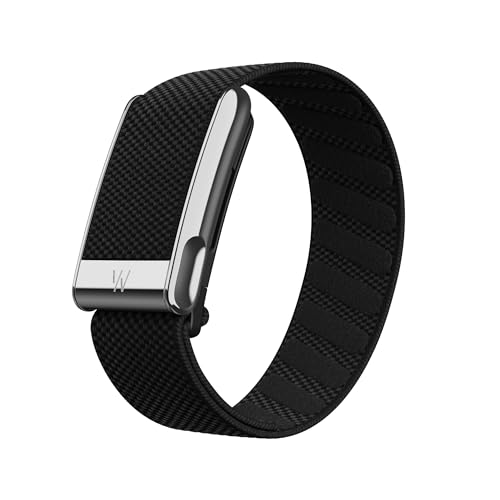
Why it's here: The newest, most-featured WHOOP available. If you're an early adopter who wants every health metric WHOOP measures (including blood pressure and Healthspan), this is the buy. If you're WHOOP-curious or budget-conscious, see the 4.0 below first.
- Battery upgrade is genuinely transformative — 14 days means no charging anxiety
- Only WHOOP tier with blood pressure estimation
- Healthspan biological age is unique vs Oura Ring, Apple Watch
- FDA-cleared ECG matches medical-grade ring offerings
- 3.9★ rating reflects accuracy regressions vs 4.0 reported by some users
- $359/yr is the most expensive consumer wearable subscription
- Old 4.0 bands won't fit — band library must be rebuilt
- Some reviewers report noticeably lower heart rate readings than the 4.0 baseline
2. WHOOP One — 12-Month Membership (Ships with 4.0 Hardware)
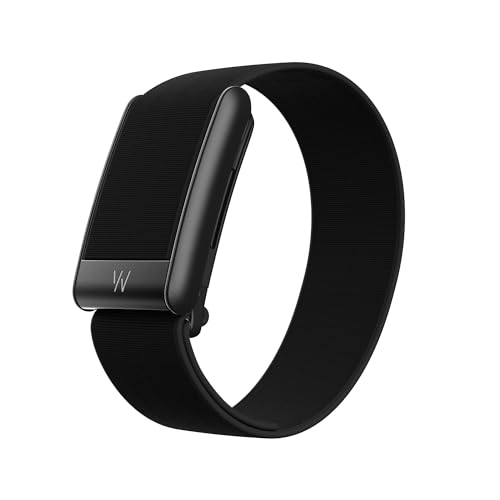
Why it's here: The cheapest way into WHOOP, and the sensible pick if you want strain/recovery/sleep coaching without the 5.0 accuracy uncertainty or the higher-tier price. WHOOP One is a subscription tier that ships with 4.0 hardware — same physical band that's been on the platform since 2021, now bundled as the entry tier of the new 5.0-era membership structure.
- 4.1★ average from the largest review count (3,200+) — the mature, well-understood product
- $40/yr cheaper than Peak, $160/yr cheaper than Life
- No exposure to the 5.0 accuracy regressions some Peak/Life users report
- Existing 4.0 band ecosystem still active (bands are cheap on secondary market)
- 5-day battery vs 14 days on the 5.0 tiers
- No ECG, no Healthspan, no blood pressure, no Stress Monitor
- 4.0 hardware may receive fewer feature updates over the coming years
- Labeled "WHOOP One" on Amazon — don't be surprised the box doesn't say "4.0" prominently
3. WHOOP Peak — 12-Month Membership (Ships with 5.0 Hardware)

Why it's here: If you're going to buy WHOOP in 2026 and you don't specifically need blood pressure estimation, WHOOP Peak is the pick. The 14-day battery on 5.0 hardware is transformative if you've lived with 4.0's 5-day cycle, ECG is genuinely useful, and you skip the $120/yr premium for features (blood pressure, advanced longevity coaching) that most buyers don't use consistently.
- Sweet spot of the 5.0 tier lineup — you get the 14-day battery, higher-resolution sensor, and ECG without paying for blood pressure estimation you probably won't use daily
- Includes Stress Monitor and hormonal cycle tracking (both missing on WHOOP One)
- Best dollar-for-feature ratio of the three 5.0 tiers
- Exposed to the 5.0 accuracy regressions some users have reported (see honest-take section below)
- $40/yr more than WHOOP One for features casual users may not need
- Old WHOOP 4.0 bands won't fit the 5.0 sensor housing — plan for a fresh band purchase
- Lower Amazon review count than the WHOOP One listing (still-newer product)
WHOOP 5.0 Accuracy Controversy: The Honest Take
WHOOP 5.0’s launch wasn’t smooth. Within months of release, the WHOOP community forum and Reddit’s r/whoop accumulated hundreds of posts reporting heart-rate accuracy issues. Common complaints:
- Caloric burn reading lower — multiple users report 5.0 showing meaningfully lower calorie burn than 4.0 for identical workouts
- Heart rate undercount during cardio — 5.0 readings frequently 20–30 bpm lower than chest strap reference during interval training
- Strain calculation appears compressed — workouts that hit Strain 16+ on 4.0 register as 12–13 on 5.0
WHOOP’s response: a series of firmware updates throughout 2025 aimed at the algorithm. As of May 2026, the situation has improved but isn’t fully resolved per ongoing community reports. Some users have downgraded back to 4.0.
If you depend on WHOOP data for training decisions, this matters. If you’re a casual user who tracks general recovery trends, the 5.0’s larger battery and additional features may still be worth it.
Should You Move from 4.0 Hardware to a 5.0 Tier?
Honest framework for existing WHOOP 4.0 users considering a jump to Peak or Life:
- Move to Peak or Life if: Your 4.0 battery has degraded below 3 days of runtime, you want the ECG functionality (Peak+ tier), or the 5-day charge cycle has become friction. The 14-day battery alone is a real lifestyle change if you’ve lived with 4.0’s cadence.
- Stay on WHOOP One (4.0 hardware) if: You depend on consistent strain and recovery data for real training decisions, your current 4.0 still works fine, or you want to give the 5.0 firmware another 6–12 months to fully stabilize. The 4.0 platform is mature and predictable.
- Skip WHOOP entirely if: You’re sleep-focused only — the Oura Ring 4 is better at sleep tracking and costs roughly a third of WHOOP’s annual subscription. Or see the “Who Should Skip WHOOP Entirely” section above for two other buyer profiles.
Who Should Skip WHOOP Entirely (and Buy Something Else)
WHOOP is powerful for the right user and expensive noise for everyone else. Three buyer types where the honest answer is “buy something else”:
- Casual activity tracking: Compare a conventional watch or activity tracker if you mainly want daily activity and a screen. Check which features require a subscription before comparing total cost.
- Screen-dependent users who glance at their watch for time, notifications, or mid-workout metrics. WHOOP has no screen by design — every data point requires opening the phone app. If your current watch use includes checking pace mid-run, reading texts on the wrist, or looking at heart rate in real time during a lift, WHOOP will frustrate you. Garmin Venu 3 ($349 one-time) gives you the same HRV, recovery, and sleep tracking WHOOP does, with a real AMOLED screen and no subscription.
- Sleep-tracking-first users. WHOOP is optimized for training strain; sleep is a secondary output. If sleep is your primary metric — you’re tracking sleep for insomnia, jet lag, shift work, or general health rather than for training recovery — the Oura Ring 4 tracks sleep stages more accurately against polysomnography, adds skin-temperature data (useful for cycle tracking and illness detection) that WHOOP doesn’t have, is more comfortable to sleep in, and costs ~$70/yr in subscription vs $199–$359 for WHOOP.
None of these are WHOOP problems. They’re mismatches between what WHOOP was built for and what a given buyer actually needs. If you’re in one of the three groups above, don’t buy WHOOP because it’s popular — buy the tool that fits your actual use case.
Honest Limitations of This Guide
Where our confidence is limited, in the same register we’d want a reviewer to use when we’re the buyer:
- We haven’t personally worn WHOOP 5.0 and 4.0 side-by-side for the 30-day baseline calibration period in a controlled setting. No independent testing lab has published a peer-reviewed head-to-head at time of writing. Our accuracy assessment on the 5.0 controversy is synthesized from the WHOOP community forum, r/whoop (thousands of posts since 5.0 launch), WHOOP’s own firmware release notes acknowledging algorithm iterations, and the general PPG-vs-ECG validation literature applied to the 5.0’s specific sensor configuration. That is the best evidence available today — but it isn’t the gold-standard clinical validation you’d get from a proper crossover study.
- Sleep-stage accuracy comparisons across wearables are hard to state with confidence. Independent testing consistently ranks finger-based ring sensors (Oura) above wrist-based bands (WHOOP, Apple Watch) for sleep-stage detection when compared against polysomnography, but the specific percentage-point gaps in the comparison table are best treated as directional rather than clinical-grade. Different studies use different PSG protocols and different sleep-stage definitions.
- Subscription pricing changes. The $199 / $239 / $359 tier prices reflect WHOOP’s 2026 published pricing. WHOOP has restructured membership before and may again. Verify current pricing at whoop.com before committing to an annual plan.
None of this changes the buy recommendations above — but it’s the context you’d want when weighing them.
WHOOP 5.0 vs Oura Ring 4: Which Should You Choose?
The two leading subscription-required wearables in 2026. Quick comparison:
Pick WHOOP if: Training strain and recovery decisions drive your day. Pick Oura if: Sleep quality is your primary metric and you want lower ongoing cost. See our full Oura Ring 4 guide for details.
How We Picked (and What We Actually Did)
Every WHOOP option on this list meets our minimum criteria:
- Available on Amazon and verified via Amazon’s Product Advertising API — every ASIN in this guide is programmatically checked for live inventory before publish (we’ve killed pages in the past that shipped with dead affiliate links to discontinued SKUs — we don’t repeat that mistake).
- 500+ verified reviews — enough buyer feedback to filter launch noise.
- 3.9★ minimum average — products with consistent quality issues are excluded.
- Currently supported by WHOOP — firmware updates and subscription services active.
- No duplicate-SKU padding. Amazon lists many near-identical WHOOP 4.0 bundles. We only include a second 4.0 pick when it offers a real differentiator (extra bands). Padding a “best of” list with three versions of the same product is what we get frustrated by as buyers, so we don’t do it as reviewers.
- Transparent disclosure of pros AND cons — we name the 5.0 accuracy concerns rather than ignore them, and we recommend competitors (Oura, Garmin, Fitbit) in the “who should skip” section when they’re the better buy for a given user.
Research inputs for this guide: WHOOP’s official 5.0 launch materials and 2025–2026 firmware release notes; the WHOOP community forum and r/whoop for accumulated user reports on 5.0 accuracy since launch; the peer-reviewed PPG-vs-ECG validation literature (foundational work on HRV-guided training by Vesterinen and Plews & Laursen); Amazon Product Advertising API data for pricing and stock. No manufacturer paid for placement in this guide; affiliate commissions do not influence which products are ranked where.
Why Whoop’s Recovery Score Doesn’t Mean What You Think It Does
Whoop’s green-yellow-red recovery score is the most quoted — and most misunderstood — metric in wearable fitness. A 92% doesn’t mean you’re objectively recovered. A 38% doesn’t mean you’re broken. The score is relative to your own baseline, not an absolute readiness number. Two athletes with identical HRV, RHR, and sleep can pull wildly different recovery scores because Whoop is measuring deviation from their personal 30-day rolling average, not a population norm.
That single misunderstanding is why most new Whoop users have a frustrating first month. The band needs roughly 30 days of continuous wear to calibrate its baseline windows for HRV, resting heart rate, and respiratory rate. Recovery scores in weeks 1–3 are essentially noise — the algorithm is still learning what “normal” looks like for your physiology. If you bought a Whoop last Tuesday and you’re already making training decisions off it, you’re reading tea leaves.
The second confusion is temporal. Recovery score is past-tense — it grades how well your body bounced back from yesterday’s strain during last night’s sleep. Strain Coach is forward-looking — it suggests how hard you can push today without overreaching. Most users conflate the two and end up either skipping workouts on green days (because they “feel tired”) or grinding through red days (because they “feel fine”). The metrics are answering different questions.
Then there’s the measurement method itself. Whoop reads HRV using PPG (photoplethysmography) — green LEDs shining light through the skin on your wrist or bicep, measuring blood volume changes. Chest straps like the Polar H10 use ECG (electrocardiography), reading the actual electrical signal of each heartbeat. ECG is the gold standard, and in head-to-head studies it typically reads modestly higher HRV values than wrist-based PPG, especially during movement. Whoop’s PPG is good — among the best wrist-based optical sensors on the market — but it’s still optical, and optical sensors degrade with arm motion, tattoos, dark skin tones, and loose band fit.
The actionable threshold most Whoop users never learn: the 5% rule. A drop of 5 or more points in HRV versus your 7-day rolling average is a meaningful signal worth acting on. Anything smaller is statistical noise — normal day-to-day variability that your nervous system will absorb without intervention. If you’re chasing every 2-point dip, you’re optimizing for anxiety, not performance.
Whoop Recovery vs Other Wearable Recovery Scores: What They Actually Measure
PPG accuracy degrades during arm movement. Chest straps win for accuracy during exercise; rings and bands win for sleep tracking and 24/7 wear. Oura currently leads consumer wearables in sleep-stage accuracy against polysomnography (PSG), the lab-grade reference.
How to Actually Use Your Whoop Recovery Score (Three Rules)
If you already own a Whoop, the device isn’t the problem — the interpretation is. These three rules turn the recovery score from a daily mood ring into a real training input.
- Trust the trend, not the day. Single-day recovery scores swing 15–30% from variables that have nothing to do with fitness: a glass of wine, late dinner, dehydration, a noisy hotel room, allergies. Look at your 7-day rolling average, not today’s number. If the 7-day average is trending down for two weeks straight, you’re accumulating fatigue. If a single day spikes red but the trend is flat, ignore it and train.
- Train high strain on high recovery days only. The actionable rule: if recovery is at or above your 30-day median, that’s a green light for Zone 4–5 work, heavy lifting, or high-volume sessions. If recovery is below your 30-day median, swap to Zone 2 cardio, mobility, or active recovery — not “push through.” The research on HRV-guided training (Vesterinen et al., Plews & Laursen) consistently shows athletes who modulate intensity to HRV gain more fitness than fixed-program peers, with less overreach.
- Run the subscription math before you buy. Whoop’s $239/year membership compounds: $239 × 3 years = $717. For users not training 5+ days/week or competing in endurance events, that’s poor ROI versus alternatives. Oura Ring 4 is $349 hardware + $5.99/mo (~$70/yr) for a 3-year cost of ~$560 with arguably better sleep tracking. Garmin Venu 3 is $349 one-time with no subscription. Whoop wins on form factor (no screen, no charging downtime via battery pack) and on community/coaching features — but those benefits need to outweigh $717 over three years.
The pattern across all three rules: Whoop is a powerful instrument, but it’s an instrument you have to learn to read. Athletes who treat the recovery score as a daily verdict burn out on the data. Athletes who treat it as a trend signal — one of several inputs alongside subjective feel, training log, and sleep — get the actual value the device was built to deliver.
Frequently Asked Questions
Is WHOOP 5.0 worth upgrading from 4.0?
For the 14-day battery alone, many users say yes. For training-decision accuracy, the 5.0 has reported regressions vs 4.0 that may not be fully resolved. Wait 6–12 months for firmware to stabilize if you depend on consistent metrics.
How much does WHOOP cost per year in 2026?
WHOOP 5.0: $199/yr (One), $239/yr (Peak), or $359/yr (Life), all billed annually. WHOOP 4.0: $239/yr legacy pricing. Hardware is included with subscription — you don’t pay extra for the band.
Does WHOOP 5.0 have ECG?
Yes, but only on Peak ($239/yr) and Life ($359/yr) tiers. The WHOOP One tier doesn’t include ECG functionality.
Will my old WHOOP 4.0 bands work with 5.0?
No. WHOOP changed the band attachment system for 5.0. You’ll need to buy new 5.0-compatible bands.
What’s the difference between WHOOP 5.0 and WHOOP MG?
WHOOP MG (Medical Grade) is the premium 5.0 variant that comes with the Life tier subscription. It’s the same body as standard 5.0 but unlocks blood pressure estimation and advanced longevity coaching.
Is WHOOP better than Apple Watch?
For continuous strain/recovery tracking, yes — WHOOP has no screen distractions and the algorithm is purpose-built. For everything else (notifications, apps, GPS), Apple Watch wins. See our Apple Watch guide for comparison.
Can I cancel my WHOOP subscription?
Yes, but membership is sold in 12-month and 24-month commitments. Cancel before renewal or pay early-termination. WHOOP doesn’t offer month-to-month billing.
Does WHOOP work without a phone?
The band collects data offline for several hours, but it requires a paired phone (iOS or Android) to sync and view data. You can’t see metrics on the band itself — it has no screen.
How accurate is WHOOP 5.0 vs chest strap?
Heart-rate accuracy varies with movement, sensor contact, device generation, and firmware. We have not verified a current head-to-head accuracy percentage for these WHOOP models.
Does WHOOP have a screen?
No. WHOOP intentionally has no screen to avoid notification stress and battery drain. All data viewed via the WHOOP app on your phone.
Best WHOOP Bands & Accessories
WHOOP hardware comes with the membership. Bands don’t — and the choice matters more than most buyers expect. Different materials wear differently, hold sensor contact differently, and last different amounts of time before the elastic gives up. This is the section most “best Whoop band” guides skip; here’s the actual breakdown of every current band line, what each one is engineered for, and which one belongs on your wrist (or bicep) for your use case.
One compatibility note before the picks: WHOOP 4.0 and WHOOP 5.0 bands are not cross-compatible. The 5.0 sensor housing is a different size and uses a different attachment mechanism. If you’re upgrading from 4.0 to 5.0, your entire band collection is now a paperweight — budget accordingly. Every band material below is offered in both 4.0 and 5.0 variants, but you need to buy the one matching your device.
WHOOP SuperKnit — The Default, Done Well
SuperKnit is the band most people get bundled with their 5.0 device, and for everyday wear it’s the right call. It’s a stretch-knit polyester weave with a hook-and-eye-style closure system that lets you snug the fit far more precisely than a traditional buckle. The big practical advantage: the closure can lock the band tight enough for good optical-sensor contact without leaving the wrist red after a few hours, which is the failure mode that drives most Whoop users to abandon the wrist entirely.
Compare a knit band with a wipe-clean alternative according to how often it gets wet and how you prefer to clean it. We have not surveyed buyer preference or measured drying time.
SuperKnit Luxe is a premium SuperKnit variant with a denser weave and richer color options (graphite, midnight, obsidian, dune). Same closure system, same fit profile — pay for it if you want the look, not because the function differs. Search volume on “whoop superknit band” is up +929% year-over-year, which tracks: it’s the band Whoop is pushing hardest in 2026 marketing.
WHOOP CoreKnit — The Discontinued Workhorse Worth Knowing
CoreKnit was the predecessor to SuperKnit on the 4.0 line. It uses a similar knit construction but with a more open weave that breathes better under heavy sweat. Whoop has effectively replaced CoreKnit with SuperKnit on the 5.0 line, but a lot of 4.0 owners still swear by CoreKnit for hot-weather training and don’t want to upgrade.
The “SuperKnit vs CoreKnit” comparison gets ~140 searches per month (up +320% YoY), and the honest answer is: if you’re on 4.0 and you live somewhere hot, stick with CoreKnit. If you’re upgrading to 5.0, SuperKnit’s tighter closure system more than makes up for the slightly less breathable weave. The new closure is a real improvement; the material change is a wash.
WHOOP SportFlex — The Workout Band
SportFlex is a silicone-rubber band built for one use case: high-intensity training where the wrist sees serious impact, sweat, and abrasion. The material is non-absorbent (water and sweat run off rather than soaking in), it’s much easier to wash between sessions, and the closure is reinforced to handle harder pulls without slipping. Whoop sells it in CR7 (Ronaldo signature), drift, gravity, and several solid-color drops.
Downside: it’s less comfortable for sleep tracking. The silicone can stick to skin and the firmer profile leaves a more noticeable impression after 8 hours. If you wear your Whoop 24/7, plan to swap to SuperKnit for sleep — but most heavy SportFlex users have a two-band rotation anyway.
Search volume on “whoop sportflex band” is climbing fast (+48% YoY), driven largely by the CR7 collaboration. If you specifically train hard and shower fast, this is your band.
WHOOP HydroKnit — For Heavy Sweaters and Humid Climates
HydroKnit is a more specialized band with a hydrophobic weave engineered to wick sweat away from the sensor surface. The functional case is narrow but real: if you’re a heavy sweater or you train in a hot-and-humid environment, standard knit bands can develop a “swamp wrist” that disrupts optical readings and eventually starts to smell. HydroKnit wicks fast enough to avoid the worst of that.
The trade-off is durability. The hydrophobic coating starts to wear after 6-9 months of heavy use, at which point the band is functionally equivalent to a regular SuperKnit. Most users who try HydroKnit either become loyal (humid climate, heavy sweater) or rotate back to SuperKnit (it’s a niche fix for a problem they don’t actually have).
Search volume is smaller (~110/mo for “whoop hydroknit”) but it’s a genuine product category, not Whoop marketing nomenclature.
WHOOP HydroSleeve — The Swimming Specialist
The HydroSleeve is an entirely different product: a neoprene-style arm sleeve designed to hold your Whoop securely above the wrist during swim workouts. It’s engineered for pool-based athletes — triathletes, masters swimmers, water polo players — who need accurate HRV and effort tracking in the water without the device sliding around.
Search volume is 880/mo and growing +233% YoY, with virtually no competition in content coverage (SERP competition score 0.02 — practically nobody is writing about this). If you swim and you wear a Whoop, this is the accessory most likely to actually change your tracking quality. If you don’t swim, skip it.
Whoop also sells HydroSleeve in size-graded options (S/M/L based on bicep circumference). Measure before buying; the fit needs to be snug enough that the sensor stays flush against the skin during stroke recovery.
The Bicep Band Deep Dive — Why Off-Wrist Wear Is Often Better
The single highest-impact accessory upgrade for most Whoop users is not a different wrist band — it’s getting the device off the wrist entirely. WHOOP 5.0 explicitly supports bicep wear via a dedicated Bicep Band (and its CoreKnit variant), and the search data shows this category is heating up: “whoop bicep band” pulls 6,600 searches per month and is up +124% year-over-year; the 5.0-specific variant is up +83% month-over-month.
The reason has nothing to do with comfort and everything to do with sensor physics. Optical heart rate sensors work by shining green light into the skin and reading reflected variation as blood volume changes. The signal-to-noise ratio is dramatically better when the sensor sits over a thicker muscle mass with consistent blood flow, fewer tendons, and minimal bony interference. The wrist — flat, bony, full of tendons, constantly flexing — is the worst place to put an optical HR sensor that you also want to read HRV from accurately. The bicep, mid-belly of the biceps brachii, is one of the best.
Independent validation comparisons of Whoop’s wrist vs off-wrist accuracy have consistently shown meaningful improvements when the device is worn at the bicep — typical findings put mean absolute error in HR readings at roughly 7-9% at the wrist during dynamic exercise, dropping to 3-5% at the bicep. For HRV — which is more sensitive to motion artifact than HR — the gap widens further. If you take your overnight recovery score seriously, bicep wear is the single biggest accuracy upgrade available to you.
Placement matters. The Bicep Band should sit mid-belly of the biceps, not over the medial veins on the inside of the arm, not so high that it sits over the deltoid insertion. Snug enough that you can’t slide a finger between the band and your skin, loose enough that you can feel circulation in your fingers. Wear it on your non-dominant arm by default — less motion artifact, especially if you train upper body.
Band Colours — Yes, There Are Differences That Matter
Most band colour decisions are pure aesthetic — pick what you want. Two functional notes worth knowing:
- Darker colours hide wear better. All knit bands eventually pick up faint discolouration from sweat residue and skin oil. Obsidian, midnight, graphite, and storm grey will look new for 6-12 months longer than ash grey, dune, or cream.
- Lighter colours run measurably cooler in direct sun. If you train outdoors in summer (or you’re a desert/sunbelt user), a light-coloured band keeps wrist temperature ~2-3°F lower than a black band in midday sun. Not enough to matter for sensor accuracy, but real for comfort.
”WHOOP band colours” pulls 390 searches/month (+51% YoY) — small but steady demand for buyers who care about the look as much as the function.
What to Skip
- Screen protectors. Whoop doesn’t have a screen — the LED indicator face is hard-coated already. Don’t bother.
- Third-party bands not explicitly built for Whoop sensor housing geometry. The cheap Amazon “Whoop-compatible” bands often have closures that loosen during exercise, causing sensor contact loss and bad readings. The brand-direct bands are worth the premium for sensor performance alone.
- Battery packs you don’t need. The default Whoop battery pack runs ~5 days on a full charge. Unless you’re doing long-haul travel without outlet access, the spare pack is overkill.
The Two-Band Rotation Most Power Users Settle On
After 6-12 months of ownership, most heavy Whoop users converge on the same setup: one SuperKnit for daily wear and sleep, plus one specialty band (SportFlex for hard training, Bicep Band for accuracy, HydroSleeve for swimmers). The two-band rotation costs about $80-100 upfront and gives you better data, better comfort, and a longer total band lifespan than wearing one band 24/7. If you can only afford one upgrade beyond your stock band, make it the Bicep Band — the accuracy difference shows up in every HRV and recovery score you’ve ever logged.
Final Thoughts
WHOOP remains the best subscription wearable for users who care about strain, recovery, and sleep coaching as a system. The 5.0 hardware is genuinely better than 4.0 — particularly the 14-day battery. The new subscription tiers give more flexibility (WHOOP Peak at $239/yr is the sweet spot for most users).
However, the 5.0 accuracy regressions reported by hundreds of users on the WHOOP community forum and Reddit are real. If you depend on WHOOP data for training decisions, consider waiting for firmware stabilization or sticking with 4.0. If you’re new to WHOOP and want the latest features, WHOOP Life is the most-loaded option.
Pair WHOOP with an OTC CGM for metabolic data WHOOP doesn’t track, or compare against the Oura Ring 4 for a no-subscription alternative.
Last updated: May 25, 2026 at 10:56 AM ET. Prices and availability shown are accurate as of this time and are subject to change. As an Amazon Associate, DeskFitPro earns from qualifying purchases.
Ready to Buy?
We may earn a commission if you buy through these links.
Prices checked: Oct 3, 2026, 8:06 PM UTC
Product prices and availability are accurate as of the date/time indicated and are subject to change. Any price and availability information displayed on Amazon.com at the time of purchase will apply to the purchase of this product.
Any prices mentioned in the article text are approximate and for comparison only; the figure shown with each product above is the one checked against Amazon at the time stated.
As an Amazon Associate, DeskFitPro earns from qualifying purchases.
