As an Amazon Associate, we earn from qualifying purchases.
At a Glance
| Purifier | Room Size | CADR (Smoke) | Filter Cost/Year | Rating |
|---|---|---|---|---|
| LEVOIT Core 300S | 219 sq ft | 141 | ~$30/yr | 4.7★ (100,000+) |
| Coway Airmega 1512HH | 361 sq ft | 233 | ~$80/yr | 4.7★ (28,000+) |
| LEVOIT Core 600S | 465 sq ft | 300 | ~$110/yr | 4.6★ (22,000+) |
| LEVOIT Core 600S Plus | 365 sq ft | 260 | ~$130/yr | 4.5★ (14,000+) |
| Dyson TP07 | ~600 sq ft | 180 (estimated) | ~$80/yr | 4.3★ (4,200+) |
An air purifier is worth comparing when its clean-air delivery rate and filtration suit the room and the particles you want to reduce. Filter efficiency alone does not tell you how quickly the room’s air will be cleaned.
This guide compares the 5 best air purifiers on Amazon by Clean Air Delivery Rate (CADR), room size coverage, filter cost, and verified user feedback. Plus how to size an air purifier correctly (most people undersize), when smart features matter, and why CADR matters more than marketing copy about “air changes per hour”.
How to Size an Air Purifier (Most People Get This Wrong)
Marketing claims about “covers 500 sq ft” mean nothing without context. The actual metric is CADR (Clean Air Delivery Rate). Rule of thumb:
- CADR (smoke) ≥ 2/3 of room square footage for 4.8 air changes per hour (the ACH that matters for allergens/smoke).
- A 200 sq ft bedroom needs CADR ≥ 133.
- A 500 sq ft open living area needs CADR ≥ 333.
Most manufacturers list “covers X sq ft” assuming only 2 ACH (insufficient for serious allergy/smoke filtration). Always check actual CADR. Higher CADR = larger room or higher ACH in smaller room. Buy bigger than you think you need — undersized purifiers run on high constantly, burn through filters, and never reach effective ACH.
CADR Glossary
- CADR Smoke — Tobacco smoke, wildfire PM2.5, cooking smoke. Smallest particles (0.09–1 micron).
- CADR Dust — Household dust, pollen. Medium particles (0.5–3 microns).
- CADR Pollen — Largest of three. Easiest to filter.
- Smoke CADR is the hardest metric — if a purifier filters smoke well, it filters dust and pollen even better.
Detailed Reviews
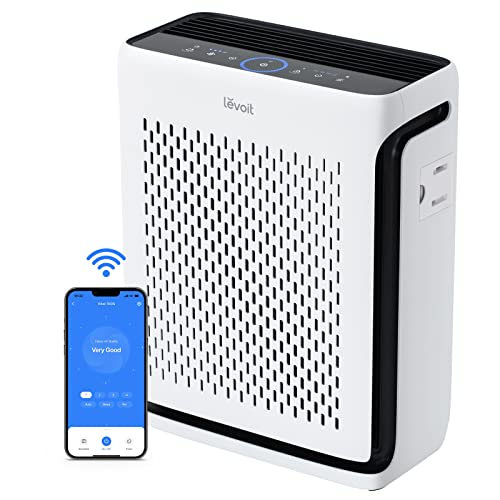
1. LEVOIT Vital 200S — Washable Pre-Filter (1,875 ft²)

Why it’s here: Best value pick for pet households or anyone who wants to stretch HEPA filter replacements (~$40 each) further. The washable pre-filter alone saves $20-40/year in shorter HEPA life. Same H13 filtration quality as the more expensive 600S models, just at a lower price.
- Washable pre-filter is the standout feature — $0 ongoing cost for the first filtration stage
- Pet households see the biggest savings: pet hair clogs the pre-filter first, washing extends HEPA life dramatically
- Larger room coverage than the 600S at lower price = best value/sq-ft in this guide
- Slightly louder than the 600S at max fan speed (still quiet on Sleep Mode)
- Side intakes mean you can't push it flat against a wall — leave 6" clearance
What Air Purifiers Actually Filter (And What They Don’t)
According to EPA’s HEPA explanation, HEPA filters theoretically capture at least 99.97% of particles at 0.3 microns. This is a filter-performance definition, not a guarantee that a purifier removes that percentage of room pollution.
- Pollen, dust mites, pet dander — large particles, easily filtered
- Mold spores — captured by HEPA
- Wildfire smoke (PM2.5) — primary use case for many buyers in CA/PNW/Canada
- Bacteria and most viruses — including SARS-CoV-2 (most viruses travel on larger respiratory droplets that get filtered)
- Volatile Organic Compounds (VOCs) — only with activated carbon stage (not all purifiers include this)
What HEPA can’t filter:
- Radon gas (need a radon mitigation system)
- Carbon monoxide (need a CO detector + ventilation)
- Ozone (some ionizing purifiers actually produce trace amounts)
- Smell from already-deposited pet stains, mold (need source remediation)
Where to Place Your Air Purifier
- Bedroom — 6+ feet from your bed. Run on auto or low overnight.
- Home office — Within 10 feet of your desk. Improves alertness and reduces eye irritation.
- Living room — Central location. Don’t push against walls (blocks intake).
- Avoid: corners, behind furniture, close to windows (negates filtration as new air enters).
How Often to Replace HEPA Filters
- Standard HEPA filter: 6–12 months depending on use
- Activated carbon pre-filter: 3–6 months
- Heavy use (wildfire season, pets, smokers): every 3–6 months
Filter cost is a real ongoing expense. LEVOIT and Coway are cheapest. Dyson and BLUEAIR are most expensive. Factor in 3–5 years of filter costs when comparing models.
Smart Features: Worth It or Marketing?
- App control — Useful for scheduling, status checks. Not life-changing.
- Air quality monitoring — Useful for understanding when pollution spikes (cooking, wildfires). Best on Coway and Dyson.
- Auto mode — Genuinely useful. Adjusts fan speed based on detected particles.
- Voice control — Mostly novelty. Touch buttons work fine.
If you’ll actually use the app daily, smart features add value. If you just want clean air without thinking about it, save the money on auto-mode-only models like Coway.
How We Picked
Every air purifier on this list meets our criteria:
- 4,000+ verified Amazon reviews — enough buyer feedback to validate consistency
- 4.3★ minimum average rating
- True HEPA H13 filtration — not “HEPA-like” or “HEPA-type”
- Published CADR — manufacturers that disclose actual CADR vs vague “covers X sq ft”
- Distinct positioning — value, large room, quiet, smart, mid-range
Who Should Skip a HEPA Air Purifier
A HEPA purifier is a particulate tool, and for a few buyers it’s the wrong tool for the actual problem. Skip it if you’re in one of these situations:
- Your complaint is gas or odor, not airborne particles. HEPA does nothing for radon, carbon monoxide, or the smell baked into an old carpet or a deposited pet stain. Those need a radon mitigation system, a CO detector plus ventilation, and source cleaning respectively — a $200 purifier won’t touch them, and only the models with a real activated-carbon stage help with VOCs at all.
- You already run a small, cross-ventilated space with windows open most days. If your outdoor air is clean and you’re swapping room air constantly, the marginal benefit is thin. A cheap box fan in an open window can out-move a purifier under those conditions; save the money unless you have a specific allergen, pet, or wildfire-smoke reason.
- You’re eyeing the Dyson TP07 primarily for filtration. At ~$500 you’re mostly paying for the bladeless fan, the display, and the app — the LEVOIT Core 600S filters more air per dollar. Skip the Dyson unless you actually want the fan (or heater sibling) as a piece of furniture and the filtration is a bonus.
Honest Limitations of This Guide
A few caveats worth stating plainly before you buy on the numbers in the table above:
- CADR and “covers X sq ft” are lab figures. Those numbers come from a sealed AHAM test chamber. Your real room has furniture, a leaky door, and a continuous pollutant source (cooking, pets, an open window), so the effective air changes you get in practice run lower than the spec sheet promises. Size up rather than to the number.
- The Dyson TP07 smoke CADR is our estimate. Dyson doesn’t publish an AHAM CADR for the TP07, so the ~180 figure in the table is directional, not a verified lab result. Treat it as a rough placeholder when cross-shopping, not a measured spec.
- Virus-capture claims are mechanistic, not trial-proven for these units. HEPA reliably catches droplet-borne particles at 0.3 microns and up, but we can’t attach a real-world infection-reduction number to any specific purifier here. The benefit is at the particle level; nobody has run a controlled clinical trial on these consumer models, and we won’t pretend otherwise.
Frequently Asked Questions
Do air purifiers actually help with allergies?
Yes for airborne allergens (pollen, dust, pet dander). Most users with allergies notice meaningful improvement within 2–4 weeks of continuous use. Doesn’t help for contact allergens (skin contact, food).
What size air purifier do I need?
CADR (smoke) ≥ 2/3 of room sq ft for 4.8 ACH. A 200 sq ft room needs CADR ≥ 133. Bigger is better — undersized purifiers run on high constantly without reaching effective air changes.
How often should I run my air purifier?
24/7 for best results. Particulate matter accumulates whenever the purifier is off. Auto mode minimizes energy use during clean periods.
Do air purifiers help with wildfire smoke?
Yes — wildfire smoke is largely PM2.5 (0.4–2.5 microns), well within HEPA filtration range. Run on max during smoke events. May need 2 purifiers for large spaces.
Are HEPA filters washable?
No. HEPA filters degrade when wet — the fiber structure breaks down. Vacuum the surface gently if dusty, but replace the filter on schedule.
Can air purifiers filter viruses?
Particles smaller than 0.3 microns are not simply too small for HEPA: diffusion helps capture very small particles. A purifier’s airflow, placement, and operation also matter; filtration is not a guarantee against infection.
Do air purifiers help with snoring?
Indirectly. Cleaner air reduces nasal congestion that contributes to snoring. Combined with mouth tape for nasal breathing, can meaningfully reduce snoring.
Does running an air purifier all day cost a lot of electricity?
Most models use 5–60 watts depending on fan speed. Running 24/7 costs ~$10–$30/year on most US electricity rates. Negligible vs the filter replacement cost.
Are ionizing air purifiers safe?
Pure HEPA is safer. Some ionizing purifiers generate trace ozone, which is a lung irritant. CARB-certified models (California) have safer ozone limits. Stick to HEPA-only if you have asthma or respiratory issues.
Should I get one big purifier or multiple small ones?
One big purifier per room is better than one shared purifier across rooms (air doesn’t travel through doorways efficiently). 2–3 medium purifiers for a 1,500 sq ft home is the typical setup.
Final Thoughts
Air purifiers are one of the highest-ROI home health investments. The LEVOIT Core 300S at $89.99 is the universal default — 100,000+ reviews validate it works for most bedrooms and home offices. Step up to the Coway Airmega 1512HH for medium rooms with auto mode. For large rooms, LEVOIT Core 600S is the workhorse.
Pair an air purifier with a humidifier for dry climate balance and a mouth tape setup for optimal sleep breathing.
Last updated: July 01, 2026 at 01:07 PM ET. Prices and availability shown are accurate as of this time and are subject to change. As an Amazon Associate, DeskFitPro earns from qualifying purchases.
Ready to Buy?
We may earn a commission if you buy through these links.
Prices checked: Oct 3, 2026, 8:06 PM UTC
Product prices and availability are accurate as of the date/time indicated and are subject to change. Any price and availability information displayed on Amazon.com at the time of purchase will apply to the purchase of this product.
Any prices mentioned in the article text are approximate and for comparison only; the figure shown with each product above is the one checked against Amazon at the time stated.
As an Amazon Associate, DeskFitPro earns from qualifying purchases.