Two over-the-counter continuous glucose monitors (CGMs) are now FDA-cleared for adults without diabetes: the Dexcom Stelo (cleared March 5, 2024 — the first OTC CGM in the US) and Abbott Lingo (cleared May 29, 2024). Both cost $49–$99 per month, last 14–15 days, and pair with your phone — no prescription, no insurance, no doctor visit. This guide compares the two head-to-head for non-diabetic metabolic health tracking, plus when it makes sense to step up to the cash-pay FreeStyle Libre 3 Plus.
We pulled MARD data from the FDA 510(k) summaries, cross-checked app features in the App Store, and grounded the safety guidance in Johns Hopkins and Mayo Clinic positions on CGM use without diabetes. Ranked on FDA clearance status, app quality, Oura / Apple Health integration, accuracy, and monthly cost.
Health Disclaimer: This page is for educational purposes only and is not medical advice. OTC wellness CGMs are not intended to diagnose, treat, or manage diabetes. They are not suitable for people who take insulin or have a history of hypoglycemia. If you have or suspect diabetes, talk to your doctor about a prescription CGM (Dexcom G7, FreeStyle Libre 3) rather than a wellness biosensor.
Dexcom Stelo
First FDA-cleared OTC CGM. 15-day sensor, best app, syncs with Oura and Apple Health. The default pick for non-diabetic glucose tracking.
Check Price on Amazon →As an Amazon Associate, I earn from qualifying purchases. Learn more.
Can You Use a CGM Without Diabetes?
Yes — and as of 2024 you don’t even need a prescription. The FDA cleared the Dexcom Stelo in March 2024 as the first over-the-counter continuous glucose monitor, followed by the Abbott Lingo on May 29, 2024. Both are explicitly marketed for non-diabetic adults who want to understand how food, exercise, sleep, and stress affect their blood sugar — not for diabetes management.
The use case is metabolic awareness: learning which meals cause large glucose spikes, whether your morning oatmeal is gentler than the granola, how a fasted workout compares to a fed one, and how poor sleep raises baseline glucose the next day. None of that requires diabetes — and none of it requires a doctor.
What the Research Says About CGMs for Non-Diabetics
The clinical evidence for routine CGM use in healthy adults is still thin. Johns Hopkins Bloomberg School of Public Health published a 2026 review noting that “the evidence is scant” on whether CGM data meaningfully improves outcomes for people without diabetes, and that interpretation can be misleading without context (a “spike” to 140 mg/dL after a meal is normal physiology, not a warning sign). VCU Health takes a slightly warmer position, calling CGM in non-diabetics an “emerging tool for early detection of dysglycemia” and personalized risk assessment.
The honest summary: an OTC CGM is most useful as a short-term self-experiment — wear one or two sensors (4 weeks of data) to map your personal food responses, then stop. Long-term continuous wear without a clear question to answer adds cost without proven benefit for healthy adults.
At a Glance
- Best Overall (Non-Diabetic): Dexcom Stelo — first FDA-cleared OTC CGM, best app, Oura integration
- Best Value: Abbott Lingo — $49/sensor with personalized coaching app
- For Advanced Users: FreeStyle Libre 3 Plus — medical-grade accuracy (7.8% MARD) and real-time alerts
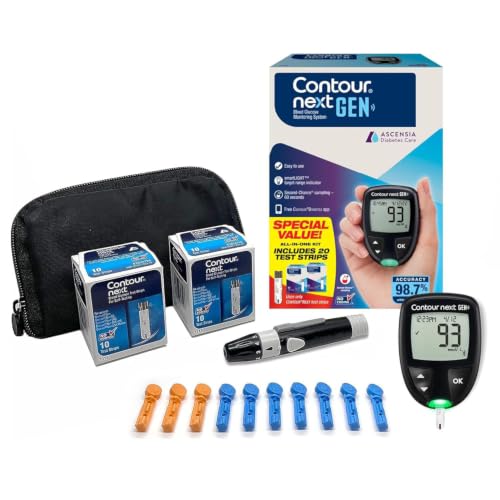
- Budget Spot-Check: Contour NEXT ONE — $19 fingerstick meter if you only want occasional readings
Comparison Table
| Monitor | FDA OTC? | Price | Wear Time | Hypo Alerts | Oura / Apple Health |
|---|---|---|---|---|---|
| Dexcom Stelo | Yes (Mar 5, 2024) | ~$50/sensor | 15 days | No | Both |
| Abbott Lingo | Yes (May 29, 2024) | $49/sensor | 14 days | No | Apple Health only |
| FreeStyle Libre 3 Plus | Cash-pay OTC | $75.99/sensor | 15 days | Yes | Apple Health |
| Contour NEXT ONE | Fingerstick | $19 meter + strips | On-demand | N/A | Bluetooth app |
Detailed Reviews
1. Dexcom Stelo

- First FDA-cleared OTC CGM (cleared March 2024)
- 15-day wear per sensor — 30 days of data per 2-pack
- 180 days of in-app glucose history (longest in this group)
- Native sync with Oura Ring, Apple Health, and Google Health Connect
- Backed by Dexcom’s 20+ years of CGM platform experience
- Most established OTC platform — FDA cleared first
- Best app and ecosystem integrations
- Oura sync is the differentiator for biohacker stacks
- 1,200+ Amazon reviews — most-reviewed OTC option
- No real-time hypoglycemia alerts (by design — wellness, not medical)
- 2-pack-only pricing means $99 upfront
- MARD not publicly disclosed (uses Dexcom G6/G7 sensor platform)
Why it’s #1: Stelo is the default recommendation for non-diabetic CGM use. It came first, it has the strongest app ecosystem (Oura + Apple Health), and it sits on Dexcom’s mature sensor platform. If you’re using Oura, Whoop, or Apple Health to track sleep and recovery, Stelo is the only OTC CGM that closes the loop.
Check Price on Amazon →2. Abbott Lingo

- $49 per sensor — cheapest FDA-cleared OTC CGM
- 14-day wear with minute-by-minute glucose tracking
- App provides personalized coaching and “Lingo Count” daily score
- Built on Abbott’s FreeStyle Libre sensor platform
- Free sensor replacement if it fails before day 14
- Lowest cost to try CGM at $49 per sensor
- Coaching app is the best for first-time users — explains what spikes mean
- Free replacement guarantee removes the “wasted $49” risk
- Abbott’s sensor track record (FreeStyle Libre has 8+ years in market)
- 14-day wear vs 15 for Stelo (one extra sensor per year)
- No Oura integration — Apple Health only
- Newer to market than Stelo (fewer reviews)
Why it’s here: Lingo wins on price and beginner UX. The coaching app is genuinely the best onboarding experience in this category — it tells you whether a 140 mg/dL post-meal spike is normal, large, or a problem. If you’re trying CGM for the first time and don’t already use Oura, start here.
Check Price on Amazon →3. FreeStyle Libre 3 Plus (For Advanced Users)

- Medical-grade accuracy — 7.8% MARD (lowest published in this group)
- Real-time high and low glucose alerts (the only OTC option with alerts)
- 15-day wear, no fingerstick calibration
- Same hardware doctors prescribe for type 1 diabetes — sold cash-pay OTC
- Highest accuracy on this list — closest to lab glucose tests
- Real-time alerts if glucose dips below 70 mg/dL or spikes above 200
- Useful if you suspect reactive hypoglycemia or want medical-grade data
- $76/sensor is 50% more than Stelo or Lingo (~$152/month)
- Not FDA-cleared specifically for non-diabetic wellness use
- App is designed for diabetes management, not lifestyle insights
When to choose it: If you have reason to want medical-grade accuracy — for example, suspected reactive hypoglycemia, post-bariatric monitoring, or you’re a researcher / quantified-self user who needs precise numbers — the Libre 3 Plus is the right tool. For general wellness tracking, Stelo or Lingo cover 95% of the use case at half the cost.
Check Price on Amazon →4. Contour NEXT ONE (Budget Spot-Check Alternative)

- Fingerstick meter — point-in-time readings, not continuous
- $19 for the meter, ongoing test strip cost (~$30–50/month)
- Bluetooth syncs with Contour Diabetes app for trend tracking
- 5-second results with smartLIGHT color indicator
- $19 entry cost vs $50+ for any CGM
- Highest-rated glucose product on Amazon (12,400+ reviews)
- Cheaper long-term than CGM if you only spot-check a few times per week
- Fingerstick — no overnight, no continuous data
- Misses post-meal spikes that peak between checks
- Not what most people mean by “CGM”
When to choose it: If you only want to compare a few specific meals (before/after toast vs eggs, for example) and don’t need continuous overnight or exercise data, a fingerstick is genuinely cheaper. Many users buy a CGM for one month, learn their patterns, then switch to occasional fingerstick checks.
Check Price on Amazon →Stelo vs Lingo: The Direct Comparison
The two FDA-cleared OTC CGMs are this article’s main decision. Here’s how they actually differ.
| Feature | Dexcom Stelo | Abbott Lingo |
|---|---|---|
| FDA Clearance Date | March 5, 2024 (first OTC) | May 29, 2024 |
| Price per Sensor | ~$50 (sold in 2-pack) | $49 |
| Wear Time | 15 days | 14 days |
| Monthly Cost | ~$99 | ~$98–105 |
| App Strength | Data depth, integrations, 180-day history | Coaching, daily Lingo Count, beginner UX |
| Oura Integration | Yes (native) | No |
| Apple Health | Yes | Yes |
| Google Health Connect | Yes | No |
| Sensor Platform | Dexcom G6/G7 lineage | FreeStyle Libre lineage |
| Free Replacement Policy | Case-by-case | Yes (early failures) |
Pick Stelo if: you already wear an Oura Ring, you want the most-mature OTC platform, or you want the longest in-app history.
Pick Lingo if: you want the cheapest entry point, you’re new to CGM and want coaching, or you don’t already have a quantified-self stack.
Monthly Cost Breakdown
| Monitor | Sensor Price | Wear Time | Monthly Cost | Annual Cost |
|---|---|---|---|---|
| Abbott Lingo | $49.00 | 14 days | ~$98–105 | ~$1,176–1,260 |
| Dexcom Stelo | ~$50/sensor (2-pack) | 15 days | ~$99 | ~$1,188 |
| FreeStyle Libre 3 Plus | $75.99 | 15 days | ~$152 | ~$1,824 |
| Contour NEXT ONE | $19 + strips | On-demand | ~$30–50 | ~$360–600 |
Subscribe-and-save on Amazon typically knocks 5–10% off Stelo and Lingo. For a “self-experiment” approach, budget for 2 months (~$200) — enough to map your food responses, then stop.
Who Should NOT Use an OTC Wellness CGM
Stelo and Lingo are explicitly cleared for adults without diabetes. They are not the right tool — and may be unsafe — for:
- Anyone who takes insulin. OTC sensors don’t have hypoglycemia alarms. If your insulin dosing depends on glucose readings, you need a prescription Dexcom G7 or FreeStyle Libre with alerts.
- Anyone with a history of hypoglycemia. Same reason — no low-glucose alerts.
- Children. Stelo and Lingo are cleared for adults 18+ only.
- Pregnant women. Pregnancy alters glucose physiology in ways that wellness CGM data can misrepresent.
- Anyone with diagnosed diabetes. Use a prescription CGM through your endocrinologist — they’re more accurate and covered by insurance.
If any of the above applies, talk to your doctor about a prescription Dexcom G7 or FreeStyle Libre 3 instead of a wellness biosensor.
How to Choose
The decision in three questions:
- Do you already use Oura, Whoop, or Apple Health heavily? Pick Stelo — it’s the only one that syncs cleanly into a quantified-self stack.
- Is this your first CGM and you want the cheapest way to try it? Pick Lingo — the coaching app is the best onboarding experience.
- Do you need medical-grade accuracy or real-time alerts (e.g., suspected reactive hypoglycemia, post-bariatric, research)? Step up to the FreeStyle Libre 3 Plus.
Recommended Accessory
HONYOU 60-Pack Sensor Adhesive Covers

- 60 waterproof adhesive patches — less than $0.17 each
- Latex-free and hypoallergenic
- Keeps the sensor in place during workouts, showers, and sleep
- Fits FreeStyle Libre (and most Stelo/Lingo) sensor footprints
Worth it if: you exercise, swim, or sweat heavily. A $10 pack of covers is cheap insurance against a sensor peeling off mid-wear — particularly important for the $76 Libre 3 Plus.
Check Price on Amazon →How We Chose These Picks
We evaluated every OTC glucose monitor available on Amazon in 2026 against the criteria that matter for non-diabetic use:
- FDA OTC clearance — only Stelo and Lingo are explicitly cleared for non-diabetic wellness use; Libre 3 Plus is included as the cash-pay step-up.
- App quality and integration — Apple Health, Google Health Connect, Oura, and Whoop sync depth.
- Sensor accuracy — MARD scores where published, sensor platform maturity otherwise.
- Monthly cost — ongoing expense, not just sticker price.
- Wear comfort and adhesion — sensor footprint, day-count, real-world Amazon reviews on adhesion failure.
Frequently Asked Questions
What’s the best CGM for non-diabetics in 2026?
The Dexcom Stelo. It was the first FDA-cleared OTC CGM (March 2024), has the most mature app, syncs with Oura and Apple Health, and runs ~$99/month.
How much does a non-diabetic CGM cost per month?
$49–$105 for the FDA-cleared OTC options (Stelo, Lingo). The cash-pay FreeStyle Libre 3 Plus runs ~$152/month.
Stelo vs Lingo — which should I buy?
Pick Stelo if you use Oura, want the most-mature platform, or want the longest in-app history. Pick Lingo if you want the cheapest sensor and you’re new to CGM (the coaching app is built for beginners).
Do OTC CGMs detect low blood sugar?
No. Stelo and Lingo are wellness biosensors — they don’t have hypoglycemia alarms. If you need real-time low-glucose alerts (e.g., suspected reactive hypoglycemia), step up to the FreeStyle Libre 3 Plus, which has alerts. If you take insulin, you need a prescription CGM, not an OTC sensor.
Which OTC CGM works with Oura Ring?
Only the Dexcom Stelo has native Oura integration. Stelo glucose data flows into the Oura app alongside sleep, HRV, and readiness.
Which OTC CGM works with Apple Watch?
Both Stelo and Lingo write data to Apple Health, so Apple Watch can display glucose alongside other health metrics.
Is using a CGM without diabetes actually useful?
The evidence is limited. Johns Hopkins notes the clinical case is “scant” for routine use in healthy adults. The strongest use case is short-term self-experimentation: wear one or two sensors (4 weeks) to map your personal food and exercise responses, then stop. Long-term continuous wear without a specific question to answer adds cost without proven health benefit.
Are there non-invasive CGMs in 2026?
No. Every CGM on the market — including OTC ones — uses a small filament under the skin. Insertion is essentially painless (a one-time pinch), and the sensor sits on the back of your upper arm for 14–15 days.
Final Thoughts
For non-diabetic glucose tracking in 2026, the choice is narrower than the broader CGM market suggests. Dexcom Stelo is the default pick — first to market, best app, best ecosystem. Abbott Lingo is the better starter if you want the cheapest sensor and helpful coaching. The FreeStyle Libre 3 Plus is the step-up for users who need medical-grade accuracy or real-time alerts.
Treat your first month as a self-experiment — wear two sensors back to back, log meals and workouts, and see what you actually learn. If the data changes your behavior, keep going. If it doesn’t, stop and save the $100/month.
Pair your CGM with an Oura Ring for sleep and recovery data, or browse our walking pad picks to add post-meal movement that’s been shown in research to flatten glucose spikes.
Ready to Start Tracking Your Glucose?
Last updated: June 12, 2026. FDA clearance dates verified against FDA 510(k) database. Research positions sourced from Johns Hopkins Bloomberg School of Public Health (Jan 2026) and VCU Health (Nov 2025). Prices and availability are accurate as of this date and subject to change. As an Amazon Associate, DeskFitPro earns from qualifying purchases.