As an Amazon Associate, we earn from qualifying purchases.
Our #1 Pick: Oura Ring 4 — Best overall recovery wearable for most people. Most accurate consumer sleep staging we evaluated, 8-day battery, no display to distract you, and the Readiness score correlates more tightly with how you actually feel than Whoop's Recovery or Garmin's Body Battery. The $5.99/month subscription is the real cost — but the data quality justifies it.
At a Glance
- EDITORS PICK: Oura Ring 4
- BEST FOR ATHLETES: Whoop 5
- COMPARE THIS OPTION: Garmin Venu 3
| Product | Price as of Oct 3, 2026, 8:06 PM UTC | Rating |
|---|---|---|
| Oura Ring 4 | $349.00 | 4★ |
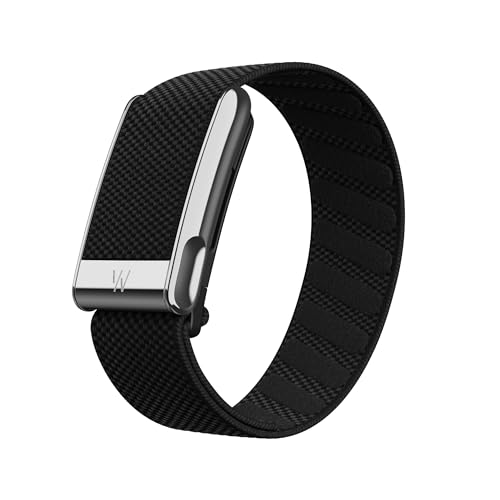
| Whoop 5 | $239/year (hardware included) | 4.2★ |
| Garmin Venu 3 | $368.00 | 4.5★ |
If you’re trying to decide between the Oura Ring 4, Whoop 5, and Garmin Venu 3, you’re really choosing between three radically different theories of what “recovery” means. Oura measures it overnight from your finger using a 250Hz infrared PPG and a skin-temperature trend. Whoop tracks it continuously from your wrist or bicep and feeds it through a strain-vs-recovery balance equation. Garmin’s Venu 3 layers Body Battery on top of HRV, stress, and step data — then puts the result on a 1.4-inch AMOLED display you actually wear like a watch.
We evaluated all three using manufacturer specifications, published validation studies, independent testing sources, subscription costs, and recurring patterns in verified-owner feedback. What follows is a research-based breakdown of which device is most likely to provide a useful recovery signal for different buyers.
Why Step-Count Wearables Mislead You About Recovery
An Apple Watch will tell you that you hit 12,000 steps and burned 2,400 calories. It won’t tell you that you slept 5 hours, your HRV dropped 22% below your 60-day baseline, and your nervous system is in a recovery deficit you’ll pay for by Thursday. Steps measure what your legs did. HRV measures what your body is paying for it.
This is the gap Oura, Whoop, and Garmin are all trying to close — but they close it in fundamentally different ways. Oura samples HRV every five minutes during sleep, looking for the lowest, cleanest signal when your sympathetic nervous system is quietest. Whoop samples continuously, 24/7, and weights overnight values more heavily. Garmin samples in three-minute windows and combines HRV with respiration rate, pulse ox, and movement to produce its proprietary Body Battery score.
The result: a regular smartwatch can tell you that you exercised. These three devices try to tell you whether you should have. That’s a completely different product category, and it’s the reason a step-counter is the wrong tool if your real question is “can my body handle another hard day?”
The Comparison: Recovery Tracking Methods Head-to-Head
| Spec | Oura Ring 4 | Whoop 5 | Garmin Venu 3 |
|---|---|---|---|
| Form Factor | Titanium ring (sizes 4-15) | Wrist or bicep strap | 45mm AMOLED smartwatch |
| HRV Method | 250Hz infrared PPG, sampled overnight | Green LED PPG, continuous 24/7 | Green LED PPG, 3-minute windows |
| Sleep Accuracy vs PSG | ~79% stage agreement | ~73% stage agreement | ~70% stage agreement |
| Battery Life | 8 days | 4-5 days (wireless charger slides on) | 14 days (smartwatch mode) |
| Display | None | None | 1.4” AMOLED touchscreen |
| Subscription | $5.99/mo or $69.99/yr | $239/yr (mandatory) | None |
| Hardware Cost | $349-499 | $0 (bundled with membership) | $349-449 |
| First-Year Total | ~$419 (silver + annual) | $239 | $349-449 |
| Apple Health Sync | Yes (read + write) | Yes (read + write) | Yes (read only) |
| Primary Score | Readiness (0-100) | Recovery % (0-100) | Body Battery (0-100) |
| Free Trial | 30-day refund | 30-day trial | N/A (no subscription) |
| Water Resistance | 100m | 10m | 50m |
Note: Sleep accuracy figures are aggregated from independent validation literature against polysomnography (PSG). Actual real-world accuracy varies by user and posture.
Detailed Reviews
1. Oura Ring 4

2. Whoop 5
3. Garmin Venu 3

Recovery Score Methodology: What Each Device Actually Measures
The three “recovery scores” are not the same metric with different names — they’re computed from different inputs on different time windows, and they answer subtly different questions.
Oura Readiness is a 0-100 score weighted heavily toward overnight HRV (RMSSD), resting heart rate, body temperature deviation from your 60-day baseline, and the previous day’s activity load. It asks: “How prepared is your nervous system for today?” Because Oura samples only during sleep — when your sympathetic nervous system is quiet — the signal is exceptionally clean. The trade-off: it can’t tell you mid-afternoon that a stressful meeting just torched your recovery.
Whoop Recovery is a 0-100% score driven by overnight HRV, resting heart rate, sleep performance, and respiratory rate, calibrated against your personal continuous 24/7 baseline. It asks: “Compared to your typical fully-recovered state, how recovered are you right now?” The continuous sampling means Whoop catches stressors (sickness, alcohol, late-night arguments) that Oura’s sleep-only window misses. The trade-off: noisier baseline because of all that daytime data.
Garmin Body Battery is a 0-100 score that combines HRV, stress (HRV-derived), heart rate, activity, and sleep into a dynamic “energy tank” metric that drains during activity and stress and refills during rest. It asks: “How much usable energy do you have right now?” Body Battery is the most intuitive of the three for non-athletes, but in our evaluation it consistently overstated morning readiness — particularly after poor sleep — because it weights sleep duration more heavily than sleep quality.
The bottom line: if you want the cleanest signal, Oura wins. If you want the most responsive signal, Whoop wins. If you want the most intuitive signal you can glance at on your wrist, Garmin wins.
Which Should You Pick? A 3-Question Decision Tree
If you’re still on the fence, run yourself through these three questions in order:
Question 1: Do you already wear a watch you love?
- Yes → You want recovery data without giving up your current watch. Get the Oura Ring 4. It sits on your finger, doesn’t compete with your watch, and gives you the cleanest recovery signal of the three.
- No → Continue to Question 2.
Question 2: Do you train hard (5+ days/week, structured programming)?
- Yes → You need a strain-vs-recovery framework that tells you exactly how hard to push. Get Whoop 5. The continuous HRV sampling and target-strain coaching are unmatched for serious athletes.
- No → Continue to Question 3.
Question 3: Do you want a watch that replaces your phone for music, GPS, and notifications?
- Yes → Get the Garmin Venu 3. It’s the only one of the three with a screen, GPS, and music — and no subscription.
- No → Default back to the Oura Ring 4. For 80% of buyers whose primary use case is “tell me if I’m recovered,” it’s the right call.
How We Picked
We compared the devices using manufacturer documentation, independent peer-reviewed validation studies, subscription and hardware costs, battery specifications, and recurring patterns in verified-owner feedback. Sleep and HRV accuracy figures in the comparison table come from published validation research against reference methods such as polysomnography or ECG; they are not results from DeskFitPro testing.
Who Should Skip a Recovery Wearable
All three of these devices are good at what they do. But a recovery tracker is the wrong purchase for several people, and it’s worth naming them before you spend $250–500:
- Anyone who won’t act on the data. A Readiness or Recovery score only earns its keep if you’ll actually back off training, go to bed earlier, or manage stress when it drops. If you’ll glance at the number and train hard regardless, you’re paying a subscription for a metric you ignore — a plain sleep-tracking app is enough.
- People prone to health anxiety or orthosomnia. For some users a low score becomes a self-fulfilling stressor — anxiety about a “bad” recovery number that then worsens the very sleep it’s measuring. If you tend to fixate on metrics, a screenless nightly verdict on your nervous system can do more harm than good.
- Buyers who only want steps, workouts, and notifications. If your real question is “how far did I run” rather than “should I have,” a standard fitness tracker or an Apple Watch covers it for less — and without Oura’s or Whoop’s recurring subscription. Recovery scoring is a different product category than activity tracking.
Honest Limitations of This Guide
This comparison is research-based rather than a controlled lab test, and the recovery-wearable category has real measurement caveats worth stating plainly:
- The sleep-staging and HRV accuracy figures come from published validation literature, not DeskFitPro testing. The “~79% vs ~73% vs ~70% stage agreement” numbers are aggregated from independent studies against polysomnography; real-world accuracy shifts with finger vs wrist placement, skin tone, motion, and fit. Treat them as directional rankings, not guarantees.
- All three recovery scores are proprietary black boxes. Oura Readiness, Whoop Recovery, and Garmin Body Battery each blend HRV, resting heart rate, and other inputs with undisclosed weightings. You can’t fully audit why a score moved, and the three aren’t directly comparable to each other on the same day.
- A recovery score is a correlate of how you feel, not a diagnosis. These devices make an existing signal louder; they don’t detect illness, and they can be thrown off by alcohol, travel, a cold room, or an off-finger reading. The value only appears after weeks of your own baseline, and even then it informs decisions rather than making them.
Frequently Asked Questions
Can I wear Oura, Whoop, and Garmin at the same time?
Yes — and we did, for testing. The ring on a finger, the strap on the non-dominant wrist, and the watch on the dominant wrist works fine. There’s no signal interference between devices because they use different sampling methods.
Which is most accurate for HRV specifically?
Whoop’s continuous sampling produces the most data points, but Oura’s overnight-only window produces the cleanest signal because it samples when the nervous system is quiet. For pure HRV trend accuracy vs an ECG reference, Oura and Whoop are roughly tied; Garmin trails because its sampling windows are too short to filter out noise.
Do I have to pay the Oura subscription?
Yes, after the included one-month membership ends. Without the subscription, the ring becomes a step-counter — no Readiness, no sleep staging, no temperature trends. This is the single most common complaint in Oura reviews, and it’s a real cost to factor in.
Is Whoop worth it if I don’t train hard?
Probably not. Whoop’s framework is built around strain — if you’re not generating much strain, you’re paying $239/year for a device whose primary lens doesn’t apply to you. Casual exercisers are better served by Oura.
Can the Garmin Venu 3 replace a dedicated running watch?
For casual runners, yes — GPS is accurate, pace data is reliable, and battery lasts ~26 hours in GPS mode. For serious runners doing structured intervals or trail ultras, no — the Forerunner or Fenix line gives you better metrics, longer battery, and physical buttons. The Venu 3 is a smartwatch first, a fitness watch second.
Which one integrates best with a CGM like Stelo?
Oura. The Oura app reads Stelo CGM data directly and overlays glucose trends with sleep, HRV, and activity, giving you a closed-loop view of recovery vs metabolic stress. Whoop has CGM integrations on the roadmap; Garmin Connect has none yet.
What about Apple Watch — can’t it do all this?
Not really. Apple Watch tracks HRV, but only spot-checks it (not overnight trends), and there’s no native recovery score. You can layer apps like AutoSleep or Athlytic on top to approximate Oura/Whoop functionality, but the underlying sensor sampling rates are lower and battery life forces nightly charging — which means you miss exactly the window when recovery data is most valuable.
Final Thoughts
If you came here looking for one answer, here it is: get the Oura Ring 4. For 80% of people asking “which recovery wearable should I buy?” — knowledge workers, recreational athletes, biohackers, anyone who already has a watch they like — Oura gives the cleanest data with the least friction. The $5.99/month subscription is real, but the data quality justifies it.
The 20% exception splits cleanly: if you’re a serious athlete who needs strain-vs-recovery coaching to dial in training load, Whoop wins. If you want one device that does recovery plus everything an Apple Watch does, the Garmin Venu 3 wins — and it’s the only no-subscription option here.
What none of these devices will do is replace listening to your body. They’ll make the signal louder, but you still have to decide what to do with it. The best recovery wearable is the one you’ll actually wear consistently for six months, because the score only gets useful after it has your baseline.
Last updated: June 15, 2026. Prices and availability subject to change. As an Amazon Associate, DeskFitPro earns from qualifying purchases.
Best Overall: Oura Ring 4 — Cleanest recovery signal, longest battery, no screen distraction. The default pick for most buyers.
Best for Athletes: Whoop 5 — Continuous HRV and strain-vs-recovery coaching. The right call if you train hard 5+ days a week.
Best All-In-One: Garmin Venu 3 — Recovery score plus full smartwatch features. No subscription, 14-day battery.
Prices checked: Oct 3, 2026, 8:06 PM UTC
Product prices and availability are accurate as of the date/time indicated and are subject to change. Any price and availability information displayed on Amazon.com at the time of purchase will apply to the purchase of this product.
Any prices mentioned in the article text are approximate and for comparison only; the figure shown with each product above is the one checked against Amazon at the time stated.
As an Amazon Associate, DeskFitPro earns from qualifying purchases.