As an Amazon Associate, we earn from qualifying purchases.
OMI Full Body PEMF Magnetic Field Therapy Mat
The only sub-$1,500 mat on Amazon with a disclosed square waveform, three programmable frequency modes, and a manufacturer (Oxford Medical Instruments) that publishes Hz settings. Real PEMF, full body, made in Europe.
Check Price on Amazon →At a Glance
- BEST OVERALL: OMI Full Body PEMF Magnetic Field Therapy Mat
- Nalax Magnetic Field Therapy Mat (79"×24")
- HealthyLine PEMF InfraMat Pro 60"×24"
- HealthyLine Jet Mat 72"×24"
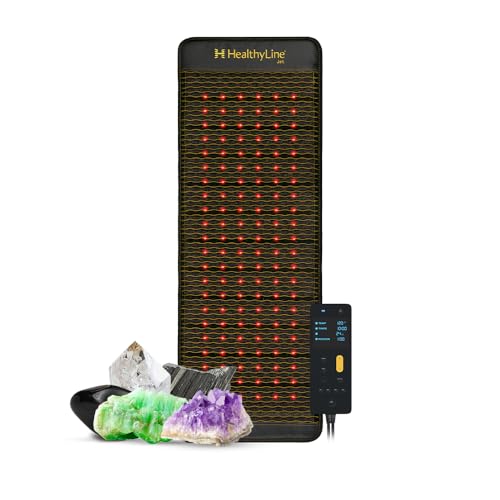
- HealthyLine TAJ Mat 72"×24" (Far-Infrared Only)
| Product | Price as of Oct 3, 2026, 8:06 PM UTC | Rating |
|---|---|---|
| OMI Full Body PEMF Magnetic Field Therapy Mat | $1050.00 | 3.8★ |
| Nalax Magnetic Field Therapy Mat (79"×24") | $839.99 | 4★ |
| HealthyLine PEMF InfraMat Pro 60"×24" | $849.00 | 4.5★ |
| HealthyLine Jet Mat 72"×24" | $1149.00 | 4.6★ |
| HealthyLine TAJ Mat 72"×24" (Far-Infrared Only) | $379.00 | 4.5★ |
The $200 “PEMF mat” you’re eyeing on Amazon is almost certainly not a PEMF device. It’s a heating pad with a few magnets sewn into the lining, sold under a wellness buzzword that legally means nothing on a product listing. Real pulsed electromagnetic field therapy requires three things: a disclosed frequency in Hertz (Hz), a measurable magnetic field strength in microteslas (µT) or gauss, and a defined wave shape. If a product page doesn’t tell you those numbers, it’s not selling you PEMF — it’s selling you a hot blanket with vibes.
We pulled the specs on every PEMF mat we could find on Amazon, checked which ones actually publish frequencies and field strengths, and cross-referenced against the better-known clinical devices (Bemer, iMRS Prime, Pulse Centers). The result is a short list. There aren’t 20 real PEMF mats under $1,500 on Amazon — there are about four, plus a handful of far-infrared crystal mats that are great heat pads but aren’t doing what the marketing implies. Below: the five devices worth your attention, what specs to demand before buying, and why the cheap stuff fails the sniff test.
Health Disclaimer: PEMF therapy is contraindicated for people with pacemakers, defibrillators, insulin pumps, cochlear implants, or other active implanted electronic devices. Also avoid during pregnancy. PEMF research is mixed — most clinical evidence is for bone healing and specific musculoskeletal conditions; broader claims around energy, sleep, and longevity are less established. This article is educational and is not a substitute for medical advice. Talk to your doctor before starting PEMF, especially if you have any cardiac, neurological, or endocrine condition.
Why Most Cheap PEMF Mats Are Just Glorified Heating Pads
”PEMF” stands for pulsed electromagnetic field. The word “pulsed” matters — it means the field is switching on and off at a specific frequency, measured in Hertz. A static magnet sewn into a pad is not PEMF. A heating coil with a magnet next to it is not PEMF. PEMF requires an electrical current pulsing through a coil to generate a time-varying magnetic field, and that field has to be characterized by at least three numbers.
Frequency (Hz). Therapeutic PEMF research clusters in the 0.5 to 100 Hz range. The most cited target is 7.83 Hz — the Schumann resonance, which is the natural electromagnetic frequency of the Earth’s atmosphere. Brain-state frequencies sit nearby: delta (0.5-4 Hz) for deep sleep, theta (4-8 Hz) for relaxation, alpha (8-13 Hz) for calm focus, beta (13-30 Hz) for alert states. A real PEMF device lets you select a frequency in this range or runs pre-programmed protocols built around it. If the product page only says “low frequency PEMF” with no number, that’s a red flag.
Magnetic field strength (µT or gauss). Clinical PEMF devices operate roughly between 1 µT and 10,000 µT (10 mT) at the surface, with most home wellness devices in the 10-200 µT range. For reference, the Earth’s magnetic field is about 25-65 µT, depending on latitude. A device producing 1 µT or less is essentially generating background-level fields — your kitchen wiring puts out more. A device that doesn’t publish field strength at all is hiding the number, which usually means it’s low.
Wave shape. PEMF coils can pulse in different waveforms: sinusoidal (smooth sine wave), square (sharp on-off), sawtooth, or trapezoidal. Square and sawtooth waves contain more harmonics and are what clinical-grade devices like the iMRS and OMI use. Sinusoidal waves are gentler and more common in entry-level devices. If a product description never mentions waveform, the manufacturer either doesn’t know or doesn’t want you to know.
Here’s the test we ran on every Amazon “PEMF” listing: search the product page for the strings “Hz”, “microtesla”, “µT”, “gauss”, and “wave”. Of the top 40 results for “PEMF mat,” fewer than a quarter mentioned any of those terms. The rest sold something called “PEMF” but described features that were entirely about far-infrared heat, amethyst crystals, jade gemstones, and negative ions — none of which is pulsed electromagnetic field therapy. Those are heat pads with rocks on top. They may feel great. They are not what Bemer, iMRS, or Pulse Centers customers are paying $3,000 to $20,000 for.
The five mats below either disclose all three specs, or — in one case — are honestly sold as far-infrared heat without the PEMF marketing pretense.
The Specs That Actually Matter: Hz, µT, Wave Shape
Before you compare any two mats, you need to read the spec sheet — not the marketing copy. Here’s what each number means and what range to look for.
Hertz range. Therapeutic windows depend on what you’re targeting. For general relaxation and sleep, 1-10 Hz is the standard band, with the Schumann 7.83 Hz baseline being the default starting frequency on most devices. For waking energy and circulation, 10-30 Hz. The handful of FDA-cleared clinical PEMF devices for nonunion bone fractures run at much higher frequencies (around 75 Hz for the EBI Bone Healing System), but those aren’t what consumer mats target. A mat that lets you select frequencies anywhere from about 1 Hz to 100 Hz covers every protocol you’d reasonably want to run. A mat with one fixed frequency — say, “advanced PEMF” with no number — is essentially a single-setting device and you can’t experiment.
Field strength. Consumer mats typically operate between 10 µT and 200 µT, which is roughly 1-10x Earth’s natural field. That’s enough to elicit the cellular responses PEMF researchers care about (the field has to be above background to actually do anything) without crossing into the high-intensity territory where you’d want medical supervision. Clinical devices used for bone healing can hit 1,000-10,000 µT briefly, but those are localized coils, not full-body mats. If a mat doesn’t publish field strength, assume it’s at the low end.
Wave shape. Square waveforms generate a richer harmonic spectrum — when the field switches state sharply, you get not just the fundamental frequency but a stack of higher harmonics, which is why square waves are the engineering choice for devices targeting broad cellular response. Sinusoidal waves are smoother and gentler, often used in devices designed for sensitive users or sleep applications. Sawtooth waves split the difference. The OMI mat is square-wave; the Bemer line is a proprietary sawtooth; the iMRS Prime uses sawtooth as well.
Pre-programmed protocols. A device with three or more pre-set programs (morning energy, evening relaxation, deep sleep, recovery) is doing meaningful work to deliver different physiological responses. A device with one “on” button is a hot blanket.
Heat as a separate feature. Most PEMF mats also include far-infrared heating. That’s fine — and arguably useful — but understand that the heat is doing something completely different from the magnetic field. Heat penetrates tissue and increases local circulation. PEMF affects cellular ion exchange and membrane potential. If your mat warms up but the field strength is undisclosed or zero, you’re getting heat therapy, full stop.
Detailed Reviews
1. OMI Full Body PEMF Magnetic Field Therapy Mat
 Check Price on Amazon →


PEMF Mat Comparison Table
| Mat | Hz Range | µT Field | Wave Shape | Programs | Heat? | Size (in) | Price | FDA? |
|---|---|---|---|---|---|---|---|---|
| OMI Full Body | ~1-30 Hz user-set | Not published | Square | 3 (P1/P2/P3) | No | 65×25.5 | $1,050 | No (wellness) |
| Nalax | 1-99 Hz | Not published | Not published | Adjustable | Yes (FIR) | 79×24 | $999.99 | No (wellness) |
| HealthyLine InfraMat Pro 60 | Multi-wave (cycled) | Not published | Not published | Multiple presets | Yes (FIR + red light) | 60×24 | $849 | Registered |
| HealthyLine Jet Mat 72 | Multi-wave (cycled) | Not published | Not published | Multiple presets | Yes (FIR + red light) | 72×24 | $1,499 | Registered |
| HealthyLine TAJ 72 | None (no PEMF) | N/A | N/A | Heat presets | Yes (FIR only) | 72×24 | $379 | Registered |
What PEMF Actually Does (Real Clinical Evidence vs. Marketing Claims)
PEMF research is real, but it’s narrower than the marketing suggests. Here’s the honest map.
FDA-cleared use: nonunion bone fractures. The strongest clinical evidence for PEMF is in bone healing — specifically, fractures that have failed to heal naturally after 6+ months. Devices like the EBI Bone Healing System are FDA-cleared for this exact use, with controlled trials going back to the 1980s. The mechanism is reasonably well understood: pulsed fields appear to upregulate osteoblast activity and improve bone matrix mineralization. If you have a nonunion fracture, talk to your orthopedist about PEMF.
Moderate evidence: chronic musculoskeletal pain and diabetic neuropathy. Several randomized trials have shown reductions in chronic low back pain, knee osteoarthritis pain, and diabetic peripheral neuropathy with regular PEMF sessions over 4-8 weeks. Effect sizes are modest but real, with meaningful reductions in pain scores versus sham devices. This is where consumer PEMF mats have their strongest case.
Moderate evidence: post-surgical recovery and wound healing. PEMF coils used post-surgically appear to reduce swelling and improve tissue repair markers. Most of this research is on localized coil devices in clinical settings, not full-body home mats.
Emerging evidence: depression and anxiety. There’s a growing body of work on transcranial PEMF for depression, but the devices used are head-targeted and run at frequencies and intensities very different from a full-body wellness mat. The mat is unlikely to replicate those effects directly.
Thin evidence: “cellular energy,” ATP production, longevity. Marketing copy on PEMF mats often invokes mitochondrial function, ATP synthesis, and “cellular tune-up.” There are some in-vitro studies showing PEMF affects mitochondrial activity in cell cultures. Extrapolating that to a human lying on a mat for 20 minutes and feeling “more energized” is a leap that the published literature doesn’t directly support. The energy boost may be real subjectively; the proposed mechanism is speculative.
Sleep claims. Some users report improved sleep with evening PEMF sessions in the 1-4 Hz (delta) range. Small studies on this are encouraging but not definitive. The mechanism is plausible — entrainment of brain rhythms toward sleep frequencies — but the effect sizes vary wildly between users.
Bottom line: PEMF is not snake oil, but it’s also not the cure-all the marketing suggests. Buy with realistic expectations.
How to Use a PEMF Mat: Protocols, Timing, and Stacking
Session length. 20-40 minutes is the standard. Less than 20 and you’re not giving the field enough exposure time; more than 40 doesn’t appear to add benefit and can leave some sensitive users feeling drained. Start at 20 minutes for your first week.
Morning vs. evening. Higher frequencies (15-30 Hz, beta range) are for morning energy. Lower frequencies (1-8 Hz, delta and theta) are for evening wind-down and sleep prep. Most people end up doing a 20-min morning session at ~20 Hz and a 20-min pre-bed session at 3-8 Hz. The OMI and Nalax both let you dial these in directly.
Can you sleep on it? Some mats explicitly say no (Nalax). The OMI’s protocol sheet describes evening use but the controller has a timer, so it’ll shut off after your set duration. We don’t recommend leaving any electrical mat on while sleeping — that’s a general safety call, not a PEMF-specific one.
Stacking with red light. PEMF and red light therapy are fully compatible — different mechanisms, no known interactions. A common stack is 15 min of red light therapy at 660/850 nm followed by a 20-min PEMF session, especially for post-workout recovery.
Stacking with grounding. Grounding (earthing) mats deliver Earth’s static voltage to your body via a conductor. PEMF delivers a pulsed magnetic field. The two don’t interfere and some users do both — but understand they’re different therapies, not the same thing dressed up.
Frequency of use. Daily is fine for most users. The clinical bone-healing protocols run 3-10 hours per day, but those are specific medical applications. For general wellness, one 20-40 min session daily is a sensible cap.
Who Should NOT Use PEMF
PEMF is contraindicated for the following groups. These aren’t optional disclaimers — the magnetic field can directly interfere with implanted electronics or developing tissue.
- Anyone with a pacemaker or implanted defibrillator (ICD). The pulsed field can disrupt device pacing or trigger inappropriate shocks.
- Insulin pump users. Magnetic fields can interfere with pump electronics and dosing accuracy.
- Cochlear implant users. Field interference can damage the implant or distort hearing function.
- Pregnancy. No safety data exists for PEMF during pregnancy. Don’t experiment.
- Active bleeding or hemorrhage. PEMF can increase local circulation, which is bad if you’re bleeding.
- Active malignancy. Some PEMF protocols increase cellular metabolism, which is contraindicated near active tumors. Talk to your oncologist before any PEMF use during cancer treatment.
- Organ transplant recipients on immunosuppression. Effects on transplant tissue are not characterized.
- Children under 18. Pediatric safety data is limited.
If you’re on any prescription medication that affects heart rhythm, blood pressure, or seizure threshold, ask your prescriber before starting.
How We Picked These
- Spec disclosure. We started with every PEMF mat on Amazon and immediately eliminated any product that didn’t disclose at least one of: frequency in Hz, magnetic field strength in µT, or wave shape. This cut the list from ~40 products to about 12.
- Manufacturer track record. We filtered for brands with at least two years on the market, a real customer service channel, and documented protocol guides. Anonymous AliExpress relabels were cut.
- Review depth. We read long-form verified reviews — not star averages. We were looking for users describing actual frequency settings, protocol experiences, and durability over multi-year use. The OMI’s review depth is what convinced us on that pick despite its modest 3.8 star average.
- Price-to-spec ratio. A $3,000 mat with great specs isn’t on this list because most readers won’t buy one. We capped at $1,500 and gave preference to devices with clear spec sheets at that price tier.
- Honest budget option. We deliberately included a non-PEMF heat-only mat because the alternative — recommending a $300 “PEMF mat” that’s actually just a heat pad — would have been dishonest. Buy the right tool for the job.
We rejected the entire category of sub-$300 Amazon “PEMF” mats. Every one we examined either failed to disclose specs entirely or contained language that made clear the “PEMF” was actually just a static magnet next to a heating element. If you see a “PEMF mat” under $300, assume it’s a heat pad until proven otherwise.
Honest Limitations of This Guide
We’re harder on this category than most, and even so, there’s a lot we can’t verify. Read these caveats before spending four figures on a mat.
- None of the five mats publishes its magnetic field strength in µT. Field strength is one of the three specs that actually defines PEMF, and every pick here — including our top choice, the OMI — leaves it blank. We rank on disclosed Hz range and waveform, but “we don’t know the microtesla output” is an honest gap that applies to the whole list, not just the budget end.
- The clinical evidence is narrow and mostly not from full-body mats. The strongest PEMF research is on nonunion bone fractures and localized clinical coils — not a person lying on a wellness mat for 20 minutes. Extrapolating those results to sleep, energy, or general recovery on these specific consumer devices is a reasonable hope, not a proven outcome.
- We did not measure any mat’s output ourselves. We have not put a gaussmeter on the OMI, Nalax, or HealthyLine units to confirm they deliver what the marketing implies. Our picks reflect spec disclosure, manufacturer track record, and review depth — and the OMI’s modest 3.8-star average is a real signal we can’t wave away.
Frequently Asked Questions
Is PEMF the same as TENS?
No. TENS (transcutaneous electrical nerve stimulation) sends electrical current directly through your skin via adhesive electrodes to interrupt pain signals at the nerve level — it works on the gate-control theory of pain. PEMF generates a magnetic field that passes through tissue without direct electrical contact, affecting cellular ion exchange and membrane potential. TENS feels like a buzz or tingle; PEMF feels like nothing (or sometimes a faint warmth or pulse sensation). Different mechanisms, different use cases. If you want fast localized pain interruption, get a TENS unit. If you want long-term cellular-level effects, PEMF.
Can I use PEMF every day?
Yes, for general wellness use. One 20-40 minute session daily is the standard cap for consumer mats. Clinical bone-healing protocols go much longer (3-10 hours daily) but require medical supervision and target very specific tissue. For wellness use, daily is fine and most users settle into either a morning routine or an evening wind-down.
PEMF vs. red light therapy — which should I get first?
They do different things. Red light (660 nm and 850 nm) delivers photons to mitochondria via photobiomodulation — local effect on skin and surface tissue, well-supported for skin and joint conditions. PEMF delivers a magnetic field that penetrates deeper tissue regardless of pigmentation or position. If you’re recovering from a specific surface injury, red light first. If you’re targeting deep musculoskeletal pain or systemic relaxation, PEMF first. They stack fine for users who want both, with no known interference.
Why is iMRS or Bemer so much more expensive than these Amazon mats?
Three reasons. First, iMRS and Bemer publish complete spec sheets (waveform, frequency curves, field intensity at every layer of the device) and submit to international medical-device standards. Most Amazon mats don’t. Second, both have proprietary waveform IP — Bemer uses a specific multi-wave signal that took years to develop. Third, the price includes a dealer network and in-person training, which inflates retail substantially. The actual hardware delta between an OMI ($1,050) and an iMRS Prime ($4,500) is real but smaller than the price gap suggests. If you can’t afford the clinical brands, the OMI is the closest engineering approximation on Amazon.
How do I know if a “PEMF mat” is actually just a heating pad?
Read the product description and search for the strings “Hz”, “microtesla”, “µT”, “gauss”, and “waveform.” If none of those appear, it’s not a real PEMF device — it’s a heating pad with magnetic marketing. Real PEMF devices know their specs and publish them. If the only specs are temperature, gemstone composition, and “negative ions,” you’re buying a heat pad.
Does PEMF interfere with my Apple Watch or fitness tracker?
Generally no for consumer-grade wellness mats — the field strength is low enough that nearby small electronics are unaffected. We’ve used both the OMI and HealthyLine mats with an Apple Watch on the wrist with no measurable disruption. That said, take the watch off during sessions if you want a clean HRV reading; the field can transiently affect sensor accuracy.
Do I need to be naked, or can I use a PEMF mat through clothing?
Through clothing is fine. The magnetic field passes through fabric (and even most building materials) with no meaningful attenuation. You can lie on a PEMF mat fully clothed with no loss of effect — this is one area where PEMF beats red light, since red light requires direct skin exposure to be useful.
Final Thoughts
PEMF is one of the most spec-opaque categories in the wellness equipment market. The brand names that publish their engineering — OMI, iMRS, Bemer, Pulse Centers — are dramatically outnumbered by mats that slap “PEMF” on the label without disclosing frequency, field strength, or waveform. The result is a market full of $200 heat pads sold as $200 PEMF devices, and a small handful of legitimate devices that cost $1,000+ for good reasons.
If you want real PEMF on Amazon, the OMI is the answer. If you want PEMF plus heat at the lowest honest price point, the Nalax is the answer. If you want the multi-therapy stack in one device, HealthyLine’s InfraMat Pro is the answer. And if you actually just want a heat pad and were about to fall for the PEMF marketing on a $250 mat, save your money — get the HealthyLine TAJ for $379 and skip the magnets-and-vibes story.
Don’t pay PEMF prices for heat-pad performance. Read the spec sheet first. If the manufacturer can’t tell you the Hz, the µT, and the wave shape, they’re not selling you PEMF — they’re selling you a story.
Last updated: July 01, 2026 at 01:10 PM ET. Prices and availability shown are accurate as of this time and are subject to change. As an Amazon Associate, DeskFitPro earns from qualifying purchases.
Our Top Two Picks
Square waveform, user-adjustable Hz, three programmable modes, included portable medallion. The only Amazon mat that meets the spec bar.
Check Price on Amazon →Skip the PEMF marketing tax. Get real far-infrared heating, real EMF shielding, real warranty — at $379 instead of $1,000+. Add PEMF later if you want it.
Check Price on Amazon →Prices checked: Oct 3, 2026, 8:06 PM UTC
Product prices and availability are accurate as of the date/time indicated and are subject to change. Any price and availability information displayed on Amazon.com at the time of purchase will apply to the purchase of this product.
Any prices mentioned in the article text are approximate and for comparison only; the figure shown with each product above is the one checked against Amazon at the time stated.
As an Amazon Associate, DeskFitPro earns from qualifying purchases.
Related Products
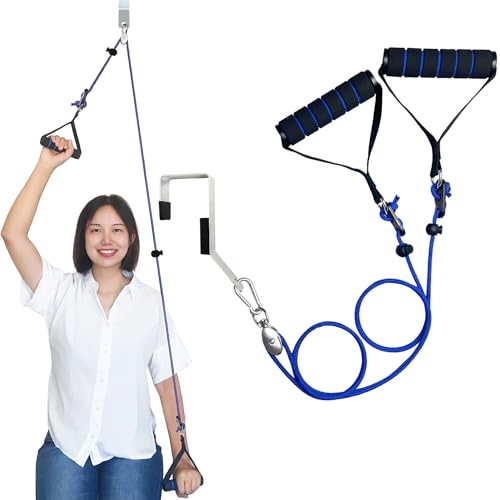
Shoulder Pulley Over-Door System
Check Price on Amazon →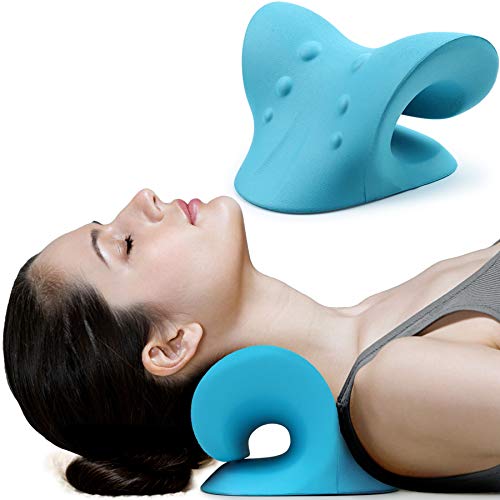
RESTCLOUD Neck and Shoulder Relaxer
Check Price on Amazon →