As an Amazon Associate, we earn from qualifying purchases.
At a Glance
- EDITOR'S PICK: RESTCLOUD Neck and Shoulder Relaxer
- BEST OVER-THE-DOOR: DMI Over-the-Door Cervical Traction Device
- BEST INFLATABLE: Inflatable Cervical Neck Traction Collar
- BEST HEATED / RED LIGHT: FliKEZE Heated Neck Stretcher with Red Light Therapy
- PT CLINIC GRADE: ComforTrac Deluxe Home Cervical Traction Kit
| Product | Price as of Sep 10, 2026, 7:26 PM UTC | Rating |
|---|---|---|
| RESTCLOUD Neck and Shoulder Relaxer | $17.99 | 4.2★ |
| DMI Over-the-Door Cervical Traction Device | $19.99 | 3.7★ |
| Inflatable Cervical Neck Traction Collar | $21.97 | 3.8★ |
| FliKEZE Heated Neck Stretcher with Red Light Therapy | $119.99 | 4★ |
| ComforTrac Deluxe Home Cervical Traction Kit | $369.00 | 4.1★ |
A cervical traction device (also called a neck stretcher, neck hammock, or cervical decompression device) gently pulls the head away from the shoulders to create space between the cervical vertebrae. That space lets compressed nerves decompress, lets tight neck muscles release, and reverses the “tech neck” forward-head posture that 8 hours of screen time builds into your neck every day. The category splits into 5 product types — chiropractic pillow, over-the-door traction, inflatable collar, electric air-pump device, and red-light-heated hybrid. The right pick depends on the cause: post-injury rehab needs different tools than desk-worker tech neck.
This guide compares the 5 best cervical traction devices on Amazon for 2026, ranked on traction method, build quality, price, ease of use, and verified review base. Includes the volume leader (92,300+ reviews), the over-the-door PT classic, the inflatable collar with 10,800 reviews, and the modern heated/red-light hybrid.
Video by Bob & Brad on YouTube — two licensed physical therapists with 5M+ subscribers. 331,000+ views on this neck decompression walkthrough.
What Does a Cervical Traction Device Do?
A cervical traction device applies gentle, sustained pull along the axis of the spine to create temporary space between the vertebrae. That space achieves three things:
- Decompresses nerve roots. Pinched cervical nerves cause radiating pain into the shoulder, arm, and hand. Traction relieves that compression for hours after a session.
- Stretches the deep neck muscles. The suboccipital muscles at the base of the skull are chronically tight in desk workers and tension headache sufferers. Standard stretches don’t reach them; traction does.
- Reverses tech neck posture. 8 hours of looking down at a screen shortens the front of the neck and lengthens the back. Traction repeats the opposite movement — pulling the head up and back — which over weeks restores cervical alignment.
Most devices deliver 10–15 lb of pull, sustained for 5–15 minutes per session. Physical therapists typically prescribe 1–2 sessions per day. Results show up within 1–2 weeks for desk-worker tension; post-injury recovery is a longer arc.
The 5 Types of Cervical Traction Devices
- Chiropractic pillow / neck-and-shoulder relaxer. You lie on it for 10 minutes. The contoured shape applies gentle posterior pressure that mimics traction. Cheapest, easiest, and the category volume leader. Best for tech neck and tension headaches.
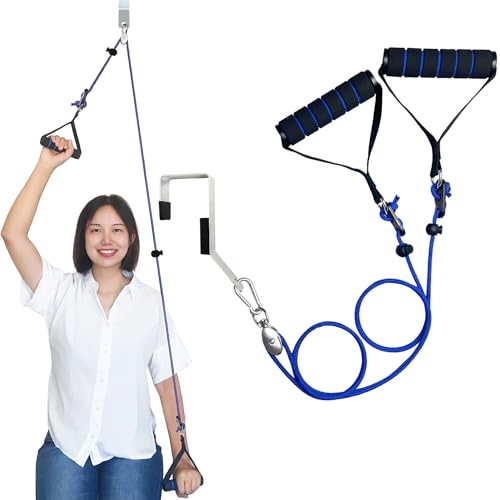
- Over-the-door traction. Strap goes over a door, you sit in a chair with the head harness, body weight provides the pull. The PT-clinic classic, most-recommended by physical therapists.
- Inflatable neck collar. Sits on the shoulders, you pump it up, it expands vertically to lift the head off the shoulders. Portable, works anywhere. Best for travel or while watching TV.
- Electric air-pump device. Same idea as the inflatable collar but with a motorized pump and programmable settings. Premium tier, mostly redundant for healthy users.
- Heated / red-light hybrid. Newer 2025/2026 product category. Wraps around the neck, applies heat plus 660nm red light for muscle relaxation. Different mechanism than mechanical traction — pairs well with a real traction device, not a replacement.
Best Cervical Traction Devices at a Glance
- Editor’s Pick / Volume Leader: RESTCLOUD Neck and Shoulder Relaxer — $16.99, 4.2☆ across 92,300+ reviews, 3,000 bought per month
- Best Over-the-Door: DMI Over-the-Door Cervical Traction — $19.99, 6,100 reviews, FSA/HSA eligible
- Best Inflatable Collar: Inflatable Cervical Neck Traction Collar — $19.99, 10,800 reviews, 2,000 bought per month
- Best Heated / Red Light Hybrid: FliKEZE Heated Neck Stretcher with Red Light Therapy — $109.99, wireless, 1,000 bought per month
- Best Professional / PT Clinic Grade: ComforTrac Deluxe Home Cervical Traction Kit — $369, 4.1☆ across 1,500 reviews, prescribed-grade home device
Detailed Reviews
1. RESTCLOUD Neck and Shoulder Relaxer
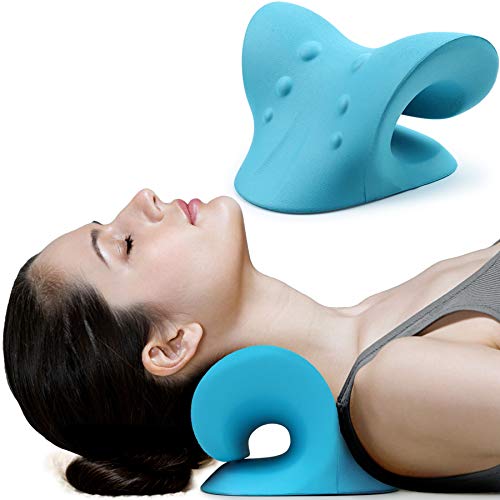
Why it's here: 92,300 reviews tells you everything — this is the cervical traction device the entire internet bought. For desk workers dealing with tech neck, tension headaches, or end-of-day stiffness, the 10-minutes-lying-down protocol is the only one most people actually stick with. At $16.99 it's also the lowest-risk way to find out whether mechanical traction works for your specific neck.
- 92,300 reviews at 4.2☆ is unmatched social proof in any health product category — if it had a serious flaw it would have surfaced 70,000 reviews ago
- $16.99 makes it the lowest-commitment entry to cervical traction
- Zero learning curve — lie down on it during a podcast or audiobook for 10 minutes
- The mechanism (contoured posterior pressure) is the closest thing to chiropractic adjustment you can self-administer safely
- 4.2☆ (not 4.6☆+) reflects a real subset of users who find the shape uncomfortable for their cervical curve — check return policy
- Best for tech neck and tension headaches; less effective for severe disc compression that needs real pull (use the DMI Over-the-Door for that)
- Plastic shell can feel hard — some users add a thin towel over it
2. DMI Over-the-Door Cervical Traction Device

Why it's here: If you have actual cervical disc compression, pinched nerve symptoms (numbness or tingling down the arm), or a PT has prescribed home traction, this is the right tool. The water-bag weight system delivers therapeutic-grade pull that the chiropractic pillow can't replicate. For pure desk-worker tech neck, the pillow is enough; for clinical-grade decompression, you need this.
- This is the device design Bob & Brad and most YouTube PTs recommend when they say “cervical traction”
- Adjustable water-bag weight lets you start gentle (5 lb) and progress to therapeutic doses (15–20 lb)
- FSA / HSA eligibility brings the effective cost below $14 with pre-tax dollars
- The real pull from gravity-fed traction is meaningfully different from a passive pillow — this works for disc-compression issues the pillow can't reach
- 3.7☆ rating is lower than the pillow picks — reflects setup complexity (some users find the head harness fiddly)
- Requires 10–15 minutes of dedicated sitting — not something you do while watching TV
- Door anchor strap can shift on hard pulls (similar to the shoulder pulley complaint)
3. Inflatable Cervical Neck Traction Collar

Why it's here: The right pick for users who want passive traction they can use during other activities. Sit at your desk wearing it during the last 15 minutes of work, on a plane, or watching a movie. Most-portable option in the category and the second-most-reviewed.
- Portable design lets you use it while doing other things — the highest-compliance device in this guide for that reason
- 10,800 reviews at 3.8☆ is real social proof at this price tier
- $19.99 puts it in the same price tier as the RESTCLOUD pillow and DMI over-door — pick by mechanism preference, not price
- Quick to set up (~30 seconds vs 2–3 minutes for the over-door)
- 3.8☆ rating reflects the same fit issue as the pillow — users with shorter or longer necks report uncomfortable pressure
- The hand pump can hiss / leak after 6–12 months of daily use (expected at this price)
- Inflated collar looks unusual — not what you wear in front of coworkers
4. FliKEZE Heated Neck Stretcher with Red Light Therapy

Why it's here: For users who already use heat or red light therapy elsewhere (we cover red light face masks and full-body panels in separate guides) and want to add neck-specific application. Best paired with a mechanical traction device, not used as the only treatment. Skip this if you're trying to fix actual cervical disc issues.
- Heat plus red light is a genuinely different mechanism than mechanical traction — targets muscle tension and inflammation rather than disc compression
- Wireless design lets you wear it while moving around, not anchored to a door or chair
- Memory-foam shape is comfortable for the 30+ min sessions red light therapy needs to be effective
- Pairs well with mechanical traction (use pillow / over-door first, then this) for a layered protocol
- $110 vs $17 for the RESTCLOUD — only worth it if you specifically want the heat / red light modality
- Only 109 reviews — far less validated than the >$20 picks above (newer product)
- Not a true cervical traction device — this is muscle / heat therapy in the same form factor
5. ComforTrac Deluxe Home Cervical Traction Kit
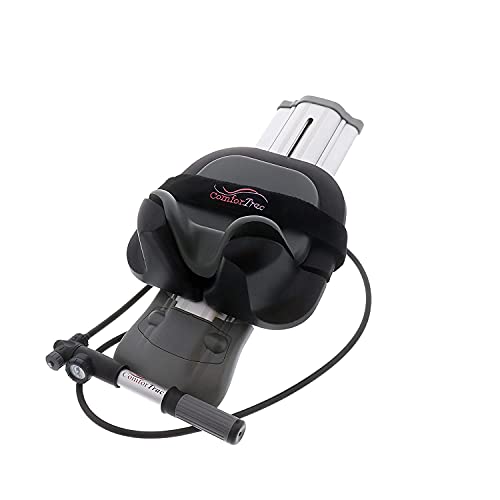
Why it's here: A traction device is a different purchase from a simple comfort cushion. Use only with appropriate clinical guidance and the manufacturer’s instructions; this guide does not establish whether traction suits your condition.
- This is the same device you'd be prescribed at a PT clinic — clinical-grade pull, clinical-grade adjustability
- The only home device in this guide that delivers true therapeutic-dose traction (up to 50 lb)
- Adjustable angle targets specific vertebrae — the lower picks pull the whole cervical spine the same way
- For users with diagnosed disc compression or post-surgical needs, this is the correct tool
- $369 vs $17 for the RESTCLOUD — this is 22x the price of the volume leader
- Overkill for tech neck or tension headaches — you don't need 50 lb of pull to fix screen posture
- Setup is more involved — takes 5 min vs 30 seconds for the pillow
- Only buy this if a healthcare provider recommended a clinical-grade home device
How to Use a Cervical Traction Device (and What to Avoid)
Most cervical traction injuries come from users pulling too hard, too fast. The protocol is consistent across device types:
- Start gentle. First session at the lightest setting (5 lb for over-door, partial inflation for collars, lying for 5 min on a pillow). The cervical spine needs time to adapt.
- 10–15 minute sessions, 1–2x daily. More is not better — longer sessions don’t increase benefit but do increase the chance of post-session soreness.
- Stop immediately if you feel: dizziness, nausea, increasing numbness or tingling in the arms, sharp pain (vs the dull stretch of normal traction), or vision changes. These are signs you’re pulling too hard or have an underlying issue traction is aggravating.
- Get clearance for severe cases. If you have herniated discs, vertebral artery issues, severe osteoporosis, or recent neck surgery, talk to a doctor before using any traction device.
For desk workers managing tech neck with no diagnosed condition, daily 10-minute sessions with the RESTCLOUD pillow or DMI Over-the-Door are well-tolerated. Bob & Brad’s full walkthrough (embedded above) covers the safe-setup checklist in detail.
Who Should Skip a Neck Stretcher
Cervical traction helps a specific set of problems. Three buyers who should pause before adding one to the cart:
- Anyone with numbness or tingling running down the arm. That’s a nerve-root sign, and the $17 chiropractic pillow won’t touch it — the pillow applies posterior pressure, not the directional pull a compressed nerve needs. Get evaluated by a clinician first; if traction is appropriate, the DMI Over-the-Door or ComforTrac deliver the real pull, not the pillow.
- People who won’t do a daily 10-minute session. Every device here works on compliance, and traction relief is largely temporary between sessions. If you know you won’t lie down or set up a door strap most days, your money is better spent on raising your monitor to eye level and taking hourly screen breaks — the cause-side fixes that don’t depend on you remembering a routine.
- Anyone with osteoporosis, vertebral artery concerns, or recent neck surgery. Pulling on a spine with reduced bone density or compromised blood flow is a real risk, not a caution to wave off. Skip every device on this list until a physician clears you specifically.
Honest Limitations of This Guide
Cervical traction has a long clinical track record, but a few things deserve straight talk:
- The evidence for lasting relief in ordinary “tech neck” is mixed. Traction is well-established for certain radicular (nerve-compression) cases, but for garden-variety desk-worker stiffness the benefit is often short-lived — it eases tension for hours, not a structural fix. Consistency and posture changes carry most of the durable improvement.
- The pillow-style devices don’t do what the over-door devices do. A contoured chiropractic pillow creates gentle posterior pressure that feels like traction; it is not the axial pull that decompresses nerve roots. Marketing in this category blurs the two, and it’s the single most common reason buyers feel let down.
- Fit is anatomy-dependent, which is why even the category leader sits at 4.2 stars. Neck length and cervical curve determine whether a given shape feels like relief or like a hard edge. There’s no universal-fit device here, and a portion of every product’s negative reviews traces to that mismatch rather than a build flaw.
How We Picked These
We confirmed each device’s ASIN, price, and review count against live Amazon listings, then organized the five picks by traction method — chiropractic pillow, over-the-door, inflatable collar, heated/red-light hybrid, and clinic-grade kit — because the right choice depends on the cause of your neck pain, not on a single ranking. We cross-referenced which device types physical therapists actually recommend, drawing on the Bob and Brad walkthrough embedded above (two licensed PTs), and matched each pick to the use case it genuinely serves rather than pushing everyone toward the most expensive option.
We did not hands-on test all five units side by side; the rankings rely on device design, verified specs, review-base validation, and PT-recommended methodology. Prices here move, and the newer heated/red-light entry has a thin review base, so treat that one as less validated than the high-volume picks.
Frequently Asked Questions
What is the best cervical traction device for home use?
For the vast majority of users — desk workers with tech neck, tension headaches, or end-of-day stiffness — the RESTCLOUD Neck and Shoulder Relaxer at $16.99 is the right call. 92,300+ reviews validate the build, no learning curve, and the 10-minute lying-down protocol is the only one most people actually do daily. For clinical disc compression or post-surgical recovery, the ComforTrac at $369 is the appropriate tool.
Are cervical traction devices safe?
For healthy adults using moderate settings, yes. They’ve been used in physical therapy for decades. The risk profile increases for users with herniated discs, vertebral artery issues, severe osteoporosis, or recent neck surgery — those users should get clearance from a physician before home traction. Stop any device immediately if you feel dizziness, increasing numbness/tingling, or sharp pain.
How long should you use a neck stretcher?
10–15 minutes per session, 1–2 sessions per day. Beginners should start at 5–10 minutes and the lightest setting. More time is not more benefit — the cervical spine adapts to the stimulus regardless of duration past 15 minutes.
Does the RESTCLOUD neck pillow actually work?
For tech neck, tension headaches, and general desk-worker neck stiffness, yes — 92,300 reviews at 4.2☆ is the strongest signal you can ask for. For diagnosed cervical disc herniation, no — the pillow applies posterior pressure but doesn’t generate the directional pull that decompresses compressed nerve roots. Use the DMI Over-the-Door or ComforTrac for that.
Cervical traction vs neck hammock — what’s the difference?
“Neck hammock” is a brand name for one specific style of over-the-door cervical traction device (the original product by The Neck Hammock company). It’s the same category as the DMI Over-the-Door pick on this list — both use a door anchor and head support to deliver gravity-fed traction. The DMI has a longer track record on Amazon, more reviews, and FSA/HSA eligibility, which is why it’s the over-the-door pick in this guide.
Can a cervical traction device fix tech neck?
It can reduce the symptoms (tension headaches, stiffness, forward-head posture) but it doesn’t fix the cause, which is hours of looking down at a screen. The full fix combines: daily 10-min traction sessions + breaking up screen time + addressing the screen height so you’re not looking down at it. The traction device handles the symptom side; ergonomic changes handle the cause side.
Do you need a doctor’s prescription for home cervical traction?
No, all 5 picks on this list are over-the-counter. However, if you have herniated discs, spinal stenosis, vertebral artery issues, severe osteoporosis, or recent neck/spine surgery, get medical clearance before using any traction device at home. The ComforTrac specifically is also sold by PT clinics as part of prescribed home programs.
Final Thoughts
For most desk workers managing tech neck, tension headaches, or end-of-day stiffness, the RESTCLOUD Neck and Shoulder Relaxer at $16.99 is the right call. 92,300+ reviews makes it the most-validated cervical traction product on Amazon, the 10-minutes-lying-down protocol is the only one most people actually stick with, and the price puts it under the threshold of “is this worth trying.”
If you have diagnosed cervical disc compression or a PT-prescribed home protocol, step up to the DMI Over-the-Door at $19.99 for therapeutic-grade pull. For travel or while-you-work use, the inflatable collar at $19.99 is portable and 10,800 reviews validate the build.
Pair the cervical traction device with our shoulder pulley, steel mace, and slant board guides for the complete top-to-bottom desk-worker mobility stack: neck traction restores cervical alignment, shoulder pulley restores overhead reach, mace restores rotation, and slant board restores ankle dorsiflexion. Each tool targets a specific tissue that 8 hours of sitting locks up.
Last updated: July 01, 2026 at 01:09 PM ET. Prices and availability shown are accurate as of this time and are subject to change. As an Amazon Associate, DeskFitPro earns from qualifying purchases.
Ready to Buy?
Prices checked: Sep 10, 2026, 7:26 PM UTC
Product prices and availability are accurate as of the date/time indicated and are subject to change. Any price and availability information displayed on Amazon.com at the time of purchase will apply to the purchase of this product.
Any prices mentioned in the article text are approximate and for comparison only; the figure shown with each product above is the one checked against Amazon at the time stated.
As an Amazon Associate, DeskFitPro earns from qualifying purchases.