As an Amazon Associate, we earn from qualifying purchases.
Tru Niagen (Nicotinamide Riboside)
The only patented, trademarked NR product on the market (Niagen, from ChromaDex) with the deepest clinical trial dossier of any NAD+ precursor — including the safety studies the FDA actually reviewed. 300 mg per capsule, one a day, no stacking gimmicks. The conservative, evidence-first pick.
Check Price on Amazon →At a Glance
- BEST OVERALL: Tru Niagen 300 mg (Nicotinamide Riboside)
- BEST NMN: partiQlar NMN 500 mg
- BEST COMBO FORMULA: Thorne ResveraCel (NR + Resveratrol + Quercetin + TMG)
- BEST PHARMA-GRADE NMN: ProHealth NMN Pro 1000 (Uthever)
- BEST LIPOSOMAL NAD+: Quicksilver Scientific NAD+ Gold
| Product | Price as of Oct 3, 2026, 8:06 PM UTC | Rating |
|---|---|---|
| Tru Niagen 300 mg (Nicotinamide Riboside) | $49.00 | 4.4★ |
| partiQlar NMN 500 mg | $44.00 | 4.5★ |
| Thorne ResveraCel (NR + Resveratrol + Quercetin + TMG) | $60.00 | 4.6★ |
| ProHealth NMN Pro 1000 (Uthever) | $58.95 | 4.5★ |
| Quicksilver Scientific NAD+ Gold | $45.00 | 4.3★ |
Walk down the longevity aisle on Amazon and you’ll find dozens of products labeled “NAD+” — capsules, powders, gummies, sublingual sprays, all promising more energy, sharper cognition, and a slower biological clock. The problem: oral NAD+ doesn’t really work. NAD+ is a 663-dalton molecule that gets degraded by gut enzymes (CD38 chief among them) before it can cross the intestinal wall in any meaningful quantity. The body raises NAD+ levels by taking in precursors — NMN (nicotinamide mononucleotide) and NR (nicotinamide riboside) — which absorb cleanly and convert to NAD+ inside cells. That’s the entire premise of the modern longevity supplement category, and it’s the reason David Sinclair famously takes NMN, not NAD+ capsules.
This guide picks the 5 NAD+ precursor supplements actually worth buying in 2026, explains why oral NAD+ is mostly marketing (with one specific exception: liposomal delivery), and walks through the NMN-vs-NR debate honestly. We’ll cover the FDA’s 2022 NMN reclassification controversy, the David Sinclair / resveratrol / TMG biohacker stack, and the very real reasons some people should not be taking any of this stuff.
Health Disclaimer: NMN and NR are emerging supplements with limited long-term human safety data. Most clinical trials have run 12 weeks or less. Do not take NAD+ precursors during pregnancy or breastfeeding. People with active or prior cancers should consult their oncologist first — NAD+ is required for cell proliferation, and the theoretical risk of fueling tumor growth is unresolved in the literature. Anyone taking metformin, SGLT2 inhibitors, or chemotherapy agents should talk to their physician before stacking precursors. This article is educational and is not medical advice.
Why Oral NAD+ Doesn’t Work (Take NMN or NR Instead)
This is the single most important thing to understand before you spend a dollar in this category: the NAD+ molecule itself is too large and too fragile to survive oral digestion intact. At 663 daltons, it’s well above the threshold for easy passive absorption across the gut wall. More importantly, the gut is full of CD38 and other NADase enzymes that cleave NAD+ apart on contact. By the time the molecule reaches your bloodstream, most of it has been broken down into nicotinamide — which is just vitamin B3, the same thing you get from a multivitamin.
The way your body actually raises NAD+ levels is through precursors: smaller molecules that cross the gut wall, enter cells, and convert to NAD+ via the salvage pathway. The two precursors with credible human data are:
- NR (nicotinamide riboside) — the most-studied form. Trademarked as Niagen by ChromaDex. Roughly 35 published human trials, including FDA-reviewed safety data. Converts to NAD+ in two enzymatic steps (NR → NMN → NAD+).
- NMN (nicotinamide mononucleotide) — one step closer to NAD+ on the salvage pathway. Heavily promoted by David Sinclair’s Harvard lab and the broader longevity community. Strong rodent data, growing human data, but fewer large RCTs than NR.
The tell on the oral NAD+ scam: David Sinclair himself, the Harvard geneticist whose Lifespan book and podcast more or less created the modern NAD+ category, takes 1 gram of NMN daily, not oral NAD+ capsules. If raising NAD+ via swallowing actual NAD+ worked, that’s what he’d be taking — he’s not.
Liposomal NAD+ is the one form where the oral category isn’t entirely a scam. Encapsulating NAD+ in phospholipid spheres protects part of the dose from gut enzymes and allows some intact NAD+ to be absorbed through the lymphatic system. It’s a real mechanism — just not as efficient as taking a precursor, and considerably more expensive per gram of NAD+ actually delivered. Quicksilver Scientific’s NAD+ Gold is the most credible liposomal product on the market and we’ve included it for the people specifically looking for the non-precursor route.
The Precursor Comparison: NMN vs NR vs Oral NAD+ vs Liposomal
The NMN-vs-NR debate is genuinely unresolved at the human evidence level — and most of the “X is better” content you’ll read is from companies selling X. Here’s the honest landscape:
NR has the deeper clinical dossier. ChromaDex has run roughly 35 human trials on Niagen across cardiovascular, metabolic, and cognitive endpoints, and the safety database is what the FDA actually examined when it granted GRAS (Generally Recognized as Safe) status. NR has been on shelves since 2013 and the long-term tolerance data is what passes for “well-studied” in this category.
NMN has the more enthusiastic biohacker community and one step fewer to NAD+. Mechanistically, NMN is the immediate precursor — NR has to convert to NMN before becoming NAD+. The rodent data on NMN is stronger than NR’s in several aging-relevant endpoints (insulin sensitivity, mitochondrial function, age-related fertility decline in mice). The human data is catching up but is still smaller and shorter-duration than NR’s. Sinclair’s group at Harvard is the most prominent NMN advocate.
Pharmacokinetics: both raise NAD+. Multiple human PK studies have now shown that oral NMN raises blood NAD+ in a dose-dependent manner (most clearly at 250–900 mg). Oral NR raises NAD+ at 300–1000 mg. The percentage increase from baseline is broadly similar across the two; we don’t have a head-to-head trial that definitively crowns one as superior.
Purity matters more than form. A 99% pure NMN from a reputable manufacturer (Uthever, Beta NMN, partiQlar) tests indistinguishably from a 99% pure NR from ChromaDex. The differentiation in this category lives in the certificate of analysis, not the molecule choice. We’ve seen independent lab tests of cheap “NMN” Amazon products that came back with as little as 30% actual NMN — the rest was filler or degraded nicotinamide. This is one supplement category where buying the cheapest option on Amazon can mean buying B3 at NMN prices.
Detailed Reviews
1. Tru Niagen 300 mg (Nicotinamide Riboside)
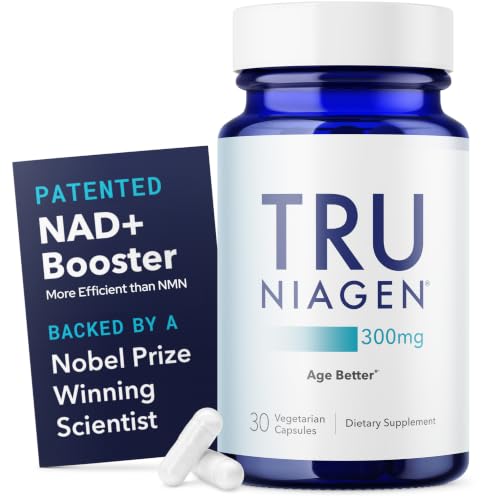
Why it's #1: If you only buy one NAD+ precursor and you want the maximum amount of "this has actually been studied in humans" confidence, Tru Niagen is the answer. The Niagen patent means you're getting the same molecule that's been put through dozens of clinical trials — not a generic NR powder of unknown provenance. For most people, especially first-time users, the conservative pick wins.
- The most-studied NAD+ precursor on the market by a wide margin
- FDA has reviewed the safety data and granted GRAS status
- One-capsule-a-day dosing is the simplest in the category
- No proprietary blends, no marketing add-ons
- Premium pricing — roughly 2x cost-per-gram vs generic NMN
- 300 mg is on the lower end of clinically studied doses (600–1000 mg used in some trials)
- NR-vs-NMN debate is unresolved; you're paying for the clinical pedigree
2. partiQlar NMN 500 mg

Why it's here: For people who want NMN specifically — because of Sinclair, because of the mechanism, or because they want the precursor one step closer to NAD+ on the salvage pathway — partiQlar is the cleanest single-ingredient option on Amazon at a reasonable price. The 500 mg dose lines up with most published NMN trials, and the certificate of analysis transparency is the differentiator in a category full of products that won't show you the lab results.
- Pharmaceutical-grade NMN at a price competitive with generic Amazon brands
- Single-ingredient transparency — you know exactly what you're getting
- 500 mg/day is the dose used in most of the published NMN human trials
- partiQlar publishes its certificate of analysis publicly
- Newer brand without ChromaDex's clinical trial portfolio
- NMN's FDA status is unsettled (see the regulatory section below)
- Smaller review base than long-running brands like Thorne or Tru Niagen
3. Thorne ResveraCel (NR + Resveratrol + Quercetin + TMG)

Why it's here: If you've read Lifespan , watched the Sinclair / Attia / Huberman podcast appearances, and want to run the biohacker stack without building it yourself from four separate bottles, ResveraCel is the most credible single-product version. Substituting NR for NMN is a defensible choice — the clinical evidence for NR is stronger — and the TMG inclusion is the detail most DIY stackers forget about.
- The closest off-the-shelf product to the Sinclair NMN + resveratrol + TMG biohacker stack — using NR instead of NMN
- TMG inclusion preempts the methyl-group depletion concern that comes with chronic precursor use
- Thorne's quality control is the practitioner gold standard for a reason
- One bottle replaces 3–4 separate supplements at lower total cost
- Most expensive per gram of NR vs straight Tru Niagen
- Combination formula makes it harder to attribute effects to any single ingredient
- Quercetin phytosome can interact with some medications (CYP3A4)
4. ProHealth NMN Pro 1000 (Uthever)

Why it's here: If you're going to take NMN, you may as well take the version that's actually been studied in humans. Uthever NMN was used in the 2022 published human safety and efficacy trial that established the dose-response for NMN raising blood NAD+ levels. Generic NMN powders sold under random brand names may or may not perform the same way — you have no way of knowing. For people running a serious longevity protocol with budget to match, the Uthever-grade route is the rational choice.
- Uthever is the only NMN brand with its own published human clinical trial data
- 1 g/day dose matches what Sinclair has publicly described taking
- ProHealth has been in the NAD+ space since the early Niagen era — long track record
- Triple lab testing (identity, purity, contaminants) on every batch
- Highest cost-per-month of any pick on this list
- 1000 mg/day is a higher dose than most users need to start with
- NMN's FDA status remains unsettled — supply could be disrupted
5. Quicksilver Scientific NAD+ Gold
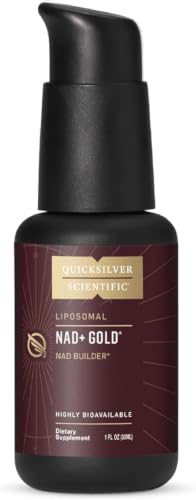
Why it's here: For people specifically looking for the NAD+ molecule itself rather than a precursor — usually because they've done IV NAD+ at a clinic and want a maintenance option between drips — Quicksilver's liposomal product is the only one we'd recommend. Most "liposomal NAD+" products on Amazon are capsules, which defeats the entire point of liposomal delivery. Quicksilver's is an actual liquid emulsion with documented particle size data. It's expensive, but in the category, it's the credible option.
- The only credible at-home alternative to IV NAD+ at a meaningful cost difference
- Quicksilver's liposomal delivery is the most-cited and most-replicated of any oral NAD+ approach
- Sublingual route bypasses some of the gut degradation problem
- Used clinically by functional medicine practitioners alongside (or instead of) IV NAD+
- By far the most expensive option per actual mg of NAD+ delivered
- Taste is not great — most users describe it as harsh
- Pharmacokinetic data on liposomal NAD+ is thinner than on NR or NMN
- Refrigeration recommended; not as travel-friendly as capsules
What NAD+ Actually Does (And What’s Hyped)
NAD+ (nicotinamide adenine dinucleotide) is a coenzyme involved in roughly 500 enzymatic reactions in the human body. It’s not a niche molecule — it’s central to how cells turn food into ATP, repair DNA, and regulate the sirtuin family of enzymes that govern stress response and longevity-relevant gene expression. The hypothesis driving the longevity supplement industry is that NAD+ levels decline by roughly 50% between age 30 and age 60, and that restoring those levels may slow or partially reverse age-related cellular dysfunction.
That hypothesis is supported by:
- Mitochondrial function. NAD+ is required for the electron transport chain. Restoring NAD+ in older mice improves mitochondrial respiration and exercise capacity — sometimes dramatically. Human data on exercise capacity is more modest but trending in the same direction.
- Sirtuin activation. Sirtuins (SIRT1-7) are NAD+-dependent deacetylase enzymes implicated in stress response, DNA repair, and metabolic flexibility. Sinclair’s whole framework treats sirtuins as the master regulators of cellular aging. The strength of that framework is genuinely debated in academia.
- DNA repair (PARP). Poly-ADP-ribose polymerase enzymes consume NAD+ during DNA damage repair. Older cells with more accumulated damage burn through NAD+ faster, which is part of why levels decline with age. Restoring NAD+ may give the repair machinery more substrate to work with.
- Inflammation (CD38). The same CD38 enzyme that chews up oral NAD+ in the gut also chews through NAD+ in tissue, and CD38 activity increases with age and chronic inflammation. Some researchers argue the most efficient path to higher NAD+ isn’t more precursors — it’s CD38 inhibition (an active area of drug development).
What’s hyped: claims of “reversing your biological age,” dramatic visible anti-aging effects in 30 days, or NAD+ as a one-shot fix for fatigue or brain fog. The honest human data shows modest improvements in objective markers (NAD+ blood levels, sometimes blood pressure, sometimes insulin sensitivity), with subjective effects (energy, focus, recovery) that are highly individual — some people feel a difference, many don’t. The category benefits enormously from placebo response in people who’ve already bought into the longevity narrative.
If you want to actually measure whether NAD+ precursors are doing anything for you, two reasonable proxies: creatine-style strength and endurance markers (NAD+ is upstream of mitochondrial output), and resting heart rate / HRV trends on a wearable like an Oura, Whoop, or Garmin. NAD+-driven improvements in mitochondrial efficiency tend to show up there before they show up in how you feel.
Dosing: 250–500 mg Daily, Morning Empty Stomach
The dosing literature for both NR and NMN converges on a similar range for most healthy adults: 250 mg to 500 mg daily, taken in the morning on an empty stomach. Higher doses (600–1000 mg) have been used safely in trials but the dose-response curve flattens — going from 500 mg to 1000 mg doesn’t double the NAD+ rise.
Timing matters more than most people realize:
- Morning, not evening. NAD+ has a circadian rhythm — it’s naturally higher in the morning and lower at night. Taking precursors in the evening can interfere with sleep for some users (mechanism unclear, but the user reports are consistent enough to take seriously). Morning is the default.
- Empty stomach. Both NR and NMN absorb better without food. Some clinical trials specify a 30-minute window before breakfast.
- Daily, not cycled. Unlike some supplements where cycling matters, the evidence supports daily continuous dosing. NAD+ levels stabilize at a new steady state after roughly 2–4 weeks of consistent intake.
One detail that gets glossed over: the methyl-group cost. Both NR and NMN ultimately get converted to nicotinamide, and nicotinamide gets methylated and excreted. At chronic high doses, this can theoretically deplete methyl groups — which is the rationale for stacking TMG (trimethylglycine / betaine) to replenish the methyl pool. We’d call this protocol “well-justified at 1000 mg/day NMN, probably unnecessary at 300 mg/day NR.” Thorne ResveraCel includes TMG by default, which is one reason it’s the easiest combo formula on this list.
Stacking: NMN + Resveratrol + TMG (Educational)
This is the protocol Sinclair has discussed publicly, and it’s the de facto template most serious biohackers in this category follow. We’re describing it here for educational completeness — we are not recommending you start stacking four supplements before you’ve established whether one of them does anything for you. Run the simplest version first; add complexity only if it’s justified by your own measured data.
- NMN 500–1000 mg — the NAD+ precursor itself. Sinclair’s reported dose is 1 g/day.
- Trans-resveratrol 500–1000 mg — the sirtuin activator pillar of the stack. Sinclair’s claim is that resveratrol “amplifies” the effect of NMN by directly turning on the same sirtuin enzymes that NAD+ enables. The human evidence for resveratrol alone is weaker than the in-vitro and rodent data suggested it would be, but stacking with NMN is the version with the most-cited rationale.
- TMG (betaine) 500 mg–1 g — the methyl-donor counterweight. Prevents theoretical methyl depletion from chronic high-dose precursor use. Cheap, well-tolerated, and the detail most DIY stackers leave out.
- Optional: quercetin or fisetin — senolytic agents that selectively clear senescent cells. Less Sinclair-canonical; more from the Mayo Clinic / Kirkland Lab side of the longevity research community.
The honest take: the entire stack is built on plausible-but-not-definitive mechanistic logic. The strongest leg is NMN/NR raising NAD+ — that’s verified human pharmacokinetics. The other components ride a less-firm evidence base. If you start with just NR or NMN and add components one at a time over 90-day windows, you’ll at least have a chance of figuring out which piece is doing the work for you specifically.
The FDA’s 2022 NMN Reclassification Controversy
This is the elephant in the room for anyone buying NMN in 2026, so we’ll cover it directly. In late 2022, the FDA quietly reclassified NMN — telling manufacturers that NMN no longer qualifies as a dietary supplement because it had been authorized for investigation as a new drug before being marketed as a supplement. Under the FDCA exclusionary clause, that disqualifies it from supplement status.
The practical result: technically, NMN is not a legal dietary supplement in the United States. In practice, manufacturers continue to sell it, the FDA has not pursued widespread enforcement, and the regulatory status is being challenged by industry. There is no consumer health concern driving the reclassification — it’s a procedural rule about which compounds qualify as supplements vs investigational drugs.
What this means for you as a buyer:
- NR (Tru Niagen, ResveraCel) is unaffected. NR has clear dietary supplement status and FDA GRAS designation. The regulatory risk is zero.
- NMN supply could be disrupted. If the FDA decides to enforce, NMN products could disappear from Amazon. Stocking a 90-day supply isn’t paranoid; it’s prudent.
- Quality control may slip. Regulatory ambiguity attracts low-quality manufacturers. Sticking to brands with publicly posted certificates of analysis (partiQlar, ProHealth Uthever) is more important now than it was in 2021.
This is the single biggest reason our default pick on this page is Tru Niagen NR rather than an NMN product. The molecule itself is similar in mechanism; the regulatory bedrock under NR is much firmer.
Who Should NOT Take NAD+ Precursors
This is the most important section on this page. NAD+ precursors are well-tolerated for most healthy adults, but the contraindications are real:
- Anyone with active cancer or a recent cancer history. NAD+ is required for cell proliferation, including tumor cell proliferation. The theoretical risk of fueling existing malignancies has not been resolved in the literature. Some oncology researchers have explicitly warned against precursor supplementation during or shortly after treatment. If you have any cancer history, this is an oncologist conversation — not a self-experiment.
- Pregnant or breastfeeding people. No safety data exists for fetal or infant exposure to high-dose precursors. Don’t take them during pregnancy or while nursing, full stop.
- People taking chemotherapy agents. Several chemo drugs (especially DNA-damaging agents) work in part by depleting NAD+ — supplementing NAD+ precursors may theoretically blunt their efficacy.
- People with kidney disease. NAD+ metabolism produces nicotinamide and methylated metabolites that the kidneys clear. Compromised renal function makes chronic high-dose supplementation harder to clear safely.
- Anyone on metformin or SGLT2 inhibitors. Both classes affect NAD+ metabolism indirectly. The interactions aren’t dangerous, but the metabolic effects may overlap unpredictably. Worth flagging to your prescriber.
- People taking immune-modulating drugs. NAD+ plays a role in T-cell activation and immune signaling. Adding a precursor on top of immunosuppressants or checkpoint inhibitors should be a physician conversation.
- Children and adolescents. Zero safety data in pediatric populations. NAD+ precursors are for adults only.
If you don’t fall into any of those buckets, you’re a generally healthy adult over 30 with a longevity-curious mindset, and you’ve established the rest of your foundation (sleep, exercise, diet, basic supplements like magnesium and creatine), then a 90-day n=1 trial of NR or NMN is a reasonable experiment.
How We Picked These
- Real precursors, not oral NAD+. Four of our five picks are precursors (NR or NMN). The one exception (Quicksilver) is liposomal NAD+ specifically because the delivery mechanism actually has pharmacokinetic data behind it, unlike the dozens of “NAD+ capsule” products we excluded.
- Verifiable purity. Each pick either has published certificates of analysis (partiQlar, ProHealth), is the patent-holding manufacturer (Tru Niagen / ChromaDex), or comes from a practitioner-grade brand with NSF certification (Thorne).
- Clinical-trial alignment. Doses on each product map to ranges used in published human trials — 300 mg for NR, 500–1000 mg for NMN. We rejected products with sub-clinical doses dressed up as “high potency.”
- Single-ingredient transparency or honest combo formulas. ResveraCel is a combo product, but it’s a combo product with rationale and published trial precedent. We excluded “10-in-1 NAD complex” products that bury 50 mg of NMN inside a kitchen-sink blend at a markup.
- Brand longevity. ChromaDex / Tru Niagen, Thorne, ProHealth, and Quicksilver have all been in this space since before 2020. partiQlar is newer but with the cleanest analytical transparency in the category.
We rejected roughly 30 popular Amazon NAD+ products during research — mostly for the oral-NAD+-in-a-capsule problem, sub-clinical dosing hidden by proprietary blends, or unverifiable claims about NMN purity from manufacturers who wouldn’t publish a certificate of analysis. The NAD+ category is one of the worst on Amazon for hype-to-substance ratio. The five products above are the ones that survived a hard filter.
Honest Limitations of This Guide
The NAD+ category invites overstatement, so here’s what we can and can’t stand behind:
- “Raises NAD+” is proven; “makes you healthier” is not. Human pharmacokinetic studies clearly show NR and NMN raise blood NAD+ at appropriate doses. What that translates to in real-world outcomes — energy, cognition, biological age, lifespan — is where the evidence thins out fast. Most human trials run 12 weeks or less and measure intermediate markers, not the endpoints buyers actually care about.
- We didn’t independently assay the bottles. Our purity confidence rests on published certificates of analysis (partiQlar, ProHealth), patent-holder status (ChromaDex / Tru Niagen), and practitioner-grade reputation (Thorne) — not on us sending each product to a lab. Independent testing has repeatedly caught cheap “NMN” products containing a fraction of the labeled dose, so the certificate-of-analysis filter matters, but it isn’t the same as us verifying every batch.
- NMN’s regulatory status is unsettled and could disrupt supply. The FDA’s 2022 reclassification means NMN’s legal footing as a supplement is genuinely contested. That’s the main reason our default pick is NR (Tru Niagen), not an NMN product — but it also means any NMN recommendation here carries a supply-continuity risk we can’t control.
Frequently Asked Questions
NMN vs NR — which is better?
Honest answer: we don’t know, and anyone selling you one will tell you it’s the other. NR has the deeper clinical trial portfolio (~35 human studies) and FDA GRAS status. NMN is one step closer to NAD+ on the salvage pathway and has stronger rodent data on aging endpoints. Multiple human PK studies show both raise blood NAD+ at appropriate doses. For most users, regulatory certainty and clinical pedigree favor NR; mechanistic logic and the Sinclair-influenced biohacker community favor NMN. Both are defensible.
Is NAD+ banned by the FDA?
No — but NMN is in a regulatory gray zone. In late 2022, the FDA reclassified NMN as ineligible for dietary supplement status because it had been authorized as a new drug investigation before reaching the supplement market. Enforcement has been limited and manufacturers continue to sell NMN, but the status is genuinely contested. NR (the molecule in Tru Niagen and Thorne ResveraCel) has clear dietary supplement status and is unaffected by the NMN controversy.
How long until NMN or NR works?
Blood NAD+ levels begin rising within 1–2 weeks of consistent dosing and stabilize at a new steady state by 4–6 weeks. Subjective effects (energy, focus, recovery, sleep quality) are highly individual — some users notice changes in the first month; many notice nothing dramatic at all. Objective markers measurable on a wearable (resting heart rate, HRV trends, recovery scores) are a more reliable proxy than subjective feel. If you’ve taken a clinical-grade product at a clinical dose for 90 days and your wearable hasn’t shifted and you don’t feel different, it’s probably not doing much for your physiology and you can stop.
Can I take NMN with metformin?
Probably yes, but it’s a physician conversation if you’re on metformin for diabetes or insulin resistance. Both compounds influence NAD+ metabolism and AMPK signaling, and the interactions are mechanistically real even if not dramatically dangerous. Some longevity-focused physicians actively recommend the combination; others suggest spacing the doses by several hours. Don’t self-stack without flagging it to whoever prescribed the metformin.
Sublingual vs capsule — does it actually matter?
For NR and NMN, no — both absorb adequately as capsules. The “sublingual NMN” products on the market are mostly marketing; the molecule isn’t particularly well-absorbed through oral mucosa. Where sublingual genuinely matters is for the NAD+ molecule itself (because oral capsules get degraded in the gut). That’s the reason liposomal liquids like Quicksilver are dosed sublingually — to give the encapsulated NAD+ a chance to bypass gut degradation. For precursors, just take the capsule.
Do I need to cycle NAD+ precursors?
The current evidence supports continuous daily dosing rather than cycling. NAD+ levels stabilize at a new steady state after a few weeks and seem to remain elevated as long as supplementation continues. There’s no evidence of tolerance or downregulation at clinically studied doses. The one practical consideration is methyl-group depletion from chronic high-dose use, which is what TMG stacking addresses — not cycling.
Will NAD+ precursors actually extend my lifespan?
Unknown. The long-term human lifespan studies that would answer this question would take decades and have not been conducted. What we have are: solid biochemistry showing NAD+ declines with age, solid pharmacokinetics showing precursors raise NAD+ levels, suggestive rodent lifespan data (modest effects, not dramatic), and short-term human trials on intermediate markers (blood pressure, walking distance, insulin sensitivity) with mixed but generally modest positive results. Anyone telling you NMN will extend your lifespan by years is selling you a story, not science. The defensible pitch is: NAD+ precursors plausibly improve some cellular function metrics, are well-tolerated at clinical doses, and are a low-risk addition to an otherwise dialed-in longevity protocol.
Is liposomal NAD+ better than precursors?
Different goals. Precursors (NR, NMN) raise endogenous NAD+ via the salvage pathway — that’s the most efficient route per dollar. Liposomal NAD+ delivers some intact NAD+ molecule directly, bypassing part of the gut degradation problem. For most people running a maintenance protocol, precursors are the better cost-per-NAD+ choice. For people specifically wanting an at-home alternative to IV NAD+ (often as a bridge between clinic drips), liposomal is the credible option. Both can be reasonable; the precursor route is the default for the vast majority of users.
Final Thoughts
The NAD+ supplement category is genuinely one of the most marketing-heavy in longevity. Most products labeled “NAD+” are oral capsules of the NAD+ molecule, which the gut degrades before absorption — so the actual NAD+ rising in your blood comes from the nicotinamide breakdown product, which is just B3. The way to actually raise NAD+ levels is via precursors (NR or NMN) or via liposomal delivery of intact NAD+. Everything else is a story.
For most people the rational starting point is Tru Niagen — the patented Niagen NR molecule with the deepest clinical trial dossier in the category, clean FDA GRAS regulatory status, and a simple one-capsule-a-day protocol. If you specifically want NMN because of the Sinclair / Lifespan framework, partiQlar NMN 500 mg is the cleanest single-ingredient option with published purity data — accepting the regulatory ambiguity around NMN itself. If you want to run the full biohacker stack without assembling four bottles, Thorne ResveraCel is the most credible combo formula on the market. And if you’ve done IV NAD+ at a clinic and want a bridge product between drips, Quicksilver NAD+ Gold is the only liposomal product we’d recommend.
One closing point: NAD+ precursors are a tier-three intervention. If you’re not sleeping 7+ hours, lifting weights, eating real food, and managing stress, no amount of NMN will move your biological age needle. The longevity research community is unanimous on this — the supplements are the cherry on top, not the foundation. Get the basics right first, then layer NR or NMN as a marginal-gain experiment with a 90-day evaluation window.
Last updated: July 01, 2026 at 01:11 PM ET. Prices and availability shown are accurate as of this time and are subject to change. As an Amazon Associate, DeskFitPro earns from qualifying purchases.
Ready to Buy?
We may earn a commission if you buy through these links.
Prices checked: Oct 3, 2026, 8:06 PM UTC
Product prices and availability are accurate as of the date/time indicated and are subject to change. Any price and availability information displayed on Amazon.com at the time of purchase will apply to the purchase of this product.
Any prices mentioned in the article text are approximate and for comparison only; the figure shown with each product above is the one checked against Amazon at the time stated.
As an Amazon Associate, DeskFitPro earns from qualifying purchases.