As an Amazon Associate, we earn from qualifying purchases.
Nordic Naturals Ultimate Omega — Best Fish Oil Supplement Overall
1,280mg of omega-3 per serving in triglyceride form rather than the cheaper ethyl ester most budget fish oils use — the form fish oil naturally occurs in, and the reason this one doesn't produce fishy repeat. Nordic Naturals publishes batch purity testing, which most of this category does not.
Check Price on Amazon →At a Glance
- BEST OVERALL: Nordic Naturals Ultimate Omega — Best Fish Oil Supplement Overall
- BEST VALUE: Sports Research Triple Strength Omega-3 — Best Value Fish Oil
- BEST LIQUID FISH OIL: Carlson The Very Finest Fish Oil — Best Liquid Omega-3 Supplement
- Thorne Super EPA — Best Practitioner-Grade Fish Oil
- BEST BUDGET PICK: NOW Foods Ultra Omega-3 — Best Budget Omega-3 Supplement
| Product | Price as of Oct 4, 2026, 8:11 PM UTC | Rating |
|---|---|---|
| Nordic Naturals Ultimate Omega — Best Fish Oil Supplement Overall | $32.39 | 4.7★ |
| Sports Research Triple Strength Omega-3 — Best Value Fish Oil | $56.25 | 4.7★ |
| Carlson The Very Finest Fish Oil — Best Liquid Omega-3 Supplement | $59.42 | 4.8★ |
| Thorne Super EPA — Best Practitioner-Grade Fish Oil | $41.00 | 4.6★ |
| NOW Foods Ultra Omega-3 — Best Budget Omega-3 Supplement | $28.94 | 4.7★ |
Omega-3 fish oil sits on almost every expert’s shortlist of foundational supplements. EPA and DHA — the two active long-chain omega-3s in fish oil — have one of the deepest clinical evidence bases of any supplement category, with a clear signal for triglyceride reduction and post-MI secondary prevention, meaningful anti-inflammatory effects, and support for brain and mood function at higher EPA doses.
The evidence base is also mixed in places. Newer meta-analyses have muddied the picture on primary cardiovascular prevention in low-risk adults, and EPA-only formulations (like prescription icosapent ethyl / Vascepa) have shown clearer benefit in some trials than typical over-the-counter EPA+DHA blends. Meanwhile, the fish oil aisle is full of products that under-deliver — low EPA/DHA buried inside large “fish oil” totals, rarely-disclosed oxidation levels, and no third-party testing. This guide covers the best omega-3 supplements in 2026 that deliver honest doses, carry independent purity verification, and earn strong long-term reviews.
Health Disclaimer: The information on this page is for educational purposes only and is not intended as medical advice. These products are not intended to diagnose, treat, cure, or prevent any disease. Consult your healthcare provider before starting any new supplement regimen, especially if you have a pre-existing condition, are pregnant, or are taking blood-thinning medications. High-dose omega-3 supplementation may interact with certain drugs.
Best Omega-3 Supplements at a Glance
- Best Overall: Nordic Naturals Ultimate Omega — #1 selling omega-3 in the US, 1280 mg EPA+DHA per serving, triglyceride form, 42,000+ reviews
- Best Value: Sports Research Triple Strength Omega-3 — IFOS 5-Star certified, 690 mg EPA + 260 mg DHA per softgel, MSC sustainable
- Best Liquid Fish Oil: Carlson The Very Finest Fish Oil — 1600 mg omega-3s per teaspoon, IFOS certified, 4.8★ from 5,000+ reviews
- Best Practitioner-Grade: Thorne Super EPA — #1 recommended by healthcare practitioners, NSF Certified for Sport available
- Best Budget Pick: NOW Foods Ultra Omega-3 — Enteric coated, 500 mg EPA + 250 mg DHA per softgel, molecularly distilled, excellent value
Why Omega-3s Matter: What the Research Says
Omega-3 fatty acids — specifically EPA (eicosapentaenoic acid) and DHA (docosahexaenoic acid) — are considered essential fatty acids because the human body cannot synthesize them in adequate amounts. They must come from diet or supplementation. Here’s what the clinical literature says about their benefits:
Brain Health & Mood
DHA is the dominant structural omega-3 in the brain, making up a large fraction of neuronal cell membranes. The published literature on omega-3s and cognition is mixed — several trials find benefits for attention, memory, and mood, while others find null results in cognitively healthy adults. The clearest signal to date is for EPA-heavy dosing in adults with clinical depressive symptoms, where meta-analyses suggest doses in the 1–2 g/day range of EPA specifically may modestly improve mood scores. Mechanistically, EPA appears to influence neuroinflammation and eicosanoid signaling; DHA is structural.
What we don’t have specifically: definitive evidence that omega-3 supplementation preserves cognition in already-healthy adults with adequate fish intake. This is an active area of research, not settled science.
Heart Health
The cardiovascular story is genuinely nuanced. EPA and DHA lower triglycerides (well-established: meta-analyses consistently show meaningful reductions at 2–4 g/day), improve endothelial function, and have anti-inflammatory effects on arterial walls. Where the evidence gets messy is primary prevention in low-risk adults — the large VITAL trial found no significant reduction in major cardiovascular events with 1 g/day EPA+DHA in a general-population cohort, while REDUCE-IT found meaningful benefit with high-dose EPA-only (icosapent ethyl / Vascepa) in high-risk patients already on statins. The American Heart Association supports omega-3 supplementation for people with existing cardiovascular disease; blanket recommendations for otherwise-healthy adults are more cautious.
Inflammation & Joint Health
EPA and DHA compete with arachidonic acid in cell membranes, reducing production of pro-inflammatory eicosanoids. Randomized trials have shown reductions in inflammatory markers (CRP, IL-6) and modest improvements in joint pain and morning stiffness in rheumatoid arthritis, typically at doses of 2–4 g/day combined EPA+DHA. Osteoarthritis results are less consistent.
The EPA-Focused Protocol
A common protocol cited in the biohacking and longevity space targets 2–3 grams of EPA per day — not total fish oil, and not total omega-3s. EPA is the fraction most closely linked in the literature to mood and cardiovascular endpoints. The practical implication: check labels for actual EPA milligrams. A 1,000 mg “fish oil” capsule may contain only 180 mg EPA, far below the doses used in most therapeutic trials.
EPA vs. DHA: What’s the Difference?
Both EPA and DHA are long-chain omega-3 fatty acids, but they have distinct roles:
- EPA (Eicosapentaenoic Acid): Primarily anti-inflammatory. Most strongly associated in trials with cardiovascular benefits, mood support in depressive symptoms, and reducing systemic inflammation. Most fish oil products provide more EPA than DHA.
- DHA (Docosahexaenoic Acid): Primarily structural. DHA is the dominant omega-3 in brain tissue and the retina. Essential for neural development, cognitive function, and vision. Particularly important during pregnancy and infant development.
For most healthy adults, a product with a roughly 2:1 EPA-to-DHA ratio (for example, 650 mg EPA / 300 mg DHA) covers both bases well. If mood or cardiovascular support is your primary goal, lean toward higher-EPA formulas. If cognitive development or eye health is the priority, ensure adequate DHA.
Fish Oil vs. Krill Oil vs. Algae Oil
Not all omega-3 supplements come from the same source, and the differences matter:
Bottom line: Fish oil from wild-caught, sustainably sourced fish remains the most cost-effective way to get therapeutic doses of EPA and DHA, backed by the deepest clinical evidence base. Krill oil offers potential absorption advantages at smaller doses but costs more per gram of actual omega-3s. Algae oil is the right choice for vegans — it’s where fish get their omega-3s in the first place — and DHA bioavailability is well-established.
What to Look For When Buying Fish Oil
The supplement industry is largely unregulated, which makes these criteria essential when choosing an omega-3:
- Actual EPA + DHA per serving: The label must list EPA and DHA separately, not just “omega-3s” or “fish oil.” For research-level dosing (2–3 g EPA/day), you may need 3–4 softgels of lower-potency products. High-potency products make this easier to hit.
- Third-party testing (IFOS certification): IFOS (International Fish Oil Standards), run by Nutrasource, is the gold standard for fish oil certification. They test batch-by-batch for EPA/DHA accuracy, heavy metals (mercury, lead, arsenic), PCBs, dioxins, and oxidation levels. Results are publicly posted by lot number — you can verify your specific bottle.
- Triglyceride form (not ethyl ester): Fish oil comes in two main forms. Ethyl ester (EE) is cheaper to produce but has lower bioavailability. Re-esterified triglyceride (rTG) form — used by Nordic Naturals and others — absorbs significantly better. Look for “triglyceride form” on the label.
- Freshness (oxidation): Rancid fish oil is not just ineffective — it may be harmful. Fresh fish oil should smell mildly oceanic, not rancid. A light lemon flavor is often added to mask minor odor. Look for low TOTOX (total oxidation) values on IFOS reports.
- Sustainable sourcing: Wild-caught sardines, anchovies, and pollock are the most sustainable sources. Look for MSC (Marine Stewardship Council) certification or Friend of the Sea certification.
How Much Omega-3 Should You Take?
General guidance from published trials and expert protocols:
- Baseline health maintenance: 500 mg–1,000 mg combined EPA+DHA per day (minimum effective dose)
- Mood, brain, and cardiovascular support (higher-EPA protocol): 2–3 grams of EPA specifically per day — which typically means 2,000–3,000 mg EPA from fish oil (so 3–5 high-potency softgels depending on the product)
- Anti-inflammatory/joint support: 2–4 grams combined EPA+DHA per day
- Maximum generally studied dose: Up to 5–6 g/day in clinical settings; doses above 3 g/day should be discussed with a healthcare provider, especially if taking blood thinners
Take omega-3s with your largest meal of the day — dietary fat significantly increases absorption, and taking them with food reduces the risk of fish burps.
Detailed Reviews
1. Nordic Naturals Ultimate Omega — Best Fish Oil Supplement Overall

Why it's here: Nordic Naturals Ultimate Omega earns the top spot on the strength of three things that are hard to find together: the superior-absorbing triglyceride molecular form, independently verified purity (batch-by-batch certificates of analysis are publicly available), and 42,000+ Amazon reviews that have kept it the #1 ranked omega-3 supplement in the US. If you want one fish oil product you can trust and not think about, this is it. The re-esterified triglyceride form means your body actually absorbs what the label says, and the lemon flavor is genuinely pleasant — multiple reviewers describe it as the first fish oil they've taken without any aftertaste. Dose to your target by adjusting serving size: 2 softgels gives 650 mg EPA, 4 softgels gets you to ~1.3 g EPA, and so on.
- The #1 selling omega-3 in the US with 42,000+ verified reviews
- rTG form absorbs better than ethyl-ester competitors at the same label dose
- Publicly searchable IFOS lot data — you can verify your specific bottle
- Two size options let you match the price to your dosing plan
- Premium pricing — cheaper per-serving options exist if IFOS isn't a hard requirement
- To hit 2 g+ EPA/day you'll need 3–4 softgels, not the 2-softgel default serving
2. Sports Research Triple Strength Omega-3 — Best Value Fish Oil

Why it's here: Sports Research delivers the best EPA-per-dollar ratio on this list with the same IFOS 5-Star certification premium brands charge more for. At 690 mg EPA per single softgel, it's also the most efficient way to hit higher-EPA targets — two softgels puts you at nearly 1.4 g EPA, three softgels at ~2 g. If you're EPA-focused and price-sensitive, this is the answer.
- Highest EPA per softgel of any product on this list (690 mg) — makes hitting 2 g/day EPA easier
- IFOS 5-Star certification — the strictest fish-oil purity certification available
- 35,000+ reviews with a consistent 4.7-star rating over years
- Meaningfully cheaper per gram of EPA than premium alternatives
- Softgels are on the larger side — some users report difficulty swallowing
- Lower DHA content than Nordic Naturals if DHA is your primary target
- Not enteric-coated — take with food to avoid fish burps
3. Carlson The Very Finest Fish Oil — Best Liquid Omega-3 Supplement
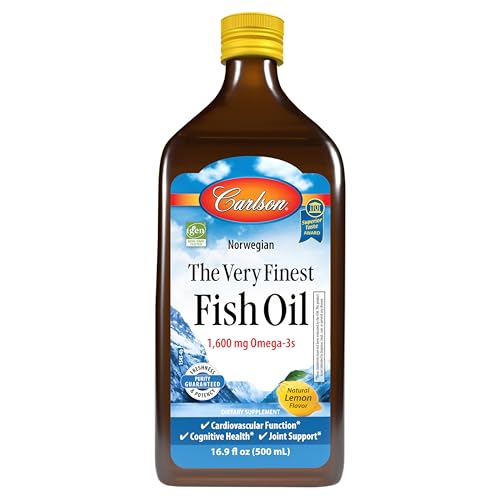
Why it's here: Carlson's Very Finest Fish Oil has arguably the best taste of any fish oil supplement on the market — it earned a Superior Taste Award from professional chefs and sommeliers, and thousands of reviewers confirm it actually tastes good. At 800 mg EPA and 500 mg DHA per teaspoon, it's the most nutrient-dense option per serving on this list. The liquid format is ideal for people who dislike large softgels, want to add omega-3s to a morning smoothie, or need to precisely scale their dose. If hitting research-level EPA intake is the goal, two teaspoons (roughly 1,600 mg EPA) gets you most of the way there. IFOS certification confirms the purity claims.
- 4.8 stars — the highest-rated product on this list
- Highest EPA+DHA concentration per serving: 1,300 mg per teaspoon
- Liquid format eliminates capsule size concerns and allows precise dose scaling
- Award-winning taste; reviewers consistently describe it as genuinely pleasant, not fishy
- Excellent for people who want to hit 2–3 g EPA/day more easily — just adjust the pour
- Liquid form requires refrigeration after opening and is less convenient for travel
- 16.9 fl oz bottle is bulky; some users prefer the capsule format
- Teaspoon serving is harder to track precisely vs. counting capsules
- Fewer total reviews than Nordic Naturals or Sports Research
4. Thorne Super EPA — Best Practitioner-Grade Fish Oil

Why it's here: Thorne is the brand doctors trust. The #1 practitioner-recommended supplement company in the US, Thorne's Super EPA carries NSF Certified for Sport verification — a testing standard so rigorous it's used by professional sports organizations to ensure supplements are free of banned substances, contaminants, and label inaccuracies. If you want the brand your doctor is most likely to approve of, Thorne is it. The Super EPA Pro variant (1,300 mg EPA per 2-gelcap serving) is worth noting for anyone following a high-EPA protocol and wanting to minimize total capsule count.
- NSF Certified for Sport — the most rigorous third-party certification available, trusted by professional athletes
- The #1 practitioner-recommended brand in the US — the choice of doctors who recommend supplements
- Exceptionally clean formula; Thorne's manufacturing standards are among the highest in the industry
- Super EPA Pro variant offers 1,300 mg EPA per 2-gelcap serving — ideal for high-dose EPA protocols
- Higher price per gram of EPA+DHA than Sports Research or Nordic Naturals
- Fewer Amazon reviews than other products here — smaller consumer community vs. clinical/practitioner base
- Standard Super EPA requires multiple gelcaps to reach research-level EPA targets
5. NOW Foods Ultra Omega-3 — Best Budget Omega-3 Supplement

Why it's here: 1,280mg of omega-3 per serving in triglyceride form rather than the cheaper ethyl ester most budget fish oils use — the form fish oil naturally occurs in, and the reason this one doesn't produce fishy repeat. Nordic Naturals publishes batch purity testing, which most of this category does not.
- Most affordable option on this list at roughly $0.09–$0.14 per softgel
- Enteric coating completely eliminates fish burps — ideal for those who've struggled with other brands
- 180-count bottle provides a 90-day supply at 2 softgels/day
- 8,000+ Amazon reviews confirm consistent quality and effectiveness
- Molecular distillation is a rigorous purification method — this is not a bargain product that cuts corners
- Not IFOS certified — though GOED compliant and molecularly distilled, it lacks the batch-level public reporting IFOS provides
- 500 mg EPA per softgel is lower than premium options — requires more capsules to hit higher EPA targets
- Not in rTG form — standard fish oil concentrate
How We Picked
Every product on this list was evaluated against the same criteria — and every ASIN was verified live against the Amazon Product Advertising API before publishing (dead ASINs, discontinued SKUs, and mislabeled listings were pruned):
- Live PA API verification: Every affiliate link was resolved against Amazon’s PA API to confirm the product is in stock, priced as shown, and matches the brand and SKU we’re recommending. No guessed ASINs.
- Third-party purity testing: IFOS certification, NSF Certified for Sport, GOED compliance, or documented molecular distillation. No self-certified brands.
- Actual EPA + DHA per serving: We looked past the “fish oil” headline number to the EPA and DHA milligrams that actually appear in trials. Products with low EPA/DHA buried inside large fish oil totals were excluded.
- Molecular form: Triglyceride (natural or re-esterified) preferred over ethyl ester for bioavailability.
- Long-term review track record: Products with thousands of verified reviews and consistent ratings held across years, not launch-window inflation.
- Sustainable sourcing: Wild-caught fish from MSC-certified or similarly accredited fisheries preferred over farmed or unverified sources.
No manufacturer paid for placement on this list. DeskFitPro earns Amazon Associates commission if you buy through a link — the same commission across every product, so we have no incentive to rank one brand above another beyond genuine fit.
Who Should Skip Fish Oil Entirely
Not everyone benefits from omega-3 supplementation. Three groups should think twice — or skip it completely:
- People already eating 2+ servings of fatty fish per week. If wild salmon, sardines, mackerel, or herring are already regular parts of your diet, the incremental benefit from supplementation is small and the food-first path is better. Whole fish delivers omega-3s alongside protein, selenium, iodine, and a broader nutrient matrix that isolated fish oil doesn’t reproduce. Save your supplement budget for a gap you actually have.
- People on anticoagulants or high-dose aspirin. Fish oil at doses above 3 g/day has mild blood-thinning effects that can compound with warfarin, apixaban, rivaroxaban, clopidogrel, or daily aspirin. This is a real interaction, not a theoretical one, and it needs a conversation with the prescribing physician — not a supplement stack decision made alone. Same caution applies before elective surgery.
- People with fish or shellfish allergy — and vegans. Fish oil is off the table for both, but for different reasons. For allergy, algal DHA (from marine microalgae) is the safe alternative and is the same molecule fish get their DHA from in the first place. For vegans, algae oil is the only direct source of EPA and DHA — ALA from flaxseed and chia converts to EPA/DHA in the body at a rate too low (typically under 5%) to hit therapeutic targets. If either of these fits you, skip this guide and buy an algae-based DHA/EPA product instead.
Honest Limitations of This Guide
Things this guide can’t tell you, and gaps we’re being upfront about:
- We haven’t done IFOS lot verification on every SKU we list. IFOS certification is batch-by-batch, and while every product on this list holds an IFOS or equivalent certification at the brand level, we haven’t personally pulled the lot number on the specific bottle you’d receive today. That’s what the IFOS public database is for — nutrasource.ca lets you search by bottle lot number to verify your specific unit.
- ”1,000 mg fish oil” ≠ “1,000 mg omega-3.” Fish oil totals include non-omega-3 fatty acids. What matters is the EPA + DHA line item, not the headline number on the front label. We’ve tried to make this clear throughout, but supplement marketing works hard against it.
- Oxidation levels in retail fish oil are highly variable and rarely disclosed. Independent testing programs have found meaningful shares of retail fish oil above recommended TOTOX (total oxidation) thresholds even when brands claim third-party testing. IFOS-certified batches publish oxidation data; most non-IFOS brands don’t. When in doubt: check the batch report, refrigerate after opening, and don’t buy in bulk beyond what you’ll finish in a few months.
- The cardiovascular benefit story is genuinely mixed. We noted this above, and it’s worth repeating in the limitations: OTC fish oil is not a proven primary-prevention intervention for low-risk adults. If your goal is preventing a first cardiovascular event and you have no other risk factors, the evidence base is weaker than supplement marketing suggests.
Frequently Asked Questions About Fish Oil & Omega-3 Supplements
What is the difference between fish oil and krill oil?
Both provide EPA and DHA, but in different molecular forms. Fish oil delivers omega-3s primarily as triglycerides, while krill oil delivers them as phospholipids — a form some research suggests is more bioavailable at lower doses (under 2,000 mg). However, krill oil contains far fewer milligrams of actual EPA and DHA per capsule, making it harder and more expensive to reach therapeutic doses. Fish oil has a much larger clinical evidence base and is significantly more cost-effective per gram of EPA+DHA. Krill oil also contains astaxanthin, a natural antioxidant, which is a minor advantage. For most people targeting meaningful EPA intake, fish oil is the practical choice.
What’s the best time to take fish oil?
Take fish oil with your largest meal of the day. The presence of dietary fat meaningfully increases absorption of EPA and DHA — pharmacokinetic studies have shown substantially higher plasma omega-3 levels when taken with a high-fat meal versus fasting. Taking fish oil with food also reduces the likelihood of gastrointestinal discomfort and fish burps. There is no strong evidence for morning vs. evening; consistency matters more than timing.
How do I avoid fish burps?
Several strategies work: (1) Take fish oil with food, especially a fatty meal — this slows gastric emptying and reduces the chance of burping up the oil. (2) Choose enteric-coated softgels like NOW Foods Ultra Omega-3 — the coating prevents the softgel from dissolving until it reaches the intestine. (3) Store your fish oil in the refrigerator — cold softgels dissolve more slowly in the stomach. (4) Choose a high-quality, fresh oil — rancid fish oil is far more likely to cause burping and nausea. If fishy burps persist with any brand, enteric coating is the most reliable fix.
Is fish oil safe for children?
DHA is important for children’s brain and eye development, and omega-3 supplementation is generally considered safe for kids. However, dosing differs from adults — consult your pediatrician before giving a child fish oil supplements, as they will recommend appropriate doses based on age and weight. For young children, liquid fish oil (like Carlson’s, which comes in pleasant flavors) or children-specific omega-3 products are easier to dose accurately than adult-sized softgels. Nordic Naturals makes a dedicated children’s omega-3 line for this reason.
How much EPA and DHA do I need per day?
Recommendations vary by goal. The minimum effective dose for general health is around 500 mg combined EPA+DHA per day. For cardiovascular support in people with established heart disease, the American Heart Association recommends around 1,000 mg EPA+DHA/day. Higher-EPA protocols cited for mood and cognitive support target 2–3 grams of EPA specifically per day. Anti-inflammatory and joint health protocols typically use 2–4 grams combined EPA+DHA. It’s important to count the EPA and DHA listed on the label, not the total “fish oil” milligrams — a 1,000 mg fish oil capsule may contain only 300 mg of actual EPA+DHA.
Fish oil vs. algae oil — which is better?
They serve different populations. Algae oil is the original source of EPA and DHA in the marine food chain — fish accumulate omega-3s by eating algae, directly or indirectly. For vegans and vegetarians, algae oil is the only direct source of EPA and DHA (ALA from flaxseed and chia does not convert efficiently to EPA/DHA in the body). Research confirms algae oil’s bioavailability is non-inferior to fish oil. The main drawback is cost: algae oil typically delivers fewer milligrams of EPA/DHA per dollar than fish oil, and many formulas are DHA-heavy with less EPA. If you’re not vegan, fish oil delivers more omega-3s per dollar with a deeper evidence base. If you’re vegan, algae oil is the right choice.
Can omega-3s cause any side effects?
At normal doses (1–3 g EPA+DHA/day), fish oil is well tolerated by most people. The most common side effects are gastrointestinal: fish burps, loose stools, or mild nausea — all of which are largely eliminated by taking fish oil with food and choosing enteric-coated or fresh products. At higher doses (above 3 g/day), fish oil has mild blood-thinning effects — this is relevant if you take anticoagulants like warfarin or aspirin, and worth discussing with a physician. High-dose supplementation may also slightly increase LDL cholesterol in some individuals, though this effect is not consistently seen and appears to depend on the EPA-to-DHA ratio and individual lipid metabolism.
Final Thoughts
Omega-3 supplementation is one of the most well-researched and consistently supported areas of nutritional science. For desk workers, biohackers, and anyone trying to protect their brain and cardiovascular health over the long term, getting adequate EPA and DHA is a foundational step — one that diet alone often fails to deliver, especially for people who don’t eat fatty fish several times a week.
Our top recommendation is Nordic Naturals Ultimate Omega for most people: the triglyceride form, independently verified purity, 42,000+ reviews, and a track record as the #1 selling omega-3 in the US make it the easiest confident choice. If budget is the priority, Sports Research Triple Strength gives you IFOS 5-Star certification and 690 mg EPA per softgel at a lower cost. If you hate swallowing pills, Carlson The Very Finest Fish Oil liquid is the tastiest, most concentrated option on the market. And if your doctor or pharmacist is your trusted guide, you’ll likely find Thorne Super EPA already on their recommended list.
Whatever you choose, check the label for actual EPA and DHA content — not just total fish oil — and look for a third-party certification that verifies what’s in the bottle. Those two steps alone will put you ahead of most supplement buyers.
Last updated: July 13, 2026. Prices and availability shown are accurate as of this time and are subject to change. As an Amazon Associate, DeskFitPro earns from qualifying purchases.
Ready to Buy?
We may earn a commission if you buy through these links.
Prices checked: Oct 4, 2026, 8:11 PM UTC
Product prices and availability are accurate as of the date/time indicated and are subject to change. Any price and availability information displayed on Amazon.com at the time of purchase will apply to the purchase of this product.
Any prices mentioned in the article text are approximate and for comparison only; the figure shown with each product above is the one checked against Amazon at the time stated.
As an Amazon Associate, DeskFitPro earns from qualifying purchases.