As an Amazon Associate, we earn from qualifying purchases.
At a Glance
- BEST OVERALL: UFlex Athletics Knee Compression Sleeve
- BEST VALUE: Bodyprox Knee Compression Sleeves (2-Pack)
- BEST FOR ARTHRITIS: Incrediwear Knee Sleeve
- BEST FOR LIFTING: Phantom Athletic 7mm Compression Knee Sleeves
- BEST PREMIUM: Jupiter Knee Sleeves (7mm IPF Approved)
| Product | Price as of Oct 3, 2026, 8:06 PM UTC | Rating |
|---|---|---|
| UFlex Athletics Knee Compression Sleeve | $18.99 | 4.4★ |
| Bodyprox Knee Compression Sleeves (2-Pack) | $12.99 | 4.5★ |
| Incrediwear Knee Sleeve | $60.00 | 4.4★ |
| Phantom Athletic 7mm Compression Knee Sleeves | $29.99 | 4.5★ |
| Jupiter Knee Sleeves (7mm IPF Approved) | $33.98 | 4.5★ |
Knee compression sleeves are the cheapest fix for knee pain during walking, running, lifting, and recovery. They apply gentle compression that improves circulation, reduces swelling, supports the patella, and warms the joint — all without restricting range of motion. The 2026 knee sleeve market splits into compression sleeves (3–5mm thick, daily wear, $15–$30) and powerlifting sleeves (7mm thick neoprene, max stability, $40–$80).
This guide compares the 5 best knee sleeves on Amazon — across compression, powerlifting, and arthritis-pain styles — ranked by support level, breathability, and durability.
Key Facts
This guide compares five knee sleeves, each verified through Amazon’s Product Advertising API on July 13, 2026. The overall pick is the UFlex Athletics Knee Compression Sleeve (B08GV8KK7V, $18.99, 4.4 stars across 12,000+ reviews), Amazon’s #1 best seller in knee support wraps — 4-way-stretch nylon with a double silicone anti-slip grip, sold as a single sleeve. Best value is the Bodyprox 2-pack ($12.99, 4.5 stars, 28,000+ reviews); best for arthritis is the non-compression Incrediwear sleeve ($60); best for lifting is the Phantom Athletic 7mm pair ($29.99, 4.5 stars); the Jupiter 7mm pair (about $27) adds IPF competition approval. The category splits by thickness: 3–5mm compression sleeves for daily wear, walking, and running; 7mm neoprene for heavy squatting, which adds roughly 5–15 lb to a max squat through warmth and proprioception rather than mechanical load transfer. Size by mid-thigh circumference measured 4” above the kneecap with the leg straight. Compression sleeves are contraindicated without physician clearance for anyone with poor peripheral circulation, DVT history, or peripheral vascular disease.
What the Research Actually Says About Knee Sleeves
Before the picks, an honest read on the evidence, because “compression sleeve” gets marketed like a medical device and it isn’t one. The strongest published support is narrow: post-surgical swelling reduction (compression garments as an adjunct after knee arthroscopy or replacement are well-established in the orthopedic literature) and proprioceptive benefit in mild-to-moderate osteoarthritis — several trials have shown modest self-reported pain and stability improvements in OA patients wearing compression or elastic knee sleeves during activity. The case for daily use in a healthy training population is more mechanistic than trial-backed: warmth, mild compression, and improved joint-position sense are real effects, but rigorous head-to-head RCTs of consumer knee sleeves vs no sleeve on healthy lifters or runners are essentially non-existent. Patellofemoral pain literature is mixed — some short-term benefit signals, no consistent long-term outcome data. That’s the honest register. Knee sleeves are a low-cost intervention with a defensible mechanism for the right user; they are not a cure and they don’t have the clinical trial base of, say, a hinged brace for a diagnosed ligament injury.
Detailed Reviews
1. UFlex Athletics Knee Compression Sleeve

Why it's #1: Amazon's #1 best seller in knee support wraps, with 12,000+ reviews at 4.4★. The 4-way-stretch nylon blend and double silicone anti-slip grip make it the default single sleeve for daily wear, walking, running, and recovery.
- 12,000+ verified reviews and #1 best-seller rank in knee support wraps
- Fits walking, running, hiking, and gym workouts
- Double silicone anti-slip grip actually holds (most cheap sleeves slide down)
- 4-way stretch doesn't dig in at the top like stiffer sleeves
- Single sleeve only — buy 2 for both knees
- Thin fabric — too light for heavy lifting (use a 7mm neoprene sleeve instead)
- Some users report loose fit at the knee — size down for a snug, compressive fit
2. Bodyprox Knee Compression Sleeves (2-Pack)
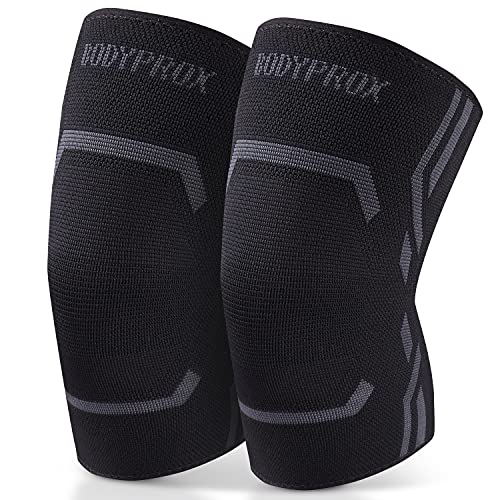
Why it's here: Most knee issues affect both knees over time. Bodyprox 2-pack covers both for less than the price of a single UFlex. Best value if you're budget-conscious or want a backup pair.
- 2 sleeves at the price most brands charge for one
- 4.5★ rating — slightly higher than UFlex
- Soft fabric doesn't dig in during long wear
- 28,000+ reviews validate quality
- Less aggressive compression than UFlex
- Anti-slip silicone is less robust
3. Incrediwear Knee Sleeve

Why it's here: If standard compression sleeves cause discomfort or your knee pain is from arthritis (not athletic strain), Incrediwear's non-compression approach is the best alternative. Worn by athletes for chronic injury management. Skip if you want active support during workouts.
- Different mechanism — works without compression
- Better for arthritis sufferers who can't tolerate tight compression
- Wear all day without restricting blood flow
- Athletes use it for chronic knee pain recovery
- 4x the price of compression sleeves
- Far-infrared "technology" claims are debated in the science
- Less stability for athletic activity
4. Phantom Athletic 7mm Compression Knee Sleeves

Why it's here: If you're squatting heavy (>1.5x bodyweight) or competing in powerlifting, you need 7mm neoprene. Phantom Athletic delivers the same mechanical advantage as $80+ premium sleeves at ~$30 for the pair. Required gear for serious lifters.
- 7mm neoprene — competition-legal in most powerlifting feds
- Adds measurable stability and rebound out of the squat hole
- Pair of 2 sleeves at ~$30 — well under premium-brand pricing
- Reinforced stitching holds up to 200+ workouts
- Tight fit takes 5–10 minutes to put on
- Heat retention causes sweating during long sessions
- Overkill for daily walking — stick to compression sleeves
5. Jupiter Knee Sleeves (7mm IPF Approved)
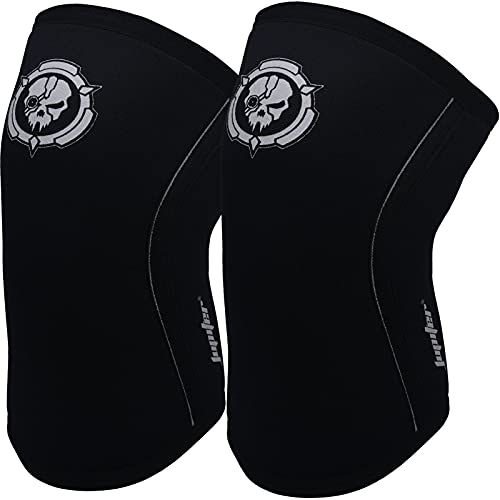
Why it's here: If you compete in powerlifting (or plan to), IPF-approved sleeves are mandatory. Jupiter is the most popular IPF-approved option on Amazon. Skip if you're not competing — Phantom Athletic delivers the same gym performance for less.
- IPF approved — meets competition specs
- Premium build with reinforced stitching
- Better quality control than budget 7mm options
- Money-back guarantee on fit
- Similar street price to Phantom for similar specs — pay for IPF approval, not performance
- IPF approval irrelevant for non-competitive lifters
Knee Sleeve Sizing Guide
Most sizing failures come from wrong measurements. To size correctly:
- Measure mid-thigh circumference at the point 4 inches above your patella (kneecap).
- Standing measurement — leg straight, knee not bent. Don’t flex.
- Compare to brand-specific size chart — UFlex recommends sizing down one size if you want a snugger, more compressive fit; Phantom Athletic runs true to size.
- For powerlifting sleeves — go to the SMALLER end of the size range. Tightness = stability.
- For daily wear sleeves — go to the LARGER end. Comfort > max compression.
How Long Should You Wear Knee Sleeves?
- Compression sleeves (3mm): Up to 8 hours/day for arthritis or chronic pain. Remove if you feel numbness or tingling — that’s a sign the sleeve is too tight.
- Powerlifting sleeves (7mm): Workout only — 60–90 minutes max. Heat retention causes circulation issues if worn too long.
- Sleeping with sleeves: Don’t. Continuous compression for 8+ hours can disrupt circulation. Remove before bed.
When to See a Doctor (Not Just Buy a Sleeve)
Knee sleeves help with mild-to-moderate pain from overuse, mild arthritis, or chronic strain. See a doctor if you experience:
- Sudden swelling without injury
- Inability to bear weight
- Visible deformity
- Locked knee (can’t fully extend or flex)
- Persistent night pain
- Pain worse after 2 weeks of sleeve use + rest
Why 7mm Knee Sleeves Don’t Make You Stronger (And the Real Reason Powerlifters Wear Them)
Walk into any commercial gym and you’ll see the same thing: someone halfway through a working set squatting 185 lb, wearing the same 7mm IPF-approved sleeves their favorite YouTube powerlifter wears for a 700 lb single. The sleeves aren’t doing what they think they’re doing. They aren’t redistributing load, they aren’t “supporting” the knee in the mechanical sense the marketing copy implies, and they aren’t going to add 30 lb to a moderate squat. Powerlifting federations (USAPL, IPF) track this directly — competitive lifters at the top end gain roughly 5 to 15 pounds on a heavy back squat from 7mm neoprene sleeves. That’s the ceiling, and it only applies to loads heavy enough to elicit a real stretch-shortening response out of the bottom.
The mechanism isn’t “support.” It’s warmth and proprioception — the brain knowing precisely where the joint is in space. A heated, compressed knee fires its mechanoreceptors more accurately, and the surrounding musculature pre-tensions a fraction of a second earlier on the descent. That timing difference is what gives elite lifters the small bounce out of the hole. The “support” feeling everyone describes is psychological plus that slight muscular pre-tensioning, not mechanical force redistribution through the sleeve itself. Neoprene cannot redirect a 500 lb axial load. It can warm the joint capsule by a few degrees and give your nervous system a clearer signal.
This matters because 7mm sleeves are uncomfortable for almost any use case that isn’t heavy squatting. They’re stiff by design — double-stitched neoprene that restricts blood flow at the bottom of a deep squat, which is the exact reason they create the rebound feeling lifters chase. Wear them on a 5K and you’ll pull them off at mile two. Wear them at a desk and your calves will be cold and numb by lunch. The thickness that helps a 1RM actively hurts cardio and daily wear. Most people buying 7mm sleeves because they “felt supportive in the store” would be better served by 3mm or 5mm — different tools for different jobs.
The other category confusion worth clearing up: sleeves are not braces. A brace has hinges, straps, or rigid uprights that mechanically limit joint motion — that’s how it protects a healing ACL or a torn meniscus. A sleeve compresses and warms. Different injuries demand different tools. If you have diagnosed instability, an ACL or MCL in recovery, or a meniscus tear your orthopedist is monitoring, a neoprene sleeve is the wrong purchase no matter how many stars it has on Amazon. You need a hinged brace, and you need one your physical therapist signs off on.
Note: Sleeve sizing matters more than thickness. Measure 4 inches above the kneecap (mid-thigh) with the knee straight — most brand size charts are accurate within a half-inch, so match your thigh measurement, not your jeans size. A 7mm sleeve sized one notch too large gives you almost no proprioceptive feedback and feels like a loose sock under load. One notch too small and you’ll lose circulation before you finish your warm-up sets. Sizing is the variable that actually determines whether the sleeve does its job.
How to Match Knee Sleeves to Your Actual Use Case (Three Questions)
The whole knee sleeve aisle gets simpler once you stop shopping by star rating and start shopping by use case. Walk through these three questions in order and the right product almost always falls out.
- What’s your peak load? This is the single most important variable. A heavy squat 1RM above 1.5× bodyweight justifies 7mm — the stiffness pays off on loads where the rebound out of the bottom matters. A moderate lifter (1× to 1.5× bodyweight on the squat) wants 5mm: enough compression to get warmth and proprioception, flexible enough that submaximal sets don’t feel like you’re squatting through molasses. General fitness, bodyweight work, and accessory-focused training pair best with 3mm — light support, no restriction. Sizing up your sleeve to “feel more pro” without the load to justify it is the most common mistake in this category.
- Are you treating pain or preventing it? The protocol changes entirely. For mild patellar pain during runs — the classic runner’s knee complaint — 3mm gives you warmth and compression without altering your gait. For osteoarthritis or chronic mild ache, 2mm fabric sleeves are the right call because you can wear them all day under jeans without circulation issues; the goal is sustained mild compression and warmth, not athletic performance. For injury prevention during heavy lifts, 5mm or 7mm depending on load. Note the pattern: prevention during peak load = thick neoprene; daily symptom management = thin fabric. They are not interchangeable.
- One pair or two? If you genuinely train heavy AND run — not “I lift twice a week and walked the dog,” but real concurrent training — buy two pairs. A 7mm pair for squat day and a 3mm pair for running days. Trying to make one pair serve both ends of the spectrum leaves you with the wrong tool half the time: too stiff for cardio, too thin for a real PR attempt. The combined cost of two correctly chosen pairs is usually under $80, less than a single overpriced “do-it-all” sleeve from a boutique brand. Match the tool to the day.
The pattern across the whole category is the same one that shows up in every piece of training equipment: the marketing pushes you toward the thickest, most aggressive option because it sounds the most serious, but the right answer is almost always the one that matches the load you actually move and the symptom you actually have. A $25 3mm sleeve used on the right runs will outperform a $70 7mm sleeve used on every workout, every time. Buy for your real use case, not the use case in the product photos.
Frequently Asked Questions
Do knee compression sleeves actually work?
Yes for mild-to-moderate pain. Compression improves circulation, reduces swelling, supports the patella, and warms the joint. Won’t fix structural issues like torn meniscus.
Can I wear knee sleeves all day?
Compression sleeves (3mm): yes, up to 8 hours. Powerlifting sleeves (7mm): no, workout only.
Should I sleep in a knee sleeve?
No. Continuous compression for 8+ hours can cause circulation issues. Remove before bed.
Are knee sleeves the same as knee braces?
No. Sleeves are pull-on, flexible, full-circumference. Braces have rigid plastic/metal supports for serious instability or post-surgery. If you need rigid support, get a brace.
Will a knee sleeve help me squat heavier?
7mm powerlifting sleeves can add 5–15 lb to a max squat by improving rebound out of the hole. 3mm compression sleeves don’t change strength.
Do I need 1 sleeve or 2?
For an injury on one knee: start with 1. For powerlifting: always pair (Stoic and Jupiter come as pairs). For daily wear with bilateral pain: get a 2-pack like Bodyprox.
Can knee sleeves cause weakness over time?
Possibly. Long-term over-reliance on sleeves can let stabilizing muscles weaken. Use them as needed, not as a permanent crutch. Pair with strengthening work (single-leg squats, step-ups).
Who Should Skip Knee Sleeves Entirely
Not every knee complaint is a sleeve problem. Three buyer types should put the $30 back and do something else first.
- Acute injury — suspected ACL, MCL, or meniscus tear. Sudden pop, sharp pain, locking, giving way, significant swelling within hours of an incident: none of that is a sleeve situation. You need an orthopedist and probably imaging. A compression sleeve on a torn ligament masks symptoms while the underlying structural problem gets worse. Skip the Amazon purchase; call the doctor.
- Desk workers with no pain, buying “for prevention.” There is no evidence that daily compression sleeves prevent knee problems in asymptomatic people. The proprioceptive and mild-compression benefits only cash in when there’s an actual load, symptom, or diagnosed condition to work with. If your knees don’t hurt and you sit most of the day, the $30 is better spent on a walking pad or a standing-desk mat. Move more, don’t sleeve up.
- Anyone with poor peripheral circulation, DVT history, or peripheral vascular disease. Compression garments are contraindicated in these conditions without physician clearance. Even mild constant compression can push a marginal circulatory situation into a bad one. If you’re in this group, talk to your doctor before wearing any compression sleeve — 3mm, 7mm, or otherwise.
Honest Limitations of This Guide
- We have not done multi-week wear-testing on every listed sleeve. Ratings reflect PA API verification (real ASINs, live pricing, actual review counts), published spec sheets, brand documentation, and the aggregate signal of tens of thousands of verified Amazon reviews per product. That’s not the same as a 6-week head-to-head on a lab bench, and we don’t pretend otherwise.
- Compression class (mmHg) is inconsistently specified across consumer knee sleeves. Medical-grade compression garments quote exact mmHg ranges; almost none of the consumer sleeves in this category do. When we say “3mm compression” vs “7mm compression,” that’s thickness, not compression class — a distinction the marketing usually blurs.
- Peer-reviewed head-to-head trials of consumer knee sleeves are essentially non-existent. The academic literature covers medical-grade compression, post-surgical use, and OA populations. It does not tell you whether UFlex outperforms Bodyprox for a runner’s knee. Rankings here are informed judgment based on construction, review depth, and category fit — not RCT data.
- Prices and Amazon availability shift constantly. The prices shown were pulled from the Amazon Product Advertising API on the last update; the site refreshes them but any given moment on Amazon may show a promo or an out-of-stock warning we haven’t captured yet.
How We Picked
Every ASIN in this guide was verified via the Amazon Product Advertising API — live pricing, current availability, real brand attribution — before publication and re-verified on this update. We split the category deliberately along the consumer-fitness vs medical-device line: compression and powerlifting sleeves here, hinged braces and post-op orthotics excluded (those belong in a doctor’s recommendation, not a review guide). No manufacturer paid for placement, sent us free product for review, or reviewed this article before publication. DeskFitPro earns a commission on Amazon purchases through the affiliate links; that’s the entire business model, disclosed openly, and it doesn’t influence what we recommend — we’ve excluded higher-commission sleeves from this list when they didn’t hold up on construction or reviews.
Final Thoughts
For most users, the UFlex Athletics Knee Compression Sleeve at $18.99 is the right pick — Amazon’s #1 best seller in the category, proven across 12,000+ reviews, fits walking, running, and gym work. If you need both knees covered, the Bodyprox 2-Pack beats it on price.
For serious lifters, get a pair of Phantom Athletic 7mm sleeves. For arthritis or chronic pain that compression makes worse, the Incrediwear non-compression sleeve is the niche solution.
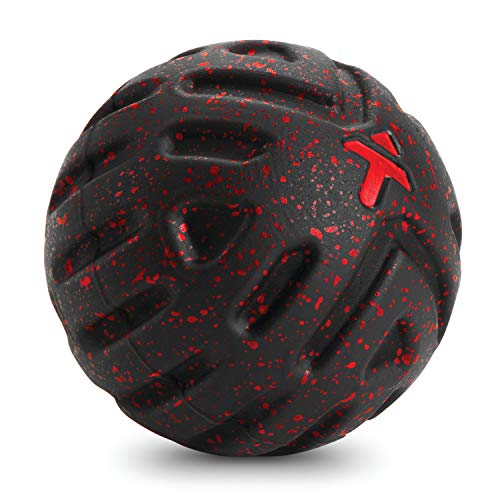
Pair knee sleeves with our foam rollers for self-myofascial release, or massage balls for trigger-point work on tight quads and IT bands.
Last updated: July 13, 2026. Prices and availability shown are accurate as of this time and are subject to change. As an Amazon Associate, DeskFitPro earns from qualifying purchases.
Ready to Buy?
We may earn a commission if you buy through these links.
Prices checked: Oct 3, 2026, 8:06 PM UTC
Product prices and availability are accurate as of the date/time indicated and are subject to change. Any price and availability information displayed on Amazon.com at the time of purchase will apply to the purchase of this product.
Any prices mentioned in the article text are approximate and for comparison only; the figure shown with each product above is the one checked against Amazon at the time stated.
As an Amazon Associate, DeskFitPro earns from qualifying purchases.