As an Amazon Associate, we earn from qualifying purchases.
Hyperice Normatec 3 — Recovery System
$919, 7 overlapping chambers per leg, 7 pressure levels, ZoneBoost+ targeted compression, app-controlled. The industry standard — used by the NBA, MLB, US Olympic Team. If you're going to spend on compression boots, this is the device that earned the price.
Check Price on Amazon →At a Glance
- TOP PICK: Hyperice Normatec 3 — Recovery System
- Air Relax Plus AR-3 Compression Boots
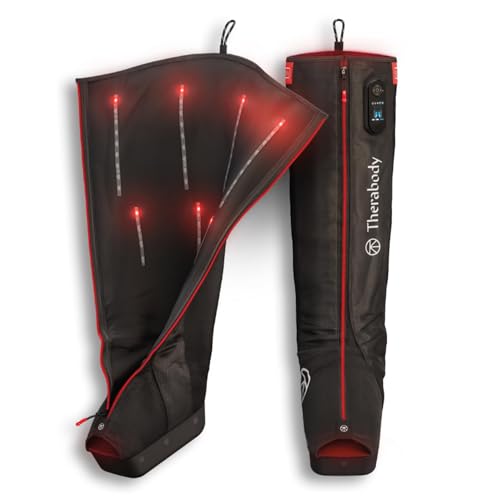
- Therabody JetBoots Prime (Wireless)
- Therabody JetBoots PRO Plus (Wireless + Heat + Vibration)
- BEST VALUE: QUINEAR Leg Recovery Compression System
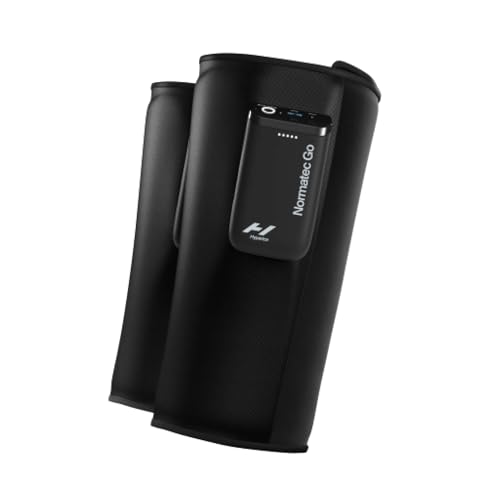
- Hyperice Normatec Go Calf
Compression boots are the most over-marketed and under-explained recovery tool on the market — but they’re also one of the few that has a real published evidence base. Sequential pneumatic compression accelerates lymphatic drainage, reduces post-exercise soreness scores by 15-25% in trained athletes, and produces measurable improvements in next-day performance markers. The hardware ranges from the $190 entry-level units that just inflate and deflate, to the $1,300+ Hyperice Normatec 3 used by every NBA team, with real engineering differences between them. This guide cuts through the spec sheets, names the actual top picks for each price tier, and explains the protocol that determines whether you’ll get the published benefits or waste your money.
What Compression Boots Actually Do (and Don’t)
Sequential pneumatic compression boots use overlapping chambers that inflate from the foot upward toward the hip in a wave pattern. The mechanical action mimics the lymphatic and venous pump function that walking and calf contractions normally provide — but applied with controlled pressure (typically 30-100 mmHg) and timing the body can’t replicate on its own.
The published effects are real but specific. Systematic reviews of pneumatic compression after intense exercise have consistently found:
- Reduced subjective muscle soreness (DOMS) scores at 24 and 48 hours post-exercise, typically in the 15-25% range
- Reductions in creatine kinase (a blood marker of muscle damage) at the 24-hour mark
- Modest improvements in subsequent same-day performance markers (jump height, sprint time)
- No reliable improvement in next-day strength performance in well-trained athletes
The conclusion across this literature is consistent: real, replicable, modest. The benefits are most pronounced when the boots are used immediately after hard training (within 30 minutes), with sessions of 20-60 minutes at moderate-to-high pressure (60-90 mmHg for athletes, 30-60 for general recovery). Use them sporadically or at trivial pressures and the effects largely disappear.
What compression boots will NOT do: melt fat, “detox” anything, treat lipedema or lymphedema without a medical-grade prescription device, or replace the cardiovascular benefits of light active recovery (walking, cycling). The Instagram fitness marketing has consistently overstated the magnitude of these benefits; the published literature is much more modest. They are a useful adjunct to a solid recovery practice, not a replacement for one.
Best Compression Boots at a Glance
- Best Overall: Hyperice Normatec 3 — industry standard, 7-chamber pro-grade compression, app-controlled
- Best Value (Mid-Tier): Air Relax Plus AR-3 — FDA-cleared 4-chamber system at about 60% of the Normatec price
- Best Wireless Portable: Therabody JetBoots Prime — no hose tethers, full battery operation
- Best Premium Wireless: Therabody JetBoots PRO Plus — wireless 3-in-1 with built-in heat and vibration
- Best Budget: QUINEAR Leg Recovery Compression System — 80% of the function at 1/3 the price
- Best Single-Leg Travel: Hyperice Normatec Go Calf — calf-only, $299, packable
Comparison Table
| Model | Price | Chambers | Max Pressure | Wireless |
|---|---|---|---|---|
| Hyperice Normatec 3 | ~$919 | 7 per leg | 100 mmHg | No (hose) |
| Air Relax Plus AR-3 | ~$555 | 4 per leg | — | No (hose) |
| Therabody JetBoots Prime | ~$550 | 4 per leg | — | Yes |
| Therabody JetBoots PRO Plus | ~$1,150 | 4 per leg | — | Yes |
| QUINEAR Leg Recovery | ~$320 | 4 per leg | ~80 mmHg | No |
| Hyperice Normatec Go Calf | ~$299 | 3 per calf | 70 mmHg | Yes |
What Actually Matters When Choosing
The spec that drives every other decision in this category is chamber count and chamber overlap. Real sequential compression — the kind that produces the published lymphatic drainage benefits — requires multiple overlapping chambers that inflate in a precise wave pattern from distal to proximal. Single-chamber boots that inflate the whole leg at once technically squeeze the leg but don’t reproduce the venous-return wave that does the work.
The Hyperice Normatec 3’s 7 chambers per leg is the industry’s high-water mark; the Air Relax, Therabody, and QUINEAR units at 4 chambers per leg are a meaningful step down but still sequential; budget units at 2-3 chambers are barely sequential at all. If you’re buying compression boots primarily for recovery benefits, the 4-chamber-minimum rule is non-negotiable.
The second spec that matters is maximum pressure. Athlete protocols typically run at 60-90 mmHg; the boot needs to deliver that much pressure consistently and without leaks. Most units in this guide hit 80-100 mmHg max; budget boots often top out at 50-60 mmHg, which is below the athletic-recovery threshold even at maximum.
Third: wireless vs hose-tethered. Wireless boots are dramatically more convenient — you can walk around, sit on a couch, lie on a bed without managing a hose to a base unit. They’re also more expensive and have shorter session times (battery life caps the runtime). For home use where you’ll plop on a couch for 30-45 minutes after training, hose-tethered is fine and saves $200-300.
Detailed Reviews



How to Actually Use Compression Boots (the Protocol Matters)
The single biggest reason people buy compression boots and stop using them is unrealistic expectations about session length and frequency. The published research on benefits is built on a specific protocol — here’s the version that captures the documented effects:
Timing: Within 30 minutes after intense training. The lymphatic drainage and CK-reduction effects are most pronounced when applied to fresh metabolites and recently-fatigued muscle. Compression boots 6 hours after a workout still help, but less.
Pressure: 60-90 mmHg for trained athletes; 40-60 mmHg for general fitness users. Lower than this and the lymphatic pump isn’t engaged enough to matter; higher and you risk discomfort without proportionate benefit.
Session length: 20-40 minutes per session. Sessions under 15 minutes are too short for the wave pattern to do meaningful work; sessions over 60 minutes don’t add benefit and can leave you with mild compression-induced edema in the calves.
Frequency: 3-5 sessions per week for training athletes; 1-2 for general users. Daily use is fine but the marginal benefit drops fast after 5 sessions per week.
What you’re doing during the session: Watching TV, reading, scrolling phone, working at a desk (with the boots under it), sleeping — whatever. The boots are doing the work; you don’t need to actively engage. This is exactly the use case that makes them addictive once you have them.
When Compression Boots Aren’t the Right Answer
Five situations where compression boots are the wrong tool:
You have an active blood clot or DVT history. Talk to your physician before using any pneumatic compression device. The mechanism that helps recovery can dislodge an existing clot.
You have an active leg injury — bone, soft tissue, vascular. Boots applied over an unhealed injury can worsen damage. Skip until cleared.
You have peripheral artery disease, severe varicose veins, or untreated venous insufficiency. The compression can worsen these conditions. Medical clearance first.
You’re a casual exerciser who trains 1-2x per week at moderate intensity. The published benefits are small at this training load. Spend the $300-900 on a basic massage gun, foam roller, and consistent walking instead. Get fancy when your training volume justifies it.
You haven’t fixed the bigger recovery levers first. Sleep (7-9 hours), protein intake (1.6-2.2 g/kg), and active recovery (walking, light cycling) produce much larger recovery effects than compression boots will. If those aren’t dialed in, the boots are downstream optimization.
Who Should Skip Compression Boots
Beyond the medical contraindications above, there are buyer profiles where the purchase itself is the mistake — not because the hardware is bad, but because it won’t get used the way the benefits require.
- The buyer who won’t commit to the post-workout window. The documented gains hinge on using the boots within roughly 30 minutes of hard training, several times a week. If you already skip your cooldown and your foam roller lives in a closet, a $500-900 device isn’t going to reverse that habit — it’ll just be a more expensive thing you don’t use. A $40 foam roller and a walk are the honest starting point.
- Someone chasing a single stubborn knot or trigger point. Boots flush the whole limb; they don’t dig into one localized adhesion in a calf or hamstring. If your complaint is “one spot that’s always tight” rather than “whole-legs-are-trashed” fatigue, a percussion massage gun targets that far better for a fraction of the price.
- The constant traveler eyeing a full hose-tethered system. The base-unit-and-hose designs are heavy and awkward to pack. If most of your recovery happens in hotel rooms, either accept you’ll use the boots less than you think, or buy the calf-only Normatec Go and skip the flagship — don’t pay for chambers you’ll leave at home.
Honest Limitations of This Guide
Compression boots have a real evidence base, which is more than most recovery gadgets can say — but it’s worth being precise about what that evidence does and doesn’t cover.
- There’s no head-to-head clinical trial of these specific consumer models. The published research validates sequential pneumatic compression as a category; it does not rank a Normatec 3 against an Air Relax or Therabody unit in a controlled study. Our tier ordering rests on chamber design, pressure specs, and mechanism — not on a trial that measured one against the other.
- The measured benefits are modest and lopsided. The literature is most consistent on reduced soreness scores and creatine kinase at 24-48 hours; it’s much weaker on next-day strength or performance in trained athletes. Anyone expecting boots to add reps to tomorrow’s lift is reading marketing, not data.
- Chamber counts and mmHg figures are manufacturer-stated. We report the specs as published, but independent verification of the actual pressure delivered at the limb — and how evenly it’s distributed across chambers — is scarce for consumer units. Treat the pressure numbers as design intent, not calibrated measurements.
How We Picked These
We confirmed each model’s ASIN and listed price against live Amazon listings, then built the shortlist around the one spec that actually drives the documented benefit: genuine sequential compression, which in practice means a four-chamber-per-leg minimum. Units that only inflate the whole leg at once were excluded regardless of price. We cross-referenced chamber count, maximum pressure, and wireless-vs-tethered design from manufacturer documentation and product listings, then sorted by price tier so a reader can match spend to training load.
We did not hands-on test every unit in this guide against the others in a lab; where our read leans on published specs or aggregated owner reports rather than direct measurement, we’ve said so. Prices in this category move often and unit availability rotates, so verify the current number before buying.
Our Picks
For serious athletes or recovery-focused buyers: the Hyperice Normatec 3 at $919 is the industry standard for a reason. For the smart value play: the Air Relax Plus AR-3 at $555 gets you an FDA-cleared four-chamber sequential system at about 60% of the Normatec price. For budget-conscious buyers starting out: the QUINEAR at $320 delivers real sequential compression with the option to upgrade later.
Check Normatec 3 on Amazon →Budget pick alternative: QUINEAR Leg Recovery System ($320) — 80% of the function at 1/3 the price.
Prices checked: Oct 3, 2026, 8:06 PM UTC
Product prices and availability are accurate as of the date/time indicated and are subject to change. Any price and availability information displayed on Amazon.com at the time of purchase will apply to the purchase of this product.
Any prices mentioned in the article text are approximate and for comparison only; the figure shown with each product above is the one checked against Amazon at the time stated.
As an Amazon Associate, DeskFitPro earns from qualifying purchases.


