As an Amazon Associate, we earn from qualifying purchases.
Polar H10
The reference strap every other manufacturer benchmarks against. Used in published cardiology studies as the consumer stand-in for clinical ECG. Dual ANT+ and Bluetooth, internal memory for strapless workouts, and a strap that lasts years instead of months. If you only buy one, buy this.
Check Price on Amazon →At a Glance
- BEST OVERALL: Polar H10
- COMPARE THIS OPTION: Garmin HRM 600 (Pro Plus successor)
- BEST SMART FEATURES: Wahoo TRACKR
- BEST BUDGET: Coospo H6
- CHEAPEST RELIABLE: Magene H64
| Product | Price as of Oct 3, 2026, 8:06 PM UTC | Rating |
|---|---|---|
| Polar H10 | $104.88 | 4.2★ |
| Garmin HRM 600 (Pro Plus successor) | $158.99 | 4.6★ |
| Wahoo TRACKR | $97.00 | 4.3★ |
| Coospo H6 | $29.99 | 4.2★ |
| Magene H64 | $19.99 | 4★ |
Here is the uncomfortable truth your Apple Watch will not tell you: during interval training, wrist-based heart rate monitors are wrong by 20–40 beats per minute for the first 5–15 seconds of every effort change. Cardiologists writing in the Journal of Sports Sciences, independent testers at DC Rainmaker, and the engineers who designed the sensors all agree on this. Your watch lies during exactly the moments you bought it to measure.
A $50 chest strap fixes the problem. Not because chest straps are exotic — but because they measure the actual electrical signal of your heartbeat instead of guessing at blood flow under your skin. For Zone 2, VO2 max intervals, or any workout where you care about when your heart rate changed (not just that it changed), a strap is non-negotiable. This guide covers the 5 chest straps that test within 1–2 bpm of medical ECG — plus exactly when wrist-based HR is fine and when it will sabotage your training.
Why Wrist HR Is Wrong During Intervals
Your Apple Watch, Garmin Fenix, Whoop, and Oura Ring all measure heart rate the same way: photoplethysmography (PPG). A green LED shines into your skin, and a photodiode measures how much light bounces back. When your heart pumps, capillaries swell with blood, more light is absorbed, and the sensor infers a heartbeat. It is clever engineering. It is also fundamentally indirect — and the indirection breaks down the second your workout gets interesting.
The problem is physics, not firmware. PPG measures blood flow, which is a downstream consequence of heart rate, not heart rate itself. Blood takes time to redistribute. Capillary beds dilate slowly. Skin perfusion changes with temperature, hydration, and pressure. When your heart rate jumps from 130 to 170 because you started a hill repeat, your wrist sensor is still seeing the blood flow pattern of 130 — and it takes 5 to 30 seconds before the optical signal catches up. Independent testing by DC Rainmaker has documented wrist HR readings off by 35 bpm during the first 60 seconds of high-intensity intervals, on hardware costing $800+.
It gets worse. Wrist flexion during lifting compresses capillaries and produces phantom heartbeats. Cold skin reduces peripheral blood flow and makes the signal disappear entirely. Tattoos absorb green light and break detection in that region. Sweat creates micro-gaps between the sensor and skin. Even a strap that is half a notch too loose can cost you 20 bpm of accuracy. The wrist is, biomechanically, the worst possible place on the body to measure heart rate — it just happens to be where we wear watches.
A chest strap measures something completely different: the electrical depolarization of your heart muscle. Two electrodes pressed against your sternum pick up the same signal a 12-lead ECG records in a hospital, just simplified to a single channel. There is no inference, no delay, no blood-flow proxy. When your heart fires, the strap sees it within the same beat. Published validation studies put the Polar H10 within 1–2 bpm of medical-grade ECG across all intensities. That is not marketing — that is why exercise physiologists use them as the reference device.
The Tech: Optical PPG vs Electrical ECG-Style Signal
It helps to look at the two measurement methods side by side. Optical sensors (PPG) and electrical sensors (ECG-style) are not different brands of the same thing — they are different physical principles, with different failure modes, different lag profiles, and different ideal use cases.
The thing to internalize: PPG is not a slightly worse ECG. It is a fundamentally different measurement that is good enough for resting HR, daily averages, and slow steady-state work — and quietly wrong for everything else.
Detailed Reviews
1. Polar H10
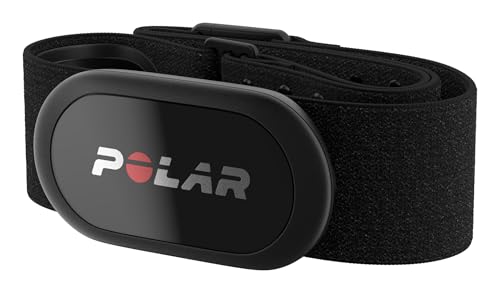
Why it's #1: When DC Rainmaker reviews a new strap, he benchmarks it against the H10. When Polar themselves released the newer H10 successor concepts, they retained the H10 as their flagship. When Whoop publishes accuracy claims, they validate against an H10. There is no other consumer device with this status. If the question is "which strap will be right when everything else disagrees," this is the answer.
- The reference strap. Published cardiology research uses H10 as the consumer ECG stand-in
- Connects to literally everything — Garmin, Wahoo, Peloton, Zwift, Apple Watch, Strava, Whoop, TrainingPeaks
- Replaceable strap and battery — module lasts 5+ years with care
- Best-in-class motion artifact rejection (no phantom spikes during burpees)
- Most expensive of the strap-only options
- Strap can need a quick rinse with water at the electrodes before short sessions
- No rechargeable battery (some users prefer it, some hate it)
2. Garmin HRM 600 (Pro Plus successor)

Why it's here: If your watch is a Garmin, this is the strap. Running dynamics on Fenix/Forerunner is gated behind Garmin's own HRM line — no third-party strap exposes those metrics. The swim HR storage feature alone justifies the premium if you do any pool work. For non-Garmin owners, the H10 wins on price and brand-agnosticism.
- Unlocks running dynamics on Forerunner/Fenix/Epix watches that don't otherwise expose them
- Stores swim HR underwater — Bluetooth and ANT+ don't transmit through water, so this is the only way to get accurate pool HR
- Rechargeable instead of coin cell — fewer "battery died mid-race" moments
- Treadmill mode is uncannily good for indoor runners without GPS
- Most expensive strap on the list — the Garmin-specific features add ~$70 over the Polar H10
- Some running dynamics fields require a compatible Garmin watch to display
- Strap connector is proprietary — not cross-compatible with H10 strap replacements
3. Wahoo TRACKR

Why it's here: The Wahoo TRACKR is what the Polar H10 would look like if it were designed in 2025 instead of 2017. Rechargeable, slimmer, auto-pairing. The accuracy data so far puts it in the same conversation as the H10 — not quite the same proven track record, but within the margin where it doesn't matter for training. Pick this if comfort and convenience matter more than reference-strap pedigree.
- The most comfortable chest strap on this list. Soft fabric, no buckle dig
- Auto-wake means you don't fight with pairing — strap is broadcasting before you finish lacing your shoes
- Rechargeable battery means no scrambling for CR2025s
- Excellent companion to Wahoo Kickr / Kickr Bike setups
- Newer product, smaller validation history than Polar H10
- Magnetic charging puck is one more thing to lose
- Wahoo Fitness app is good, not great — most users will pair it to Zwift or a watch instead
4. Coospo H6
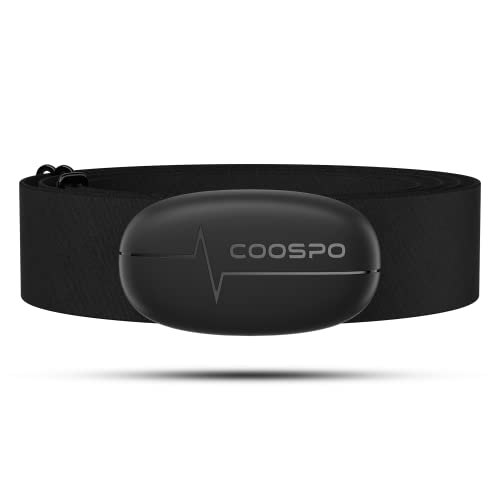
Why it's here: The Coospo H6 is a simpler chest-strap option to compare if you want basic heart-rate recording. Confirm compatibility with your watch or app. We have not established equal accuracy to the other straps across workouts.
- Wildly cheap for what you get — under $30 for the same dual-band protocol as a $105 strap
- Accuracy testing on YouTube and Reddit consistently puts it within a few bpm of the H10 in steady state
- 3,300+ Amazon reviews and a real customer support line — not a fly-by-night brand
- Replaceable strap and battery — long-term ownable
- Motion artifact rejection is not as tight as the H10 — occasional phantom HR spike during heavy lifting
- Strap material is stiffer than premium options, less comfortable for runs over 90 min
- No internal memory — needs a connected device to record
5. Magene H64

Why it's here: If $25 is the price you wanted to pay for a chest strap, the Magene H64 is the one that actually works. Same dual-band protocol as a Polar H10, just without the polish, the brand, and the bulletproof QA. Big in the Zwift community for a reason — it pairs cleanly and stays paired.
- Under $25 with full dual-band protocol — the cheapest credible chest strap on Amazon
- Popular in the indoor cycling community (Zwift, TrainerRoad, Rouvy) — known good
- Snap connectors match the standard Polar/Garmin strap pattern, so you can replace the elastic with any aftermarket strap
- Battery life is genuinely long if you remember to detach the pod after rides
- Quality control is more variable than name-brand straps — some users report dud units (Amazon return policy makes this low-risk)
- Companion app is barebones — you will not use it; you will pair to your existing platform instead
- Strap material breaks down faster than Polar/Wahoo (budget for a new $10 strap each year)
The Latency Problem: How 8 Seconds of Lag Wrecks Your Zone 2
Heart-rate zone definitions differ by training method and individual physiology. Set zones using your chosen protocol, and check that the strap pairs reliably with the device recording your workouts.
Here is what wrist HR does to that protocol. You start an easy ride. Your watch reads 138 bpm, comfortably inside Zone 2. You feel like you could push a little. You add 30 watts. Your actual heart rate climbs to 158 — out of Zone 2, into Zone 3. Your watch is still reading 142 because PPG lags 8–15 seconds during transitions. By the time the watch catches up and you back off, you have spent 30 seconds anaerobic. Repeat that micro-error fifteen times in a 90-minute ride and you have done a tempo workout, not a Zone 2 workout. The aerobic adaptation you were trying to drive does not happen.
This is not a rare failure mode. It is the default behavior of optical sensors at every inflection point in your workout. The strap fix is immediate: the H10 sees the 158 the same beat your heart fires it, and you back off in 1–2 seconds instead of 15. Over the course of a training block, the difference is not subtle — it is the difference between progressing and plateauing.
If you have ever wondered why your structured training “isn’t working,” and you have only ever used wrist HR, this is the first place to look. Pair a strap for two weeks. If your watch and the strap agree, fine. If they don’t — and they won’t, during intervals — the strap is right.
ANT+ vs Bluetooth vs Both: What Your Bike Computer or Watch Needs
One of the most under-explained aspects of chest straps is which radio protocol you actually need. The short version: buy dual-band (ANT+ and Bluetooth) and never think about it again. Every strap on this list is dual-band. Here is what the protocols do:
- ANT+ is the older standard, originally designed for the fitness industry. It can broadcast to unlimited receivers simultaneously. Garmin watches, Wahoo bike computers, and most dedicated fitness hardware speak ANT+ natively. If your watch is a Garmin Fenix or Forerunner, ANT+ is the path of least resistance.
- Bluetooth LE is the universal modern radio. It works with phones, Apple Watch (via apps), Peloton screens, Zwift on laptops, and basically anything made in the last 10 years. The historical limitation was one connection at a time — modern straps (H10, TRACKR, HRM 600) now support 2–3 simultaneous Bluetooth pairings.
- Dual-band straps broadcast both at once. Your Garmin watch can grab the ANT+ signal while Zwift on your laptop simultaneously grabs Bluetooth. No mode-switching, no app dance.
Practical consequence: avoid Bluetooth-only straps (some cheaper models). The $5–$10 you save will cost you a hardware change the next time you upgrade a watch.
Stacking: Chest Strap + Apple Watch / Garmin / Whoop
You do not have to choose between a chest strap and your existing wearable. The smart play is to keep the wearable for 24/7 metrics — sleep, HRV trends, daily activity, recovery scoring — and pair a chest strap only during workouts where accuracy matters. Most platforms support this natively:
- Apple Watch: Open the Workout app, scroll to the workout type, and pair the strap as an external HR source via Bluetooth. The watch will use the strap as the source of truth and ignore its own wrist sensor during the workout, then revert to wrist HR afterward.
- Garmin watches: Add the strap as an HR sensor in Settings. The watch will prefer the strap when broadcasting, and combine it with wrist-based metrics like Pulse Ox and Body Battery in the background.
- Whoop: Whoop will not directly accept a chest strap signal, but you can record workouts in Strava or Apple Health with the strap, and Whoop’s strain calculation will use whichever HR source it sees as more reliable for that workout.
- Peloton: Open the device pairing screen mid-ride, search for the strap, pair. Peloton overrides any other HR source the moment a strap is connected.
This stack — wearable for daily, strap for workouts — is what most serious athletes actually do. The wearable handles trends; the strap handles truth.
Who Should NOT Use a Chest Strap
Chest straps are not universally better. They are better for measuring rapid changes in heart rate, which is most of training but not all of it. Skip the strap if:
- You only do steady-state work. If your training is exclusively Zone 1 walks, gentle yoga, or long easy runs where your HR barely changes, a wrist sensor is fine. PPG accuracy is excellent at steady state — the failure mode is transitions.
- You are tracking aggregate daily activity, not workouts. Step counts, calories burned over a day, resting HR trends, sleep heart rate — wrist and ring sensors are designed for this and do it well.
- You have skin sensitivities or chest implants. Some users find chest straps irritate skin during long sessions. Wet the electrodes before putting it on, or look at armband alternatives (Polar Verity Sense, Wahoo TICKR FIT) which use optical PPG but on the upper arm where the signal is dramatically better than at the wrist.
- You hate strapping things on. Honest answer: the best heart rate monitor is the one you’ll actually wear. A wrist HR you use beats a chest strap in a drawer.
For everyone else — anyone doing intervals, structured Zone 2, lifting where HR matters, or any sport with rapid intensity changes — the strap pays for itself in one block of training. For broader wearable strategy, see our Oura vs Whoop vs Garmin comparison on which 24/7 tracker stacks best with a chest strap.
How We Picked These
- Accuracy vs ECG reference — only straps with documented validation against medical-grade ECG within ±2 bpm at all intensities
- Dual-band protocol — ANT+ and Bluetooth required; single-band straps disqualified
- Real-world reliability — minimum 500 Amazon reviews with 4.0★+ average, and an established presence in the cycling/running community
- Strap longevity — replaceable strap, replaceable or rechargeable battery, no built-in obsolescence
- Cross-platform pairing — must work with at least Garmin, Wahoo, Peloton, Zwift, and Apple Watch ecosystems
We disqualified several popular Amazon options for being Bluetooth-only, having no track record in independent accuracy testing, or being rebadged generic hardware with no support. The 5 picks here cover the full range from $20 to $180 with no compromises on the core measurement.
Honest Limitations of This Guide
The chest-strap accuracy story is strong, but it’s not uniform across every pick — and it’s worth being clear about where the evidence thins out.
- The “±1–2 bpm vs ECG” validation applies mainly to the Polar H10. That figure comes from published work using the H10 as a reference device — it does not automatically transfer to the Coospo H6, Magene H64, or the newer Wahoo TRACKR, which we rate on independent tester comparisons and steady-state agreement rather than peer-reviewed validation. Treat the budget picks as “very good in steady state,” not “clinically proven at every intensity.”
- We did not run our own synchronized-ECG accuracy testing. The motion-artifact and lag claims here lean on independent testers like DC Rainmaker, community reports, and manufacturer specs — not a controlled study we conducted. The direction is well-supported; the exact bpm deltas you’ll see depend on your body and fit.
- Fit, electrode moisture, and skin chemistry drive real-world accuracy as much as brand. A dry or slightly loose H10 can read worse than a well-fitted budget strap for the first few minutes, and dropout or phantom spikes are partly a strap-position problem. Your session-to-session results genuinely vary for reasons that have nothing to do with which strap you bought.
Frequently Asked Questions
How accurate is a chest strap compared to a medical ECG?
The Polar H10, Garmin HRM line, and Wahoo TRACKR all test within ±1–2 bpm of 12-lead clinical ECG in published validation studies. Wrist-based optical sensors typically test at ±5–15 bpm in dynamic conditions, with errors of 20–40 bpm during the first 5–15 seconds of intensity changes.
Do I need both ANT+ and Bluetooth?
Yes — buy dual-band. ANT+ is what most bike computers and Garmin watches speak; Bluetooth is what phones, Apple Watch, and Zwift speak. Dual-band straps broadcast both simultaneously, so you never need to remember which mode you are in.
Can I wear a chest strap with an Apple Watch?
Yes. Open the Workout app, start a workout, and the watch will prompt you to pair external HR sources via Bluetooth. The strap overrides the wrist sensor for the duration of the workout. After the workout ends, the watch reverts to wrist HR for daily tracking.
Why does my chest strap read low at the start of a workout?
Dry electrodes. Wet the two contact strips on the inside of the strap with water or a tiny dab of electrode gel before putting it on. The strap needs skin conductivity to pick up the electrical signal, and dry skin in the first few minutes can give a 30–60 second period of low or missing reads.
How long does the battery last in a chest strap?
CR2025/CR2032 coin cell straps (Polar H10, Coospo H6, Magene H64) last 300–500 hours of use. Rechargeable straps (Wahoo TRACKR, Garmin HRM 600) last 100–180 hours per charge. For most non-pro athletes, both formats translate to 6–12 months between battery events.
Will a chest strap work for swimming?
Only specific models. ANT+ and Bluetooth do not transmit through water, so during a swim the strap cannot broadcast live to a watch. The Garmin HRM 600 (and predecessor HRM-Pro/HRM-Tri) stores swim HR internally and downloads it to the watch after the session. The Polar H10 also stores one workout in memory. Generic straps and the Coospo/Magene budget options will not work for swim HR.
Are armband optical monitors a good middle ground?
Yes, with caveats. The Polar Verity Sense and Wahoo TICKR FIT use PPG (optical) like a watch, but on the upper arm where the signal is dramatically cleaner — no wrist flexion artifact, better skin contact, less ambient light interference. Accuracy is closer to a chest strap than a wrist watch, though still slightly worse during very rapid HR changes. If you cannot tolerate a chest strap, an armband is the next-best option.
Final Thoughts
If you are reading this and you don’t already own a chest strap, the practical answer is: buy the Polar H10. It is the reference device every other manufacturer benchmarks against, it pairs with everything, and it will outlast two or three of your watches. The premium over the budget options is roughly the cost of one month of a Whoop subscription, and you will own it forever.
Compare the Garmin HRM 600 for compatible Garmin training features, the Wahoo TRACKR for a rechargeable option, and the Coospo H6 for a simpler strap. We have not established equal accuracy or comfort across these products in controlled testing.
The thing not to do is keep training on wrist HR alone, assume the numbers are right, and wonder why your structured training is not progressing. The error is real, it is documented, and it is fixable for the cost of dinner. For complementary tracking, our best Oura Ring guide covers 24/7 recovery, and walking pads with incline are an underrated way to get Zone 2 work in at a desk.
Last updated: July 01, 2026 at 01:11 PM ET. Prices and availability shown are accurate as of this time and are subject to change. As an Amazon Associate, DeskFitPro earns from qualifying purchases.
Ready to Buy?
We may earn a commission if you buy through these links.
Prices checked: Oct 3, 2026, 8:06 PM UTC
Product prices and availability are accurate as of the date/time indicated and are subject to change. Any price and availability information displayed on Amazon.com at the time of purchase will apply to the purchase of this product.
Any prices mentioned in the article text are approximate and for comparison only; the figure shown with each product above is the one checked against Amazon at the time stated.
As an Amazon Associate, DeskFitPro earns from qualifying purchases.