As an Amazon Associate, we earn from qualifying purchases.
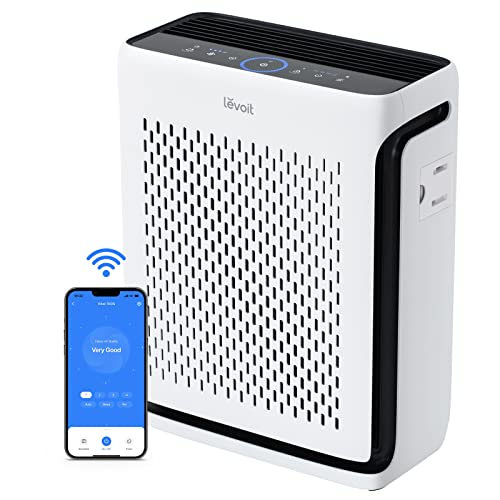
Levoit Vital 100S-P
A smart purifier option to compare for your room. Confirm clean-air delivery rate, filter availability and the exact model; the linked listing is the Vital 100S-P, not the Core 400S.
Check Price on Amazon →At a Glance
- TOP PICK: Levoit Vital 100S-P — The Allergy Workhorse
- Levoit Vital 200S — Best for Pet Allergies
- Levoit Core 300 — Best Bedroom Purifier
- Levoit Core 600S — For Open-Plan Living
| Product | Price as of Sep 10, 2026, 7:26 PM UTC | Rating |
|---|---|---|
| Levoit Vital 100S-P — The Allergy Workhorse | $119.97 | 4.6★ |
| Levoit Vital 200S — Best for Pet Allergies | $167.96 | 4.5★ |
| Levoit Core 300 — Best Bedroom Purifier | $84.99 | 4.7★ |
| Levoit Core 600S — For Open-Plan Living | $259.99 | 4.5★ |
Air purifiers are one of the most evidence-supported non-pharmacological interventions for allergy symptom management — the Asthma & Allergy Foundation of America explicitly endorses HEPA filtration as a foundational allergen control strategy. The catch: most consumer “air purifiers” don’t deliver true HEPA-grade filtration, and the room coverage claims are often unverified. This guide ranks the five best Amazon-available air purifiers specifically for allergy sufferers, explains the spec sheet items that actually matter (particulate filtration, AHAM verification, ACH rating), and recommends specific models by room size and allergy type.
Health Disclaimer: Air purifiers are wellness devices that can reduce indoor allergen burden, not medical treatments for allergies, asthma, or respiratory conditions. For severe respiratory symptoms, work with an allergist or pulmonologist on a complete management plan that may include medications, immunotherapy, and environmental control.
Why Air Purifiers Help with Allergies
Indoor allergens are the second-biggest controllable variable in allergy management (the first is avoidance / removal at source — pet-free zones, no carpet, regular cleaning). The Asthma & Allergy Foundation of America consistently identifies HEPA filtration as a foundational intervention. The major indoor allergens HEPA filtration captures:
- Dust mite particles — fecal pellets are 10-40 microns, well above the HEPA capture threshold
- Pet dander — flakes of skin and saliva proteins, typically 2.5-10 microns
- Pollen — 10-100 microns, very efficiently captured by HEPA
- Mold spores — 1-30 microns depending on species; most efficiently captured
- Cockroach allergens — protein particles 1-10 microns
Critical caveat: HEPA filters capture airborne allergens. They don’t capture allergens settled in carpet, upholstery, or bedding — that requires vacuuming with HEPA-equipped vacuum or removing the source. The combination of source control + HEPA filtration produces the largest measurable allergy symptom reduction.
The Air Purifier Specs That Actually Matter for Allergies
Filter claim and airflow. EPA’s HEPA explanation describes theoretical particle capture by a HEPA filter. Verify the exact purifier and replacement filter; we cannot classify every Levoit model as H13. Compare clean-air delivery rate and room size as well as filter wording.
2. AHAM Verified room coverage. Independent third-party verification (Association of Home Appliance Manufacturers) of the room coverage rating. AHAM-verified ratings are tested rigorously; manufacturer-only claims often inflate coverage.
3. ACH (Air Changes per Hour) rating. For allergy sufferers, you want 4-5 ACH minimum — meaning the purifier filters the entire room’s volume 4-5 times per hour. The “room coverage” rating is typically based on 2 ACH; if you need 4-5 ACH, choose a purifier rated for double your actual room size.
4. Activated carbon filter. HEPA captures particles; carbon captures VOCs (volatile organic compounds, gases, odors). For users with chemical sensitivity or homes with strong odor sources (cooking, pets), activated carbon is meaningful.
5. Quiet operation at high speeds. Air purifiers only help if you actually run them. Models that are too loud at the speeds needed for adequate ACH get turned off. Look for <50 dB at maximum fan speed for bedroom use.
Best Air Purifiers for Allergies at a Glance
- Best Overall: Levoit Vital 100S-P — 1,073 sq ft, smart features, particulate filtration
- Best for Pet Allergies: Levoit Vital 200S — washable pre-filter for heavy pet hair loads
- Best for Bedroom: Levoit Core 300 — quiet operation, 219 sq ft, bestseller
- Best for Large Open Spaces: Levoit Core 600S — 2,933 sq ft coverage
- Best Premium Alternative: Coway Airmega 400S — premium build, slightly quieter operation
Detailed Reviews


Where to Actually Place Your Air Purifier
The published guidance from indoor air quality researchers:
- Bedroom is the priority placement for most allergy sufferers — you spend 7-9 hours per night there, breathing concentrated allergens from bedding and carpeting.
- Position centrally if possible — corner placement reduces effective coverage by 30-40% due to airflow obstruction. A purifier should have 6+ inches of clearance on all sides.
- Don’t place near windows or doors — outside air flowing through dilutes filtered air. Place toward room interior.
- Height matters less than airflow path — most consumer purifiers can sit on the floor; some perform slightly better elevated 1-2 feet, but the gain is small.
The Allergy Symptom Reduction Protocol
Specific to allergy management, not generic air purification:
Week 1: Source control + purifier install. Vacuum carpets with a HEPA-equipped vacuum. Wash bedding in 130°F+ water. Install the purifier in your bedroom and run it 24/7 at the speed needed for 4 ACH in your specific room size. Track subjective symptoms on a 1-10 scale.
Week 2-3: Consistency + monitoring. Keep the bedroom purifier running. Add a second unit in the main living space if you spend significant waking hours there. Most users notice 30-50% symptom reduction within 2-3 weeks.
Week 4+: Adjust based on triggers. If you have pet allergies, add the washable pre-filter (Vital 200S) and increase filter replacement frequency. If you have seasonal allergies, the auto mode handles pollen spikes. If you have year-round dust mite allergies, the bedroom unit is doing the heaviest lifting.
When to Skip: an Air Purifier
Your allergies need medical evaluation. Severe seasonal allergies, food allergies, anaphylaxis history, or symptoms interfering with daily functioning — see an allergist. Air purifiers can be part of a complete management plan but are not substitutes for proper diagnosis and treatment (which may include immunotherapy, prescription antihistamines, or other medical interventions).
You haven’t done source control. Air purifiers handle airborne allergens. If your carpets, upholstery, and bedding are full of settled allergens, the purifier helps marginally. Vacuum, wash, and consider removing carpet first.
You have a mold problem. Active mold growth in walls, basements, or ductwork requires remediation, not just air filtration. The purifier captures airborne spores but doesn’t address the source.
Your bedroom is too small for the unit. Don’t oversize — a Core 600S in a 200 sq ft bedroom runs at low fan speed and doesn’t deliver more allergen reduction than a Core 300. Match the unit to the room.
Honest Limitations of This Guide
Air purifiers are genuinely useful for allergy sufferers, but the specifics deserve honest hedging:
- No clinical trial tests these exact Levoit models against your specific allergy profile. The evidence that HEPA filtration lowers indoor allergen burden is solid at the category level; there is no head-to-head study proving a Vital 100S-P reduces sneezing more than a Coway Airmega in a real bedroom. The model ranking here rests on verified specs (particulate filtration, AHAM coverage, dB, ACH math), not on a controlled symptom study.
- The “coverage” numbers hide an allergy-grade gap. AHAM-style coverage ratings assume roughly 2 air changes per hour; allergy sufferers want 4-5. That puts the real allergy-grade room size closer to half the headline figure — the Vital 100S-P reads 1,073 sq ft on paper but only about 530 sq ft at 4-5 ACH. Treat the marketing coverage as an optimistic ceiling, not the allergy number.
- This lineup is Levoit-heavy, so “best” is partly “best within one brand.” Levoit dominates the mid-price true-HEPA tier on Amazon, which is why four of five picks are Levoit. Coway, Winix, and Blueair make excellent units too; we did not exhaustively bench every competitor, and replacement filters (roughly $30-50 every 6-12 months per unit) are an ongoing cost the sticker price doesn’t show.
How We Picked These
We prioritized the specs that actually predict allergy relief rather than marketing language: verified particulate filtration filtration (not “HEPA-type”), AHAM-style third-party coverage verification, an ACH rating high enough to hit allergy-grade air changes, activated carbon for VOC and odor control, and noise low enough (under 50 dB) that the unit actually gets left running overnight. We pulled current ASINs and pricing from Amazon at publication and matched each model to a room-size and allergy-type use case.
What we did not do is run these units in an instrumented chamber with a particle counter. The rankings rest on published specifications, AHAM verification where available, and aggregated owner feedback — not our own lab measurements. For your specific room, the ACH math (double your square footage, then match a unit rated for that) matters more than any ranking here.
Our Pick
Compare the exact model, room requirements and replacement filter before choosing. The linked Vital 100S-P was previously mislabeled as a Core 400S; the ASIN is unchanged.
Check Levoit Vital 100S-P on Amazon →For the broader Levoit lineup analysis: read our full Levoit Air Purifier review covering Core 200S, Vital 200S, EverestAir, and the Coway Airmega comparison.
Prices checked: Sep 10, 2026, 7:26 PM UTC
Product prices and availability are accurate as of the date/time indicated and are subject to change. Any price and availability information displayed on Amazon.com at the time of purchase will apply to the purchase of this product.
Any prices mentioned in the article text are approximate and for comparison only; the figure shown with each product above is the one checked against Amazon at the time stated.
As an Amazon Associate, DeskFitPro earns from qualifying purchases.
