As an Amazon Associate, we earn from qualifying purchases.
Walking Pad Treadmill
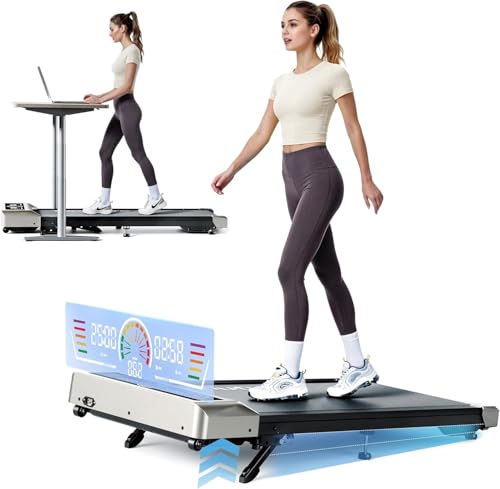
Highest calorie burn, most natural movement, proven cognitive benefits. A walking pad is the best all-around choice for most people working at a desk. Our top pick is the TRAILVIBER with 450 lb capacity and 9-level auto incline.
Read the Guide →| Factor | Walking Pad | Under-Desk Elliptical | Desk Bike |
|---|---|---|---|
| Calories Burned (per hour) | 150–300 cal | 120–200 cal | 100–180 cal |
| Noise Level | 40–55 dB (moderate) | 30–45 dB (quiet) | 25–40 dB (quietest) |
| Desk Type Required | Standing desk (38–46" height) | Standard sitting desk | Standard sitting desk |
| Desk Clearance Needed | 4–6" added height | 10–12" under desk | 24–30" under desk |
| Price Range | $150–$300 | $150–$350 | $150–$400 |
| Joint Impact | Low (weight-bearing) | Very low (no impact) | Very low (no impact) |
| Typing Difficulty | Moderate (first week) | Low | Very low |
| Cognitive Benefit | High (increases brain blood flow 20–30%) | Moderate | Moderate |
| Step Count | Yes (5,000–10,000/day) | No | No |
| Best For | Overall health, weight loss, productivity | Quiet offices, knee-friendly movement | Long sitting sessions, leg circulation |
Walking pads, under-desk ellipticals, and desk bikes all promise to keep you moving while you work — but they solve different problems. I’ve used all three at my desk over the past year, and the right choice depends on your space, noise tolerance, budget, and what kind of movement your body needs. Some are better for burning calories, others for joint health, and one is clearly the quietest option for shared offices.
This guide compares all three categories head-to-head on the metrics that actually matter: calories burned, noise level, desk clearance, price, and joint impact. If you’re ready to buy, I’ll link you to our detailed reviews for each category.
Calories Burned: Walking Pad Wins
Walking at 2.0 MPH on a walking pad burns roughly 150–200 calories per hour for an average adult, and pushing to 3.0 MPH gets you closer to 250–300. An under-desk elliptical at moderate resistance burns about 120–200 calories per hour, while a desk bike at moderate pedaling typically hits 100–180 calories per hour.
The difference adds up fast. Over an 8-hour workday, even walking at a slow 1.5 MPH for 4 hours burns an extra 400–500 calories — that’s the equivalent of a solid gym session without changing clothes or leaving your office. Ellipticals and bikes can’t match that output at comfortable desk-working intensities.
Winner: Walking pad, by a significant margin. The full-body engagement of walking (arms swinging, core stabilizing, legs striding) simply burns more than isolated leg movement.
Noise Level: Desk Bike Is Quietest
If you work in a shared office or take frequent Zoom calls, noise matters. Here’s how they stack up:
- Desk bikes (25–40 dB): Magnetic resistance pedaling is essentially silent. Coworkers won’t know you’re using one.
- Under-desk ellipticals (30–45 dB): Nearly as quiet as bikes, with a gentle whirring sound. Most models are Zoom-friendly.
- Walking pads (40–55 dB): The motor and belt generate a low hum, plus your footsteps add noise. Under 45 dB models exist, but they’re louder than the other two categories. Still quieter than a normal conversation (60 dB).
For reference: a refrigerator hums at about 40 dB, and normal conversation is 60 dB. All three are usable in an office, but if noise is your top concern, a desk bike or elliptical is the safer bet.
Winner: Desk bike, followed closely by under-desk elliptical. If you need a quiet walking pad specifically, see our guide to the best quiet walking pads for shared offices.
Desk Clearance and Setup Requirements
This is where the three options diverge most dramatically:
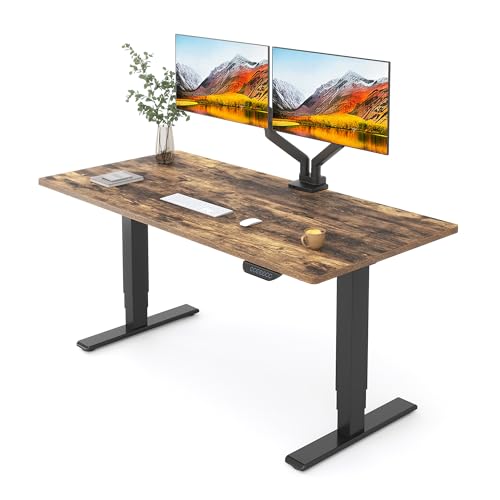
- Walking pads require a standing desk that adjusts to 38–46 inches. The pad itself adds 4–6 inches of height under your feet, so your desk needs to go higher than a normal standing position. If you don’t have a standing desk, you’ll need one — which adds $200–$600 to the total cost.
- Under-desk ellipticals work with a standard sitting desk but need about 10–12 inches of clearance underneath. Most standard desks provide enough room, but measure first. Your knees may bump the desk if clearance is tight.
- Desk bikes need the most vertical clearance at 24–30 inches under the desk, but they work with any desk that gives you enough legroom. Some models have adjustable seat heights to accommodate different desk setups.
Winner: Under-desk elliptical, for working with the widest range of existing desk setups. Desk bikes are a close second. Walking pads require the most investment in desk infrastructure.
Joint Impact and Physical Comfort
All three options are low-impact compared to running or high-intensity exercise, but there are differences:
- Walking pads are weight-bearing exercise, which is actually beneficial for bone density and joint health when done at low speeds. However, people with serious knee or hip issues may find even slow walking uncomfortable for extended periods.
- Under-desk ellipticals provide a smooth, zero-impact motion that’s easy on knees, hips, and ankles. The elliptical path eliminates the foot-strike impact of walking entirely.
- Desk bikes are the gentlest option — seated pedaling puts almost zero stress on joints. Physical therapists often recommend cycling for patients recovering from knee surgery.
Winner: Desk bike for people with joint issues. Under-desk elliptical is a close second. Walking pads are still low-impact but involve weight-bearing movement.
Productivity and Cognitive Benefits
A Mayo Clinic study on active workstations found that walking, stepping, and standing all improved reasoning scores compared to sitting. Typing speed slowed slightly but accuracy was unaffected.
Walking specifically increases blood flow to the brain by 20–30%, boosting levels of BDNF (Brain-Derived Neurotrophic Factor) — a protein critical for memory and learning. This effect is more pronounced with walking than with seated leg movement like biking or elliptical use.
That said, all three options are better than sitting still. The movement itself — regardless of type — helps break up sedentary time and maintain alertness throughout the workday.
Winner: Walking pad, backed by the strongest research on cognitive benefits. But any movement beats sitting.
Price Comparison
The devices themselves are similarly priced, but the total cost of setup differs:
- Walking pad: $150–$300 for the pad + $200–$600 for a standing desk (if you don’t have one) = $150–$900 total
- Under-desk elliptical: $150–$350 (works with your existing desk) = $150–$350 total
- Desk bike: $150–$400 (works with your existing desk) = $150–$400 total
If you already own a standing desk, a walking pad is competitively priced. If you don’t, an elliptical or bike is significantly cheaper to get started with.
Winner: Under-desk elliptical or desk bike if you don’t have a standing desk. Walking pad if you already have one.
The Verdict: Which Should You Buy?
Buy a Walking Pad if…
- You have (or plan to buy) a standing desk
- You want the highest calorie burn and step count
- Cognitive performance and productivity matter to you
- You want the most “natural” form of movement while working
- You don’t work in a noise-sensitive shared office
Our top pick: TRAILVIBER Walking Pad — 450 lb capacity, 9-level auto incline. See all our walking pad reviews →
Buy an Under-Desk Elliptical if…
- You want movement without changing your desk setup
- Quiet operation matters (shared office, frequent calls)
- You have knee or hip issues that make walking uncomfortable
- Budget is a concern and you don’t own a standing desk
Our top pick: Cubii JR1 Under-Desk Elliptical — compact, whisper-quiet, adjustable resistance. See all our elliptical reviews →
Buy a Desk Bike if…
- You need the quietest possible option
- You have joint issues or are recovering from injury
- You want to exercise during long seated work sessions
- You have enough under-desk clearance (24–30 inches)
Our top pick: DeskCycle Under-Desk Bike — ultra-quiet magnetic resistance, fits under standard desks. under-desk elliptical options
Can You Use More Than One?
Absolutely — and I’d recommend it. I alternate between a walking pad during meetings and calls, and a desk bike during deep focus work that requires precise typing. Switching between movement types throughout the day prevents fatigue and keeps different muscle groups engaged.
The ideal desk fitness setup in 2026: a standing desk with a walking pad underneath for active work, plus a desk bike or elliptical at your seated workstation for focused sessions. Total investment: $300–$600 for life-changing daily movement.
When to Skip: Under-Desk Cardio
All three options beat sitting still, but for some people none of them is the right buy. Here’s when to step back.
- You have a fixed, low, or cramped desk with no clearance. If you can’t fit a standing desk for a pad, and there’s under a foot of room beneath a shallow desk for an elliptical or bike, forcing any of the three creates a bad ergonomic setup. A sit-stand converter plus scheduled walk breaks may move you more, with less compromise, than jamming a device under an unsuitable desk.
- Your primary goal is real cardiovascular fitness or meaningful weight loss. Desk movement is low-intensity NEAT, not a training stimulus. It’s excellent for breaking up sedentary time, but if you’re counting on it to replace structured exercise, a dedicated workout will get you there and these won’t.
- Your work demands sustained fine-motor precision all day. Detailed CAD, surgery on spreadsheets, pixel-level design — even a quiet desk bike splits attention during the tasks that need it most. Someone in that situation is often better served by movement breaks between focus blocks than by moving continuously while they work.
Honest Limitations of This Guide
The comparison table is useful, but the numbers behind it have real caveats.
- Calorie-burn figures are population estimates. Actual burn swings widely with body weight, speed, and resistance, so the per-hour ranges are directional guidance, not a promise of what you’ll personally burn.
- Noise levels are typical ranges, not your unit. The decibel figures reflect moderate-speed operation under ordinary conditions; your specific model, floor type, and footwear can push real-world noise above or below what’s listed.
- The cognitive-benefit claim reflects general findings, not a device test. The increased-brain-blood-flow and BDNF points come from broad exercise-neuroscience research, and the linked Mayo Clinic active-workstation study supports cognition-while-moving in general — neither ranks a walking pad against a bike or elliptical head-to-head.
How We Selected the Comparisons
We compared the three categories on the metrics buyers consistently ask about — calories burned, noise, desk clearance, total cost, and joint impact — rather than on spec-sheet trivia. The assessments draw on a year of first-hand use of all three at a working desk, combined with manufacturer specifications and the linked Mayo Clinic research on active workstations.
One honest note on method: the calorie and noise figures are estimated and observed ranges, not lab-instrumented measurements, and the specific product picks named in each verdict were verified on Amazon for availability and current pricing.
Frequently Asked Questions
Which burns more calories: a walking pad or under-desk elliptical?
Calorie expenditure depends on the user, resistance or speed, and duration. We have not measured a head-to-head advantage at matched effort. Choose the movement that fits your desk and that you can use comfortably.
Can I use an under-desk elliptical with any desk?
Most under-desk ellipticals work with standard sitting desks, but you need 10–12 inches of clearance underneath. Measure your desk’s under-desk space before buying. Some compact models like the Cubii JR1 are specifically designed for tight spaces.
Are walking pads too loud for Zoom calls?
Most walking pads operate at 40–50 dB at walking speeds of 1.5–2.5 MPH, which is below normal conversation volume (60 dB). Modern noise-canceling microphones filter out the motor hum easily. The main noise concern is footsteps, which can be mitigated by wearing socks or soft-soled shoes. For shared offices, check our best quiet walking pads guide.
Do I need a standing desk for all three options?
Only walking pads require a standing desk — one that adjusts to 38–46 inches high. Under-desk ellipticals and desk bikes both work with standard sitting desks. If you don’t have a standing desk and don’t want to buy one, an elliptical or bike is the more practical choice.
Which option is best for people with bad knees?
A desk bike is the gentlest option for people with knee issues — seated pedaling puts minimal stress on the joint. Under-desk ellipticals are also very low-impact with their smooth, gliding motion. Walking pads involve weight-bearing movement which, while beneficial for most people, may not be comfortable for those with significant knee problems. Consult your doctor if you have a specific knee condition.
How long does it take to adapt to working on a walking pad?
Most people need 3–7 days to adapt to typing and working while walking. Start at 1.0–1.5 MPH for the first few days and gradually increase. Under-desk ellipticals and bikes have almost no adaptation period since your upper body stays stationary and stable.
Last updated: March 21, 2026
Prices and availability are accurate as of the update date but may change. Check Amazon for the most current pricing.
Ready to Buy?
We may earn a commission if you buy through these links.