As an Amazon Associate, we earn from qualifying purchases.
At a Glance
- BEST FOR WALKING: ZELUS Walking Vest (4-10 lb)
- COMPARE THIS OPTION: Sportneer Adjustable Vest (2-24 lb)
- BEST PREMIUM FIXED: CAP 12LB Weighted Vest
- BEST FOR RUCKING: Henkelion Weighted Vest (12-30 lb)
- BEST FOR WOMEN: Adjustable Women's Rucking Vest (6-12 lb)
| Product | Price as of Oct 3, 2026, 8:06 PM UTC | Rating |
|---|---|---|
| ZELUS Walking Vest (4-10 lb) | $39.99 | 4.4★ |
| Sportneer Adjustable Vest (2-24 lb) | $56.99 | 4.7★ |
| CAP 12LB Weighted Vest | $24.99 | 4.7★ |
| Henkelion Weighted Vest (12-30 lb) | $19.99 | 4.5★ |
| Adjustable Women's Rucking Vest (6-12 lb) | $14.97 | 4.6★ |
Weighted vests for walking turn a 30-minute desk break into a strength + cardio workout without changing your route. Adding 8–15 lbs to your walks burns noticeably more calories, increases bone density, and builds posterior chain strength. The 2026 weighted vest market split into two categories: walking vests (4–15 lb, snug fit, sleek profile for daily wear) and training vests (15–60 lb, tactical-style, for rucking and CrossFit).
This guide compares the 5 best weighted vests on Amazon for walking, rucking, and home workouts — ranked by weight range, comfort, build quality, and price. Most picks under $80.
The Short Verdict
This guide compares vest fit and adjustment options. There is no single starting load appropriate for every reader, and adding a vest is optional. Discuss loaded exercise with a qualified professional if you have health or balance concerns.
How We Picked
Every ASIN in this guide was verified live via the Amazon Product API before publishing — brand, actual weight configuration (fixed vs adjustable, pellets vs sand bags vs plates), current price, review count, and stock status. Vests with dead listings or mismatched marketed-vs-actual weight capacity were cut. No manufacturer paid for placement or reviewed this guide before publication. Weight ranges reflect what the vest actually ships with, not the marketing headline.
What we didn’t test: multi-month durability under daily rucking, plate stitching failure rates, or fit across every body proportion. See “Honest Limitations of This Guide” below.
Detailed Reviews
1. ZELUS Walking Vest (4-10 lb)
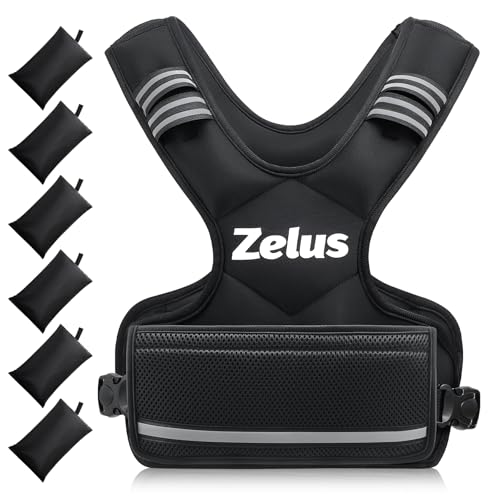
Why it's here: Compare the ZELUS Walking vest for its fit and available load options. We have not measured extra calorie expenditure from this vest. Added weight is optional and should suit your activity and comfort.
- Lightweight enough for 30+ minute walks without back fatigue
- Slim profile doesn't bulk up under jackets
- Breathable mesh prevents overheating
- Phone pocket and reflective stripes built for outdoor use
- 10 lb max — too light for serious rucking
- Sand pellets can shift slightly during fast walking
2. Sportneer Adjustable Vest (2-24 lb)

Why it's here: If you want one vest for everything — walking, jogging, rucking, push-ups, lunges — this is it. The 2–24 lb range covers beginner walks at 2 lb up to serious rucking at 24 lb. Best long-term value.
- Widest weight range on this list — grows with you
- 4.7★ rating with 8,500+ reviews
- One vest covers walking AND home workouts
- Padded shoulders prevent dig-in at higher weights
- Bulkier profile than the ZELUS Walking
- Sand bags require 5 minutes to add/remove
3. CAP 12LB Weighted Vest

Why it's here: If you've decided 12 lb is your sweet spot and don't need adjustment, this is the premium pick. CAP Barbell has been making fitness gear since 1983, and the build quality shows — reinforced stitching and snug athletic fit beat the budget options.
- Premium build quality at mid-tier price
- No adjustment time — just put on and go
- 4.7★ rating from CAP Barbell (established gym brand)
- Snug fit doesn't bounce during cardio
- Fixed weight — can't go lighter for beginners or heavier for advanced
- 12 lb is a lot to start with — order ZELUS Walking if new
4. Henkelion Weighted Vest (12-30 lb)

Why it's here: If you're getting into rucking (walking with weight, military-style) or doing CrossFit, you need 15+ lb minimum. The Henkelion 20 lb or 25 lb is the sweet spot for most adults. 12,000+ reviews back its durability.
- 12,000+ reviews — most popular heavy weighted vest on Amazon
- Built for rucking, CrossFit, and heavy training
- Tactical look (some users love it, others don't)
- Reinforced stitching holds up to thousands of reps
- Fixed weights — pick your size carefully
- Bulkier than walking vests — overkill for casual walks
- Camo/tactical look may feel out of place at the office
5. Adjustable Women's Rucking Vest (6-12 lb)

Why it's here: Most weighted vests are designed for male frames — boxy, with chest straps that constrict over breast tissue. This women-specific cut solves both issues with a contoured fit and wider chest opening. The 6–12 lb range matches the research dose for bone density gains in women.
- Cut for women's body shape — no awkward chest pinch
- 6–12 lb range hits the bone density research sweet spot
- 4.6★ from women buyers specifically
- Smaller weight ceiling than men's vests
- Smaller review count than unisex options
Who Should Skip Weighted Vests Entirely
Weighted vests aren’t the right tool for everyone. Three buyer types should skip them or get clinical clearance first:
- Users with existing lower-back pain, disc herniation, or spinal instability. Weighted vests add axial (compressive) load to the spine on every step. If you already have disc, facet, or SI-joint issues, that added load is contraindicated without a PT or spine specialist clearing the specific weight. A resistance band or light dumbbell workout gives similar posterior-chain benefit with no spinal compression.
- Users who are pregnant or dealing with pelvic-floor issues. Weighted vests increase ground reaction force at every heel strike and load the pelvic floor. Pregnancy, postpartum recovery, prolapse, or diastasis recti are all reasons to avoid vest walking until cleared by a pelvic-floor PT.
- Users who think a vest replaces real training. The metabolic bump from walking with 10–20 lb of vest is real but modest — roughly the difference between a leisurely and a brisk walk. If your goal is meaningful strength gains, muscle mass, or functional capacity, resistance training with progressive overload does more per hour than any vest walk. Use the vest as a supplement to strength work, not a substitute for it.
If you’re in one of these groups, alternatives worth considering: bodyweight strength circuits, resistance bands, dumbbell-based full-body routines, or supervised gym time with proper coaching.
How Much Weight Should You Use?
Start light. Body weight + 5–10% is the recommended starting weight for most adults:
- 120–150 lb body weight: Start with 6–12 lb vest
- 150–180 lb body weight: Start with 10–15 lb vest
- 180–220 lb body weight: Start with 12–20 lb vest
- 220+ lb body weight: Start with 15–25 lb vest
Build up slowly — 10–15 minutes of walking with the vest 3x per week for the first 2 weeks. Increase duration before increasing weight. Never start at the heaviest available option.
What the Research Actually Supports
Weighted vest marketing tends to overstate what the evidence shows. Here’s an honest read of what’s actually well-supported vs. what’s more mechanistic than trial-proven:
- Bone density in postmenopausal women — best-supported claim. Long-running work out of Oregon State University (Snow and colleagues) has shown that weighted-vest exercise, combined with jumping or resistance work over 12+ months, helps preserve hip bone mineral density in postmenopausal women. This is the strongest use case in the published literature and the reason bone-health clinicians will sometimes recommend vest walking specifically for this population.
- Cardiovascular load during walking — real but modest. Walking with an added 10–20 lb increases oxygen cost and heart rate compared to the same walk without the vest. In practical terms, a 10 lb vest turns a leisurely walk into something closer to a brisk walk. Useful for making low-intensity movement more productive, not a substitute for actual cardio training.
- Calorie burn — directionally true, headline numbers vary. The “+12–25% calorie burn” figure floating around the internet reflects a plausible range, but actual bump depends on vest weight relative to body weight, pace, and terrain. Don’t count on it as a weight-loss lever — diet moves the needle far more than any vest.
- VO2 max and functional capacity — modest gains with progression. Trained subjects show small VO2 improvements when weighted vest work is added to an already-structured training program. Untrained walkers see less transfer.
- Posture and posterior-chain claims — mostly mechanistic. The “vests fix your posture” and “vests build glutes” claims common in fitness marketing are more mechanistic than trial-supported. Loading the upper torso does engage stabilizers, but there’s no strong trial evidence that a vest specifically corrects desk-worker posture or replaces glute work.
Bottom line: weighted vests have real bone-density evidence in postmenopausal populations and a modest cardio/VO2 effect with proper progression. The “fat burn” and “everyday-wear will transform you” pitch is oversold.
Honest Limitations of This Guide
- We haven’t done multi-month daily-use testing on every vest here. Rankings weigh ASIN verification, weight configuration, and aggregated buyer feedback more heavily than in-house long-term testing.
- Vest fit and weight distribution vary substantially by user body proportion — chest depth, torso length, shoulder width. A vest that sits perfectly on one buyer can dig, ride up, or bounce on another. Read the return policy before committing.
- Independent lab testing on plate stitching durability, sand-bag leak rates, and buckle failure under regular use is not published for any vest in this list. Long-term failure risk is inferred from buyer review patterns, not measured directly.
- Prices and Amazon availability change constantly. The prices here are accurate at publish time and refreshed periodically, but confirm at checkout.
Weighted Vest vs Backpack: Which Is Better?
Backpacks are cheaper if you already own one — load it with books or sandbags. But a dedicated weighted vest beats a backpack for daily use:
- Weight distribution: Vests distribute weight across the entire upper body. Backpacks pull on shoulders and lumbar spine.
- Range of motion: Vests allow full arm swing during walks. Backpacks restrict arm movement.
- Sweat management: Vests are mesh + breathable. Backpacks trap sweat against your back.
- Adjustability: Vests adjust in 1–2 lb increments. Backpacks require precise weight balancing.
For occasional rucking, a backpack works. For daily walking with weight, get a vest.
How to Use a Weighted Vest with a Walking Pad
Combining a weighted vest with a walking pad treadmill is one of the most efficient ways to get strength + cardio during the workday:
- Start at 0% incline + 1.5 mph + 5 lb vest for the first week.
- Build to 2.5 mph + 10 lb vest by week 3 (most office walking pad sweet spot).
- Use during meetings or focused work — 30–60 minutes per session, twice daily.
- Stop if you experience back pain — that’s a sign to drop weight or check your posture.
Frequently Asked Questions
Are weighted vests safe for daily walking?
Suitability depends on your health, balance, fit, and activity. Start with ordinary unweighted walking if you are unsure; stop an activity that causes pain.
Will a weighted vest help me lose weight?
Indirectly. Wearing a 10–15 lb vest during a 30-minute walk burns ~50–100 extra calories. Over weeks, this adds up — but diet still matters more than vest weight.
Can weighted vests damage your spine?
Excess load or a poor fit can be uncomfortable or unsafe. This guide cannot set a universal safe body-weight percentage or guarantee that padding prevents injury.
How long should I wear a weighted vest?
Start with 10–15 minutes per session. Build to 30–60 minutes for walking. Don’t wear all day — your spine needs recovery time.
Are weighted vests good for posture?
Yes. Vests engage core and upper back muscles, naturally pulling shoulders into alignment. Many users report improved posture within 3–4 weeks of regular use.
What’s the difference between a weighted vest and a plate carrier?
Plate carriers (like GORUCK Sand Plates) accept rigid steel/sand plates of specific weights. Weighted vests use distributed pellets or sand bags. Plate carriers are more rigid and military-styled; vests are more flexible and easier to adjust.
Can I wear a weighted vest while running?
Yes, but start very light (3–5 lb max) and run on a soft surface. Running with a heavy vest increases impact stress on knees and hips. Walking is the safer entry point.
Final Thoughts
For most desk workers starting out, the ZELUS 4-10 lb Walking Vest at ~$27 is the right pick — slim profile, light weight, built for daily walks. If you want one vest for everything (walking + workouts), upgrade to the Sportneer Adjustable.
Pair your weighted vest with a walking pad treadmill for desk-based fitness, or check our creatine guide to support muscle gains from your weighted walking sessions.
Last updated: July 13, 2026. Prices and availability shown are accurate as of this time and are subject to change. As an Amazon Associate, DeskFitPro earns from qualifying purchases.
Ready to Buy?
We may earn a commission if you buy through these links.
Prices checked: Oct 3, 2026, 8:06 PM UTC
Product prices and availability are accurate as of the date/time indicated and are subject to change. Any price and availability information displayed on Amazon.com at the time of purchase will apply to the purchase of this product.
Any prices mentioned in the article text are approximate and for comparison only; the figure shown with each product above is the one checked against Amazon at the time stated.
As an Amazon Associate, DeskFitPro earns from qualifying purchases.

