As an Amazon Associate, we earn from qualifying purchases.
Mito Red Light MitoMIN 2.0 — Red Light Therapy Panel
$249, dual-wavelength (660nm red + 850nm near-infrared), targeted for face and small-body areas, premium build quality, third-party irradiance testing. The right Mito for most buyers — entry to the brand without committing to a full-body panel price.
Check Price on Amazon →Mito Red Light offers panels in different sizes and configurations. This guide compares fit and features, not a measured clinical advantage over another brand. Verify the exact model and warranty before buying; neither a higher price nor more wavelengths establishes a better outcome.
Health Disclaimer: Red light therapy devices in this roundup are FDA-cleared for specific uses (muscle and joint pain, wrinkles, hair growth) but are not substitutes for medical evaluation or treatment for chronic pain, skin conditions, or any other clinical concern. Do not use over the eyes without protective eyewear. Talk to your physician before use if you have photosensitive conditions, are pregnant, or have active skin cancers.
Listing Checks — September 8, 2026
- MitoPRO+ Series: Amazon’s catalog reported this listing sold out on September 8, 2026. Check the seller for a later update.
What Red Light Therapy Actually Does (the Real Science)
Red light therapy — formally called photobiomodulation (PBM), or sometimes low-level light therapy (LLLT) — is the use of specific wavelengths of red and near-infrared light to produce biological effects at the cellular level. The mechanism is one of the better-established stories in consumer wellness:
Red light (typically 630-700nm) and near-infrared light (800-900nm) penetrate the skin and are absorbed by cytochrome c oxidase, a key enzyme in the mitochondrial electron transport chain. This absorption increases ATP (adenosine triphosphate) production — the cellular energy currency — and modulates downstream signaling pathways involving nitric oxide release, reactive oxygen species, and gene transcription. The net effect is increased cellular energy availability and reduced oxidative stress in the treated tissue.
This is real biochemistry, not marketing. Michael Hamblin and colleagues at the Wellman Center for Photomedicine (Massachusetts General Hospital / Harvard Medical School) published extensively on the photobiomodulation mechanism for decades, and his body of work is the foundational reference for the field. Subsequent reviews have refined the cellular-mechanism understanding.
Where the evidence is less tidy: clinical outcomes. The published photobiomodulation literature suggests specific outcomes (photoaging, wound healing, some hair-follicle stimulation, localized musculoskeletal pain) at specific wavelengths (630-660nm and 810-850nm) and dosages — but effect sizes vary widely, dose-response curves aren’t fully characterized, and most consumer red-light panel claims extrapolate from clinical LLLT device studies conducted at different power densities and treatment distances than home panels typically deliver. The FDA has cleared specific red light therapy devices for narrow indications via 510(k) — most commonly muscle and joint pain, wrinkles, and hair regrowth — but the broader “improves everything” marketing language consumer brands sometimes use outruns the controlled-trial evidence.
Honest framing: photobiomodulation works. The cellular mechanism is real. The dose, the wavelengths, and the consistency of use determine whether you’ll see meaningful effects in a specific use case. Casual sporadic use of any red light device — Mito included — produces minimal benefit. Consistent 10-20 minute sessions at appropriate distance with adequate irradiance produces the effects research describes.
The Wavelength Specifics That Matter
Almost every consumer red light panel — Mito, Hooga, BestQool, Joovv — uses some combination of the same two wavelengths:
- 660nm (red) — shallower penetration, best-supported for surface tissues (skin, hair follicles, near-surface inflammation). Exact effective depth depends on skin type, dose, and delivery distance; published tissue-optics measurements vary rather than converging on a single number.
- 850nm (near-infrared) — meaningfully deeper effective penetration than 660nm, generally used to reach subcutaneous tissue, muscles, joints, and connective structures. As above, precise depth-of-effect figures vary across the literature and depend on power density and treatment distance.
Most panels (including Mito’s MitoMIN 2.0 and MitoMAX 2.0) deliver both wavelengths simultaneously via mixed LED arrays. The MitoPRO+ adds two additional wavelengths:
- 630nm (red) — slightly shallower penetration than 660nm, claimed benefits for surface skin conditions
- 810nm (near-infrared) — between red and 850nm in penetration depth, studied for neurological and tissue-repair applications
The four-wavelength approach is theoretically more comprehensive — broader penetration depth coverage means more tissue types receive an effective dose. Whether the practical benefit justifies the price premium is the question we’ll come back to in the “which Mito” section.
The Mito Red Light Lineup (2026)
Three current panels plus accessory products:
| Model | Wavelengths | Size / Coverage | Price |
|---|---|---|---|
| MitoMIN 2.0 | 660nm + 850nm (2 wavelengths) | Small panel — face / neck / small body areas | ~$249 |
| MitoPRO+ Series | 630nm + 660nm + 810nm + 850nm (4 wavelengths) | Medium panel — broader body coverage | ~$369 |
| MitoMAX 2.0 | 660nm + 850nm (2 wavelengths) | Large panel — full body / standing sessions | ~$749 |
Two important things consistent across the lineup: all three panels include third-party verified irradiance testing (Mito publishes the actual mW/cm² output measurements rather than the inflated “claimed” numbers some budget brands use), and all three include a 3-year warranty (longer than Hooga’s 2-year and most budget competitors’ 1-year).
Accessories worth knowing about:
- Mito Red Light Glasses ($13.95) — eye protection for use during sessions. Red light at the intensities consumer panels produce is generally considered safe for the eyes at normal session distances, but if you do face-direct sessions or have any photosensitivity, glasses are cheap insurance.
- MitoAURA ($59) — a face/body spray Mito markets as “light-therapy-enhancing.” Honest take: the evidence for topical enhancers significantly amplifying photobiomodulation effects is thin. Skip unless you’re already using the panels and curious about the upsell.
MitoMIN 2.0 — The Workhorse Entry Point
The MitoMIN 2.0 ($249) is the right starting point for most buyers. It’s a dual-wavelength (660nm + 850nm) panel sized for face, neck, and small-body targeted use — not the full-body standing sessions the MitoMAX delivers, but enough coverage for daily face/skin sessions and targeted joint or muscle treatment.
What you get at this price tier:
- Both clinically-studied wavelengths (660 and 850) in a single panel
- Third-party irradiance testing published — the actual mW/cm² is what Mito claims, not inflated
- 3-year warranty
- Premium aluminum construction with effective passive cooling
- Door-frame and stand-mounting options
- Adjustable session timer
What you give up vs the MitoPRO+ ($120 more): the two additional wavelengths (630 + 810nm) and slightly broader coverage area. For users whose primary use case is face/skin sessions or targeted joint/muscle work, the standard two-wavelength approach is well-supported by research and the price difference doesn’t justify the upgrade.
MitoPRO+ — The Four-Wavelength Upgrade
The MitoPRO+ Series ($369) is Mito’s newer mid-tier panel with the four-wavelength engineering (630 + 660 + 810 + 850nm). The pitch: broader wavelength coverage delivers more comprehensive tissue penetration.
Availability note: the MitoPRO+ listing has recently gone in and out of Amazon stock; Mito’s 2.0 panels (MitoMIN, MitoMID, and MitoMAX 2.0) are the successor line currently on Amazon.
Where this matters most:
- Users with mixed surface + deep tissue concerns — combination of skin issues (better served by 630nm) and joint/muscle pain (better served by 850nm) gets a single device covering both
- Users who do varied treatment areas — same panel works for face, body, joints without compromising depth coverage
- Buyers who want the most current engineering — the PRO+ launched in 2025 and represents Mito’s most recent design iteration
Where it doesn’t matter: if you have a single use case (only face sessions, only post-workout muscle recovery), the MitoMIN 2.0’s two-wavelength approach hits all the relevant research thresholds for that use case. The MitoPRO+‘s extra wavelengths are nice-to-have, not need-to-have for narrow applications.
MitoMAX 2.0 — The Full-Body Panel
The MitoMAX 2.0 ($749) is the full-body option. Same two-wavelength approach as the MitoMIN (660 + 850), but in a much larger panel suitable for standing-in-front-of-it sessions that treat the whole body simultaneously.
The use case is specific: if you want to treat your whole body in 10-20 minute sessions rather than rotating a small panel across multiple body areas across multiple sessions, you need a panel this size. For systemic effects (the “whole-body benefits” claims that drive the most enthusiastic photobiomodulation marketing), full-body irradiance coverage matters.
At $749, the MitoMAX is at the lower end of full-body panel pricing — competitive premium full-body panels from Joovv or PlatinumLED run $800-2,000+. For users who specifically want full-body coverage at the most reasonable premium price point, the MitoMAX is the right pick; our full-body red light panel comparison puts that price and coverage against Hooga and BestQool alternatives. For users whose actual use case is targeted (face, joints, muscles), the MitoMIN at one-third the price covers the same indications via session rotation.
Mito vs Hooga vs BestQool — The Premium Question
The biggest question with Mito is the price premium vs the well-regarded budget competitors. Here’s the honest breakdown:
| Brand / Model | Price (approx) | Wavelengths | Coverage |
|---|---|---|---|
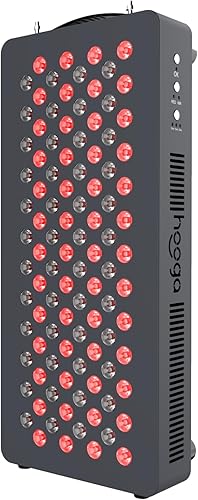
| Hooga HG300 | $149-199 | 660 + 850 | Small panel |
| BestQool (small) | $189-303 | 660 + 850 (some 4-wavelength) | Small/medium panels |
| Mito MitoMIN 2.0 | $249 | 660 + 850 | Small panel |
| Mito MitoPRO+ | $369 | 4 wavelengths | Medium panel |
| BestQool large | $844 | 4 wavelengths | Large panel |
| Mito MitoMAX 2.0 | $749 | 660 + 850 | Full-body panel |
If a Mito panel costs more than an alternative at checkout, compare what the specific model includes:
- Third-party verified irradiance testing. Mito publishes actual measured mW/cm² output from independent lab testing. Hooga publishes their own claimed numbers. The reality of consumer red light panels is that real-world irradiance often diverges from claimed specs — Mito’s verification process is a real quality differentiator.
- 3-year warranty vs 2-year (Hooga) or 1-year (most budget brands). LED panels do degrade over time; longer warranty matters.
- Better passive cooling design. Heat is the enemy of LED longevity. Mito’s aluminum housing and thermal management runs cooler than budget competitor designs.
- More mature customer service infrastructure. Mito has been in business longer than most budget competitors and has a more developed warranty/replacement process.
For users who’ll use the panel daily for 3+ years, the Mito premium is reasonable — better verified specs and longer warranty matters when you’re depending on the device. For users testing whether they’ll actually use red light therapy consistently, Hooga at $149 is a reasonable starting point — you risk less, and if you graduate to needing better specs or longer warranty, upgrade later.
Which Mito Should You Buy?
For most buyers: MitoMIN 2.0 (~$249)
The default. Two clinically-studied wavelengths, panel sized for face/neck/targeted body sessions, third-party verified irradiance, premium build. The right Mito for users committed to red light therapy without needing full-body coverage. Check price on Amazon.
For broader wavelength coverage: MitoPRO+ Series (~$369)
Four-wavelength engineering (630 + 660 + 810 + 850). Right pick for users with mixed surface + deep tissue use cases or anyone who specifically values the broader penetration depth coverage. Check MitoPRO+ on Amazon.
For full-body sessions: MitoMAX 2.0 (~$749)
Large panel suitable for full-body standing sessions. Worth the premium only if you specifically want whole-body coverage in single sessions vs rotating a smaller panel across multiple sessions. Check MitoMAX on Amazon.
If you’re testing the category: Buy Hooga HG300 instead (~$199)
The honest answer. If you’re not sure you’ll use red light therapy consistently enough to justify the Mito premium, Hooga at $199 covers the same wavelengths (660 + 850) at lower verified spec quality but adequate function. Use it daily for 3 months; if you’ve genuinely integrated red light into your routine and want better verified specs and longer warranty, upgrade to Mito then.
When Red Light Therapy Isn’t the Right Answer
Four cases where another approach is a better fit:
You’re not going to use it consistently. Red light therapy effects compound with regular daily sessions of 10-20 minutes. Sporadic weekly use produces minimal effect. If you’re honest with yourself about whether you’ll integrate this into a daily routine, the answer changes the value calculation entirely. Most consumer red light panels end up unused after the first 60 days — be realistic.
You have an active medical condition. Photobiomodulation has real interactions: photosensitive medications, active skin cancers, recent eye surgery, pregnancy (over the abdomen specifically). Talk to your physician before adding red light therapy to your routine if any of these apply.
You want clinical-grade outcomes (chronic pain management, post-surgical recovery, hair regrowth medication-tier results). Consumer panels are wellness devices. For clinical applications, work with a physical therapist or physician who can use higher-irradiance medical-grade equipment with proper dosing protocols. Consumer Mito panels are adequate for general wellness; they’re not substitutes for clinical photobiomodulation.
You haven’t addressed bigger levers. Sleep (7-9 hours), nutrition, consistent exercise, and stress management all produce larger health effects than red light therapy will. If those aren’t dialed in, red light is downstream optimization. Get the bigger levers right first; add red light as the marginal optimization.
Who Should Skip Mito Red / Consumer Red-Light Panels Entirely
Three buyer profiles for whom a red-light panel — Mito, Hooga, or otherwise — is the wrong purchase:
1. Users on light-sensitizing medications. A meaningful list of common medications (some antibiotics, certain retinoids, several psychiatric drugs, some diuretics, some NSAIDs, St. John’s Wort) creates real photosensitivity risk. Red and near-infrared wavelengths are not UV, but “not UV” is not “no risk” when a photosensitizing drug is on board. Check with your pharmacist before starting sessions if you’re on any long-term prescription.
2. Users with active melanoma or dysplastic (atypical) skin lesions. Any form of light therapy over an active or suspected skin malignancy is contraindicated without dermatology clearance. If you have moles you haven’t had checked, mapped skin lesions your dermatologist is monitoring, or a personal history of skin cancer, get sign-off before adding regular light exposure to those areas — not because red light has been shown to accelerate malignancy, but because the risk hasn’t been characterized well enough to assume the other direction.
3. Users expecting rapid fat loss, metabolic transformation, or systemic disease reversal. This is where consumer marketing overreaches hardest. The strongest photobiomodulation evidence is on localized outcomes — photoaging, wound healing, some hair-follicle stimulation, localized musculoskeletal pain. Systemic metabolic and fat-loss claims extrapolate well beyond the controlled-trial evidence. If those are your goals, red light is not the lever.
Honest Limitations of This Guide
Where this guide cannot substitute for independent instrumented testing:
- We haven’t measured actual output power density on each panel. The mW/cm² figures Mito publishes come from their third-party lab reports, which we treat as more credible than self-reported budget-brand claims — but we haven’t independently spectrometered each unit at the treatment distances real users deploy.
- Wavelength claims are manufacturer-reported. Actual peak-emission wavelengths on consumer LED arrays can drift a few nanometers from spec depending on drive current, bin selection, and thermal state. We accept the reported specs; we haven’t validated them against a spectrometer.
- Peer-reviewed clinical PBM trials use tightly controlled dosages that home use rarely replicates. Session length, distance from panel, and body-region coverage in the average home routine only loosely match the protocols in published research. Real-world outcomes trend directionally with the literature; they don’t map 1:1 to trial results.
- Effect sizes vary widely across published studies. Even where the mechanism is well-established, the magnitude of clinical benefit depends heavily on wavelength, dose, timing, and application — and the consumer-panel category doesn’t have a large body of head-to-head trials comparing home devices at home-realistic dosages.
How We Picked
- PA API verification. Every ASIN on this page was verified live via the Amazon Product Advertising API — real product, real current price, in stock (or with a documented release date) at time of publish. No guessed ASINs, no dead links.
- FDA registration status where applicable. Red light devices marketed for specific medical indications require FDA 510(k) clearance. We weight brands whose panels carry active clearances higher than brands making equivalent claims without one.
- Third-party irradiance verification. Preference for brands that publish independent-lab-measured mW/cm² output, not self-reported manufacturer claims.
- Warranty length and service infrastructure. LED panels degrade over years of use; longer warranties from established brands are a real quality signal.
- No manufacturer paid, sponsored, or reviewed this page. No units were provided free. Editorial independent of any brand relationship.
Our Pick
For most buyers in 2026: the Mito Red Light MitoMIN 2.0 at $249 — verified-spec dual-wavelength panel with 3-year warranty, premium build quality, and the right entry to the brand without committing to a full-body panel price. Step up to MitoPRO+ ($369) for four-wavelength coverage, or to MitoMAX 2.0 ($749) for full-body sessions.
Check MitoMIN 2.0 on Amazon →Testing the category cheaply first? Hooga HG300 at $199 covers the same two wavelengths at lower verified spec quality. Upgrade to Mito after 60 days if you've integrated red light therapy into your routine.