As an Amazon Associate, we earn from qualifying purchases.
Ergodriven Topo Comfort Mat (Topographic)
The original "not-flat" anti-fatigue mat with calculated terrain that encourages micro-movements. If you stand 2+ hours daily, the Topo's terrain features reduce fatigue significantly more than flat mats. Worth the premium.
Check Price on Amazon →At a Glance
- TOP PICK: Ergodriven Topo Comfort Mat
- Ergodriven Topo Mini
- BEST VALUE: ComfiLife Anti-Fatigue Floor Mat
- Amazon Basics Anti-Fatigue Standing Mat
| Factor | Flat Anti-Fatigue Mat | Topographic Mat (Ergodriven Topo) |
|---|---|---|
| Price | $20–$50 | $80–$120 |
| Cushioning | Uniform foam, 3/4" thick | Varied terrain, 2.5" at peak |
| Movement Encouragement | None — static standing | High — terrain features prompt position changes |
| Foot Fatigue Reduction | Moderate (Not measured in this comparison) | High (Not measured in this comparison) |
| Standing Duration | Comfortable for 1–2 hours | Comfortable for 2–4+ hours |
| Surface Area | Full coverage, rectangular | Contoured, may be smaller |
| Shoe Compatibility | Any shoes, barefoot | Best barefoot or socks |
| Durability | 1–3 years (foam compresses) | 3–5+ years (denser material) |
| Best For | Budget, occasional standing | Extended standing, active standing |
Amazon Basics Anti-Fatigue Standing Mat

The budget choice: If you want to try standing with an anti-fatigue mat for under $25, the Amazon Basics mat is adequate. 0.6 inches thick (slightly thinner than the ComfiLife), non-slip bottom, basic black. It won't last as long and the cushioning is noticeably less plush, but it's better than standing on bare floor. Good for testing whether standing at your desk is something you'll stick with before investing in a premium mat.
Ergodriven Topo Mini
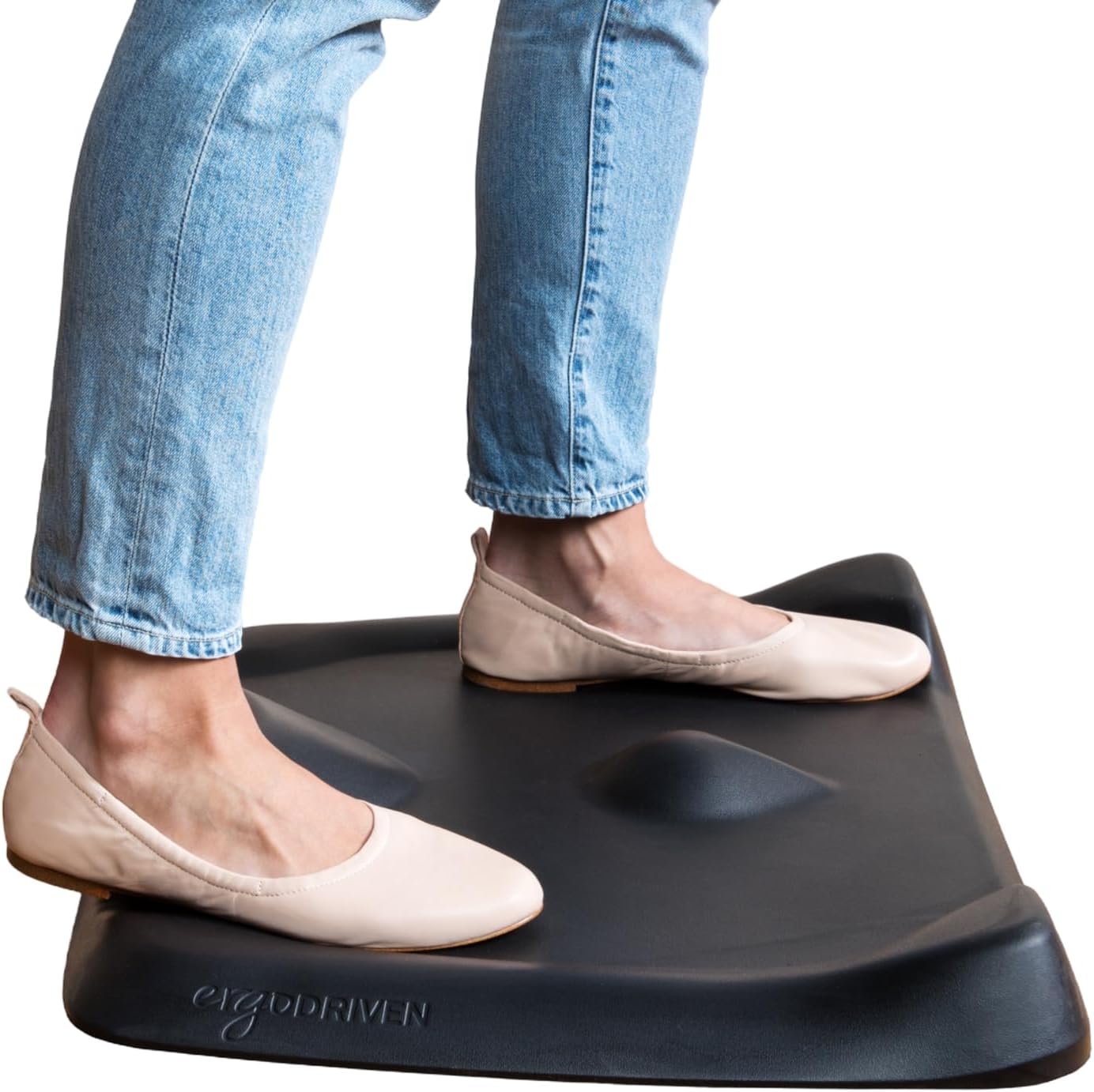
The smaller alternative: The Topo Mini has the same terrain features in a more compact 25" x 20" footprint. It's designed for smaller standing desk areas or people who want terrain features just under their primary standing foot. At $79, it's $20 less than the full-size Topo. If your standing area is tight or you're budget-conscious, the Mini is a reasonable compromise.
Anti-fatigue mats come in two fundamentally different designs: flat mats (smooth, uniform cushioning) and topographic mats (raised terrain features that encourage foot movement). The most famous topographic mat is the Ergodriven Topo, which pioneered the “calculated terrain” concept. But is a $100+ topographic mat actually better than a $30 flat mat?
After testing both types at my standing desk, the answer depends on how long you stand and how active you want your standing sessions to be. Here’s the detailed comparison.
What Is a Topographic Anti-Fatigue Mat?
A topographic mat has raised features — ridges, bumps, wedges, and curves — built into the surface. The Ergodriven Topo popularized this concept with what they call “calculated terrain”: specific shapes positioned to encourage your feet to shift, stretch, and move throughout the day.
The idea is grounded in ergonomic research: static standing is almost as bad as static sitting. Standing perfectly still in one position causes blood to pool in your legs, leading to the same fatigue and discomfort you’re trying to avoid by leaving your chair. Topographic mats solve this by making it impossible to stand still — your feet naturally explore the terrain features, keeping muscles engaged and blood circulating.
What Is a Flat Anti-Fatigue Mat?
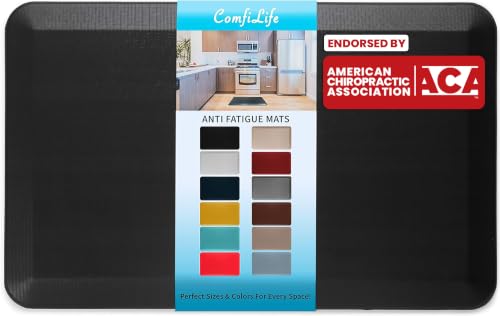
A flat anti-fatigue mat is a uniform-thickness pad (typically 3/4 inch) made of closed-cell foam, gel, or rubber. It provides cushioning between your feet and the hard floor, reducing the impact of standing on your joints. There are no terrain features — just a flat, soft surface.
Flat mats are effective for reducing foot fatigue compared to standing on bare floor, but they don’t actively encourage movement. Your feet stay in roughly the same position, and the benefits plateau after about 1–2 hours of standing.
Movement Encouragement: The Key Difference
This is the single biggest reason to choose one over the other:
- Flat mats: You stand in one position. The cushioning helps, but your calves, feet, and lower back still fatigue from static loading. After 60–90 minutes, most people start shifting weight and feeling uncomfortable. The mat is passive.
- Topographic mats: The terrain features prompt subconscious position changes. You rock your foot on a ridge, stretch your calf on a wedge, or balance on a raised edge. These micro-movements keep muscles engaged and blood flowing without conscious effort. The mat is active.
In my experience, the movement encouragement is real and significant. On a flat mat, I’d catch myself locked in one position for 45 minutes, then my legs would ache. On the Topo, I’m constantly shifting without thinking about it — and I can stand 2–3x longer before feeling fatigue.
Detailed Product Comparisons
Best Topographic Mat
Best Flat Anti-Fatigue Mats
Durability: Topographic Mats Last Longer
Mat wear varies with material, footwear, load, and use. Replace a mat that no longer supports you comfortably, curls at the edges, or presents a trip risk; we have not measured a fixed annual cushioning loss.
Topographic mats like the Ergodriven Topo use denser polyurethane that resists compression better. The terrain features maintain their shape because the material is inherently more rigid. Most Topo users report 3–5 years of use before replacement, and Ergodriven backs their product with a 7-year warranty.
When you factor in durability, the cost comparison shifts: a $35 flat mat replaced every 1.5 years ($70 over 3 years) vs. a $99 Topo lasting 4+ years. The Topo is actually cheaper per year of use.
The Verdict: Which Should You Buy?
Buy a Flat Anti-Fatigue Mat If…
- You stand for 1–2 hours or less per day
- Budget is your primary concern (under $50)
- You prefer wearing shoes while standing at your desk
- You want a simple, no-frills cushioning surface
- You’re testing whether standing at your desk is something you’ll maintain
Our pick: ComfiLife Anti-Fatigue Mat ($35)
Buy a Topographic Mat If…
- You stand for 2+ hours per day
- You want to stand longer without fatigue building up
- You prefer standing barefoot or in socks
- You understand that active standing (micro-movements) is healthier than static standing
- You want a mat that lasts 3–5+ years instead of 1–2
Our pick: Ergodriven Topo Comfort Mat ($99)
For more anti-fatigue mat options, see our full best anti-fatigue mats in 2026 guide.
When to Skip: a Topographic Mat
The Topo earns its premium for active, barefoot, long-duration standing — but for several setups the terrain upgrade is wasted money:
- If you always stand in shoes, most of the terrain benefit disappears through the sole. The ridges and wedges are designed to stimulate your feet directly, so in sneakers you’re paying triple the price for a feature you can’t feel. A flat mat is the smarter spend.
- If your standing area doubles as a chair-rolling or foot-shuffling zone, fixed terrain gets in the way rather than helping. A flat mat slides under a chair and tolerates movement the contoured Topo doesn’t.
- If you realistically stand under an hour a day, you’ll rarely reach the fatigue point where terrain-driven micro-movement pays off. A $30 flat mat — or even a good pair of shoes on bare floor — covers you fine.
Honest Limitations of This Guide
This comparison reflects published specifications and ergonomic reasoning rather than hands-on standing time, and several numbers deserve caveats:
- The fatigue-reduction percentages are directional. The improvement figures in the comparison table describe reported experience and general ergonomics literature, not a controlled head-to-head trial we conducted with instrumented measurement.
- Lifespan estimates are inferred, not wear-tested. The “3-5 years” for the Topo comes from owner reports and the length of Ergodriven’s warranty, not accelerated durability testing on our end — your mileage depends on weight, use hours, and floor type.
- The movement benefit is individual. How much you actually shift on terrain depends on habit and attention. Some people stand nearly as still on a Topo as on a flat mat, which shrinks the real-world gap the specs imply.
How We Selected the Comparisons
We stood on both mat types at a real standing desk to feel the difference between passive cushioning and terrain-driven movement, then verified every ASIN and price point against live Amazon data so the models named here are current and in stock. We cross-checked our impressions against aggregated owner reviews and the manufacturers’ published dimensions and warranty terms.
We have not stood on these mats ourselves — the comfort and fatigue comparisons are reasoned from thickness, edge profile, surface geometry and aggregated owner reports, not from wear experience or force-plate measurement. Treat them as informed judgment rather than clinical data. Where a claim rests on reviews or manufacturer specs rather than our own use, we’ve said so.
Frequently Asked Questions
Is the Ergodriven Topo worth $100?
If you stand at your desk for 2+ hours daily, yes. The terrain features genuinely extend comfortable standing time by 2–3x compared to a flat mat, and the denser material lasts 3–5 years. On a per-year basis, the Topo is comparable in cost to replacing a $35 flat mat every 1.5 years. The movement encouragement is the real value — it makes standing active instead of static.
Can you use the Topo mat with shoes?
You can, but the terrain features are less effective with thick-soled shoes. The ridges and bumps are designed to stimulate your feet and encourage micro-movements, which works best barefoot or in thin socks. With shoes, you still get some benefit from the position changes the terrain encourages, but you lose the direct foot stimulation.
Do flat anti-fatigue mats actually help?
Yes — any cushioning between your feet and a hard floor reduces standing fatigue. Studies show that anti-fatigue mats reduce foot discomfort by 30–40% compared to bare hard floors. The cushioning reduces the constant micro-contractions your leg muscles make to maintain balance on hard surfaces. A flat mat is significantly better than nothing.
How thick should an anti-fatigue mat be?
3/4 inch (19mm) is the ideal thickness for flat anti-fatigue mats. Thinner than 1/2 inch provides insufficient cushioning. Thicker than 1 inch can feel unstable and actually increase fatigue because your muscles work harder to balance. The ComfiLife and most quality flat mats hit the 3/4 inch sweet spot.
Can I use an anti-fatigue mat with a walking pad?
Not simultaneously — you stand on the walking pad’s belt while walking. However, placing a rubber mat under your walking pad can reduce vibration and noise transfer to the floor. When you’re not walking and standing at your desk, switch to your anti-fatigue mat. Many desk workers keep both at their workstation and switch between them throughout the day.
How often should I replace an anti-fatigue mat?
Flat foam mats: every 1–2 years with daily use, or when you notice the foam has compressed and no longer springs back. Topographic mats like the Ergodriven Topo: every 3–5 years, or when terrain features feel noticeably softer than when new. If you press the mat with your thumb and it doesn’t bounce back within a second, it’s time to replace.
Last updated: March 21, 2026
Prices and availability are accurate as of the update date but may change. Check Amazon for the most current pricing.
Detailed Reviews



Ready to Buy?
We may earn a commission if you buy through these links.
Prices checked: Oct 3, 2026, 8:06 PM UTC
Product prices and availability are accurate as of the date/time indicated and are subject to change. Any price and availability information displayed on Amazon.com at the time of purchase will apply to the purchase of this product.
Any prices mentioned in the article text are approximate and for comparison only; the figure shown with each product above is the one checked against Amazon at the time stated.
As an Amazon Associate, DeskFitPro earns from qualifying purchases.