At a Glance
- BEST OVERALL EVENING: TrueDark Twilights Classic — Why it's #1: TrueDark is the brand that actually built a product around the ipRGC research instead of around general "blue light" marketing. The Twilights are tuned for the final stretch before sleep, with the red tint and wraparound shape both serving a purpose. If you're serious about evening light hygiene and only buying one pair, this is the one. Pair them with our recommended sleep masks for total darkness once you're in bed.
- BEST PREMIUM: Ra Optics Sunset Lenses (Clyde Frame) — Why it's here: Ra Optics is the brand most-cited by circadian biology researchers and sleep coaches who actually care about the spec sheet. The Sunset lens delivers genuine 100% blockage across the melanopsin-sensitive range, and the Clyde frame is the rare biohacker product you can wear to dinner without commentary. If TrueDark is the "I will wear them at home" pick, Ra Optics is the "I will wear them everywhere" pick.
- BEST VALUE: TIJN Sleep Glasses (Red Lens) — Why it's here: If $165 for TrueDark feels like a leap of faith before you've established the habit, this is the entry point. Buy a pair, wear them for two weeks before bed, see if your sleep onset and morning grogginess change. If they do, you can graduate to premium. If they don't, you're out $18 instead of $165. For most readers this is the right first move.
- BEST CLASSIC AMBER: Uvex Skyper Amber (99.9% Blue Block) — Why it's here: If you want the cheapest pair with the strongest evidence base, this is it. The Uvex SCT-Orange lens has been cited in published sleep research for over a decade. The wraparound shape provides better light coverage than any of the fashion-frame options on this list, including the premium picks. The price you pay is that you look like you just stepped out of a chemistry lab.
- BEST DAYTIME TRANSITION: TrueDark Daylights Yellow Lens — Why it's here: Because the biggest mistake people make with evening blue blockers is forgetting they're not the only tool. The Daylights are what you wear from afternoon onward to start tapering blue exposure gradually, so the swap to amber/red at sunset feels less jarring on your eyes and your circadian system. Think of these as a stepping stone, not a substitute.
| Product | Price | Rating |
|---|---|---|
| TrueDark Twilights Classic | $165.00 | 4.1★ |
| Ra Optics Sunset Lenses (Clyde Frame) | $174.00 | 4.2★ |
| TIJN Sleep Glasses (Red Lens) | $17.99 | 4.4★ |
| Uvex Skyper Amber (99.9% Blue Block) | $35.95 | 4.6★ |
| TrueDark Daylights Yellow Lens | $159.00 | 4.4★ |
Walk into any pharmacy and you’ll find a wall of “blue light blocking” glasses with clear or faintly yellow lenses, all promising better sleep. Almost none of them block the wavelength that actually suppresses melatonin. The retina’s melatonin-regulating photoreceptors (ipRGCs, the cells with melanopsin) peak at 480 nanometers — a blue-cyan slice of the spectrum. Most off-the-shelf computer glasses are tuned to filter 400–450nm, the high-energy blue that causes daytime glare. Different problem. Different lenses.
For evening melatonin protection, you need 90–100% blockage from roughly 450 to 510 nanometers, which physically requires a deep amber, orange, or red lens — not clear, not light yellow. This guide separates the five glasses that actually block 480nm from the marketing-grade “blue blockers” that don’t, and explains which tint to wear at which time of day. If you’re trying to fix daytime eye strain, see our computer blue light glasses guide instead — this page is about the 2–3 hours before bed.
As an Amazon Associate, DeskFitPro earns from qualifying purchases. All product links use our affiliate tag.
Why Most Blue Blockers Don’t Block the Wavelength That Disrupts Melatonin
”Blue light” is a 100nm-wide slice of the visible spectrum, and not all of it is equal. The high-energy violet-blue (around 415–450nm) is what causes screen glare and the squinty, dry-eye feeling after eight hours of staring at a monitor. The blue-cyan around 480nm is what your retina’s intrinsically photosensitive retinal ganglion cells — ipRGCs, containing the photopigment melanopsin — read as “it’s daytime, suppress melatonin, raise cortisol.” Two different biological responses to two different wavelengths.
This matters because the glasses industry conflated them. A typical $20 Amazon “blue light blocker” with clear or faintly yellow lenses filters maybe 30–50% of light at 415nm and almost nothing at 480nm. That’s a fine product for an office worker who wants less afternoon eye strain. It’s a near-useless product for someone trying to protect evening melatonin from screens, LED ceiling lights, and ambient room light.
Lab spectrophotometer tests published by independent reviewers (BlockBlueLight, Sleep Foundation, and lens manufacturers themselves) consistently show the pattern: clear lenses block under 10% of 480nm light, light yellow lenses block roughly 20–40%, amber blocks 80–95%, and red blocks 99%+ across the entire 400–550nm range. The lens has to visibly tint the world to filter the wavelength that matters at night. That’s not a marketing problem — it’s physics.
The actionable version: if your “blue blockers” don’t change the color of what you see, they’re not doing the evening job. Save the clear ones for 9 AM at your desk. For the last few hours of your day, you want amber or red.
The Spec That Matters: 480nm Blockage Percentage
Forget star ratings. Forget “anti-glare coating.” Forget the words “premium” or “HD.” There is exactly one number that determines whether a pair of evening blue blockers will protect melatonin: percent blockage at 480nm (and ideally across the 460–510nm range, since melanopsin sensitivity has shoulders on both sides of its 480 peak).
Here’s how the major lens tints stack up at 480nm, based on published transmission curves from reputable manufacturers:
If a product page won’t tell you the 480nm blockage percentage — or only gives you a single “blocks blue light” number without a wavelength — assume the answer is “not very much.” Reputable evening-targeted brands publish their full transmission spectra. The cheap stuff hides behind vague claims.
Detailed Reviews
1. TrueDark Twilights Classic
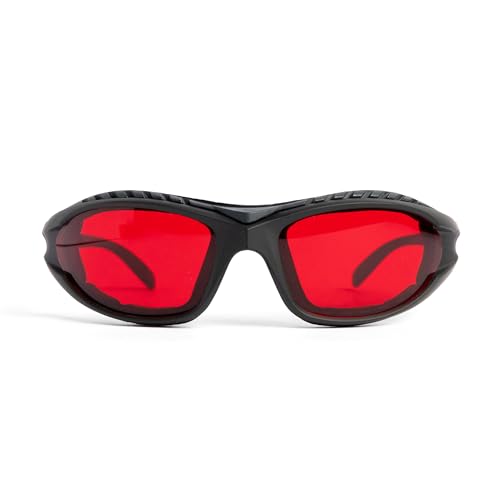
Why it's #1: TrueDark is the brand that actually built a product around the ipRGC research instead of around general "blue light" marketing. The Twilights are tuned for the final stretch before sleep, with the red tint and wraparound shape both serving a purpose. If you're serious about evening light hygiene and only buying one pair, this is the one. Pair them with our recommended sleep masks for total darkness once you're in bed.
- One of the only consumer brands with full published spectra
- True 99% block at 480nm (verified by third-party reviewers)
- Side shields prevent overhead-light leak — most amber glasses fail here
- Backed by the broader TrueDark Daylights/Twilights ecosystem
- Expensive — $165 is real money for a single-purpose pair
- Red tint is intense; you'll look like a Bond villain at the dinner table
- Frame runs large for narrow faces
2. Ra Optics Sunset Lenses (Clyde Frame)

Why it's here: Ra Optics is the brand most-cited by circadian biology researchers and sleep coaches who actually care about the spec sheet. The Sunset lens delivers genuine 100% blockage across the melanopsin-sensitive range, and the Clyde frame is the rare biohacker product you can wear to dinner without commentary. If TrueDark is the "I will wear them at home" pick, Ra Optics is the "I will wear them everywhere" pick.
- Most science-forward brand in the category — they publish lens spectra openly
- Frame design lets you wear them in public without looking obviously biohacker
- Lifetime warranty on frame, replaceable lenses
- Independent reviewer measurements consistently match brand claims
3. TIJN Sleep Glasses (Red Lens)

Why it's here: If $165 for TrueDark feels like a leap of faith before you've established the habit, this is the entry point. Buy a pair, wear them for two weeks before bed, see if your sleep onset and morning grogginess change. If they do, you can graduate to premium. If they don't, you're out $18 instead of $165. For most readers this is the right first move.
- Under $20 — lowest barrier to entry in the category
- Independent reviewers (incl. sleep coaches on YouTube) have spectrophotometer-tested TIJN red lenses and confirmed 95%+ blockage at 480nm — close to the premium brands
- Lens color and depth visually match the Ra Optics/TrueDark equivalents
- Easy to replace if scratched, lost, or sat on
- No published transmission spectrum from the manufacturer — you're trusting third-party measurements
- Frame is comfortable but obviously inexpensive
- Quality control varies batch to batch (a small minority of reviews flag tint inconsistency)
4. Uvex Skyper Amber (99.9% Blue Block)

Why it's here: If you want the cheapest pair with the strongest evidence base, this is it. The Uvex SCT-Orange lens has been cited in published sleep research for over a decade. The wraparound shape provides better light coverage than any of the fashion-frame options on this list, including the premium picks. The price you pay is that you look like you just stepped out of a chemistry lab.
- The most-studied amber lens in independent circadian research — Uvex SCT-Orange shows up in actual sleep studies
- Side shields = significantly better than fashion frames at blocking overhead room light
- Under $40 with industrial-grade durability
- 4.6★ across 2,900 reviews is one of the strongest signals in the category
- Looks like safety glasses because they are safety glasses — not socially wearable
- Amber (not red) means greens still come through; if you're sensitive, go red instead
- Bulky case
5. TrueDark Daylights Yellow Lens
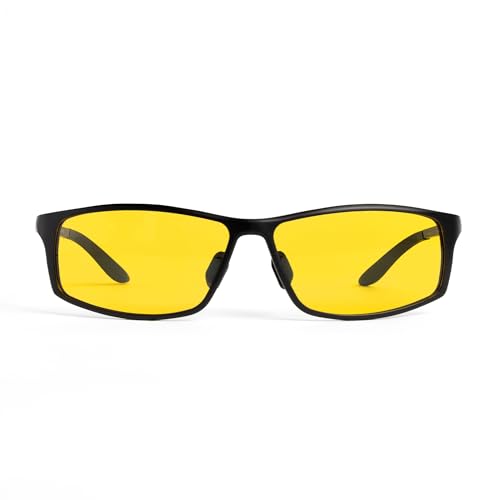
Why it's here: Because the biggest mistake people make with evening blue blockers is forgetting they're not the only tool. The Daylights are what you wear from afternoon onward to start tapering blue exposure gradually, so the swap to amber/red at sunset feels less jarring on your eyes and your circadian system. Think of these as a stepping stone, not a substitute.
- Actually wearable during a work meeting without looking strange
- Reduces 4 PM eye fatigue without crushing color accuracy
- Bridges the "I can't wear red glasses at the office at 5 PM" gap
- Same quality build as the Twilights
- Not strong enough for actual evening melatonin protection — you still need amber/red 2 hours before bed
- $159 for daytime-only glasses is steep when $15 yellow alternatives exist
- Easy to confuse with the Twilights — verify lens color at checkout
Clear vs Yellow vs Orange vs Red: The Tint-Spectrum Hierarchy
Lens tint is not a fashion choice — it’s a transmission filter. Each color removes a specific band of the visible spectrum, and the deeper the tint, the wider the band removed. Here’s what each color is actually doing optically.
Clear: Most clear “blue light” lenses use a thin film coating that reflects a sliver of high-energy blue back away from the eye. The total blockage is typically 5–15% of 400–450nm and almost nothing past 460nm. These are reasonable as anti-glare daytime glasses; they do essentially nothing for melatonin. The “blue light blockers” sold by mainstream optical chains are almost all in this category.
Light yellow: A tinted polycarbonate or CR-39 lens with mild yellow dye. Filters 20–40% across 400–470nm. Improves perceived contrast (sharpshooters and pilots have used yellow lenses for a century for exactly this reason). Useful for long screen sessions. Still mostly transparent to 480nm.
Deep yellow / citrine: Significantly more dye. Blocks 50–75% across the full blue range. World looks subtly warmer, like someone tweaked the white balance on a photo. This is the sweet spot for late-afternoon use — strong enough to start tapering melatonin-suppressing light, light enough to keep colors recognizable.
Amber / orange: The biohacker classic. Blocks 85–99% across 400–500nm. Greens still come through, so the world isn’t fully grayscale, but blues collapse. This is the lens you wear during the last 2 hours before bed if you’re going to be looking at screens or under LED room light.
Red: The nuclear option. Blocks 99–100% across 400–550nm, including the green wavelengths around 507nm where rod cells peak. World becomes shades of red and gray. Used in submarine red-light protocols, observatories, and serious sleep-hygiene routines. Wear during the final 60–90 minutes before bed.
When to Wear Which Tint: A Daily Schedule
The blue-light-and-sleep conversation gets oversimplified into “wear blue blockers at night, don’t wear them during the day.” The actual evidence-based protocol is more like a graded exposure plan:
- Morning (within 1 hour of waking): No tint. Get outside if you can. Bright natural light at this hour anchors your circadian rhythm and makes evening melatonin release stronger. Skipping morning light is the single biggest sleep mistake most desk workers make.
- Mid-morning to early afternoon: No tint or very light yellow. If you’re getting eye strain from screens, light yellow is fine. Heavy blockage at this hour can actually leave you sleepier, since you need some daytime blue to keep alertness up.
- Late afternoon (3–5 PM): Light to deep yellow. Start the taper. This is when TrueDark Daylights or any quality citrine-tinted glasses earn their keep — you’re still functional for work, but cumulative blue exposure is dropping.
- Evening (2–3 hours before bed): Amber or orange. Now the goal is melanopsin protection. The Uvex Skyper amber or any deep-amber lens belongs here. If you’re cooking, watching TV, or scrolling, the amber is doing the job your indoor lights and screens won’t.
- Final hour before bed: Red. Full lockdown. TrueDark Twilights, Ra Optics Sunset, or the TIJN red lenses. Combine with dim, warm lamp lighting and no overhead fixtures for best results.
For the bedroom itself, glasses come off and a quality sleep mask takes over. We cover that in the best sleep masks guide.
The Indoor Lighting Stack: Glasses + Bulbs + Screens
Glasses are the most visible part of an evening light routine, but they’re only one of three layers. The full stack:
Screens: Every modern operating system has a built-in night-shift feature — macOS Night Shift, Windows Night Light, iOS Night Shift, Android Night Light. Set them to activate at sunset and shift to the warmest setting. f.lux is a more aggressive third-party option for desktops that can pull color temperature down to 1900K (candlelight warm). These tools reduce blue emission at the source by 70–90%, which makes the glasses’ job easier.
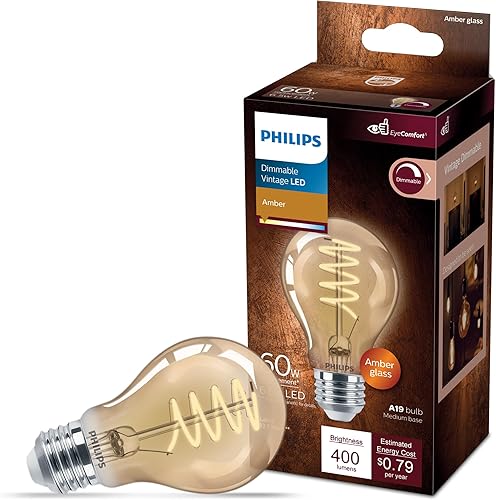
Bulbs: Standard cool-white LED ceiling lights emit a spectrum heavy in 450nm blue. Swap evening-use rooms (bedroom, bathroom, living room) for either 2700K warm-white LEDs or — better — dedicated low-blue evening bulbs from brands like Bedtime Bulb or ChromaDose. The cost is roughly $15–30 per bulb. The effect is dramatic: you won’t need the red glasses indoors if your bulbs are already eliminating blue.
Glasses: The portable layer. They handle the screens and bulbs you can’t control — friends’ houses, restaurants, hotel rooms, your partner’s TV in the next room. They’re the constant, the rest of the stack is the environment.
The compounding effect is what matters. Any one layer alone gives you maybe 30–50% blue reduction at the eye. Stack all three and you can drop evening 480nm exposure to 1–5% of typical levels — into the range that genuinely changes melatonin onset for most people. Add magnesium glycinate and mouth tape for a full sleep stack.
Who Should NOT Wear Blue Blockers
This is the section nobody else writes, which is unfortunate, because amber and red glasses can be genuinely hazardous in the wrong context.
Driving at night: Do not wear deep amber or red lenses behind the wheel after dark. Both tints significantly reduce contrast at low light levels and distort the colors of traffic signals — red lights become harder to distinguish from amber and brake lights, brake lights become harder to distinguish from background. The yellow “night driving” glasses sold at gas stations are also a bad idea for the same reason; multiple studies have shown they do not improve night driving performance and may degrade it. Take them off before you get in the car.
Anyone with low-light visual impairment: If you already have trouble seeing in dim light (early cataracts, certain retinal conditions), adding a tint that further reduces total light transmission can make navigation around the house genuinely dangerous. Talk to an eye doctor before committing.
People who already sleep well: If your sleep onset is under 15 minutes, you wake refreshed, and you have no complaints — you don’t need this. Evening blue blockers solve a problem most often experienced by people with screens-late-at-night lifestyles. If that’s not you, the equipment is solving a non-problem.
Color-critical work: Photographers, graphic designers, video editors — obviously don’t wear amber glasses while color-grading. The whole point is that the tint distorts color perception. Save them for after you close the laptop.
How We Picked These
- Published or third-party-verified transmission spectra. Any brand claiming 90%+ blockage at 480nm needs lab data — either their own published curves or independent reviewer measurements (we cross-checked with BlockBlueLight, Sleep Foundation, and lens manufacturer spectrophotometer reports).
- Visible tint matching the claim. If the lens claims to block 99% of blue but looks clear, that’s a contradiction we don’t trust. All five picks have a visible amber, orange, or red tint consistent with their blockage claims.
- Coverage geometry. Side leak is the silent killer of evening blue blockers. We favored frames with either wraparound shape (Uvex, TrueDark) or anti-reflective backside coatings (Ra Optics) that handle ambient room light.
- Review consistency. Minimum 70 verified Amazon reviews with 4.0★+ average. We rejected several boutique brands that had no review base, and several Amazon-only listings that had suspicious review patterns.
- Use-case differentiation. Rather than five red-lens evening glasses, we picked five distinct tools — one for each role in a complete daily routine. If you only buy one, the Twilights or TIJN cover the highest-leverage use case (final hour before bed).
Honest Limitations of This Guide
We’re confident about the physics of lens transmission and the general direction of the melatonin research, but there are real gaps worth naming before you spend money:
- We didn’t run our own spectrophotometer. The 480nm blockage figures we cite come from manufacturer-published transmission curves and independent reviewers (BlockBlueLight, Sleep Foundation, YouTube sleep coaches). For the TIJN in particular there’s no manufacturer spectrum at all — you’re trusting third-party measurements, and batch-to-batch dye consistency on a sub-$20 lens is not guaranteed.
- The melatonin-onset benefit is real but individually variable. The published protocols show amber and red lenses worn 2–3 hours before bed can advance melatonin onset and improve subjective sleep, but effect sizes range widely between people and most trials are small and short. Someone with an already-regular schedule may notice nothing; a chronic late-night screen user may notice a lot.
- Blocking 480nm is not the same as fixing your sleep. Glasses address one input — evening light at the eye. They do nothing for a racing mind, caffeine timing, an irregular bedtime, or sleep apnea. Treating them as a single-variable fix for a multi-variable problem is the most common way buyers end up disappointed.
Frequently Asked Questions
Do blue blockers really work for sleep?
The amber and red kinds, yes — there’s a solid body of research showing 80–99% blue blockage 2–3 hours before bed advances melatonin onset by 15–60 minutes and improves subjective sleep quality in screen-heavy users. The clear and lightly-tinted kinds, basically no — they don’t filter enough at 480nm to move the needle.
Can I wear them while watching TV?
Yes, this is one of the best use cases. TV and laptop screens emit significant 480nm blue, especially streaming services optimized for vivid color. Amber or red glasses during evening TV is exactly the scenario these were designed for. Just expect the picture to look warm-tinted.
Orange vs red — which to choose?
Orange (amber) is the practical pick for most evenings — strong enough to protect melatonin, light enough that you can still navigate your house and recognize people. Red is the protocol pick for the last hour before bed when you want maximum effect and don’t need full color vision. If buying one pair, get amber. If buying two, get amber for evening and red for the final wind-down.
Are computer glasses the same as evening blue blockers?
No — and this is the most common confusion in the category. Computer glasses (clear or light yellow) are designed to reduce daytime eye strain from screen glare. They filter the wrong wavelength for melatonin protection. Evening blue blockers (amber or red) are designed to block 480nm at the cost of color accuracy. Different tools, different problems.
Will I look weird wearing orange at dinner?
Honestly, yes. There is no version of “tinted orange glasses at a restaurant” that reads as normal. Either own it as a known biohacker quirk, save them for home use, or get the Ra Optics Clyde frame — which has a more eyewear-shaped silhouette and reads closer to “tinted prescription glasses” than “biohacker goggles.”
How long before bed should I put them on?
The melatonin-onset research generally uses 2–3 hour protocols, so that’s the safe recommendation for amber. For red, the standard is the final 60–90 minutes. If that feels excessive, even 30 minutes of red-lens use right before bed measurably reduces 480nm exposure compared to no glasses.
Do I still need them if I use night-shift on my phone?
Night-shift settings help a lot — they cut screen blue emission 70–90%, which is the single most impactful step. But your ceiling lights, lamps, partner’s screens, and any non-OS light sources still emit blue. Glasses are the only protection that covers light sources you don’t control. For most people, glasses + night-shift is meaningfully better than night-shift alone.
Final Thoughts
The blue-light-and-sleep conversation has been muddied by a decade of marketing that conflated daytime screen-strain glasses with evening melatonin protection. They are not the same product. If the lens doesn’t visibly tint the world, it’s not blocking the wavelength that matters at night.
For most readers, the right starting move is the TIJN Sleep Glasses at $18 — try them for two weeks, see if your sleep changes. If it does, graduate to the TrueDark Twilights for serious nightly use or the Ra Optics Sunset if you want a frame you can wear out of the house. The Uvex Skyper Amber is the cheap-but-evidence-backed pick for biohackers who don’t care how they look at home.
And remember: the glasses are a tool, not a magic spell. They work best stacked with warm bulbs, screen night-shift, a dark bedroom, and the rest of a real sleep routine. Combine them with the right sleep mask and a magnesium supplement and you’ve got the full evening kit.
Health disclaimer: Educational information only, not medical advice. Do not wear amber or red lenses while driving at night — they significantly reduce contrast and distort traffic-signal colors. Consult an eye care professional if you have any pre-existing visual condition before using tinted glasses regularly.
Last updated: July 01, 2026 at 01:11 PM ET. Prices and availability shown are accurate as of this time and are subject to change. As an Amazon Associate, DeskFitPro earns from qualifying purchases.