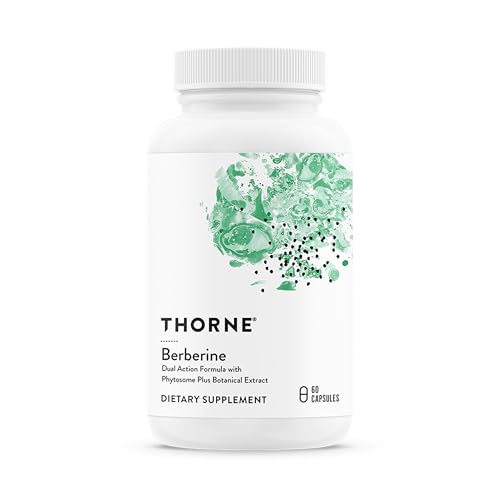
OUR #1 PICK Thorne Berberine 500 mg of pure berberine HCl per capsule from a brand with NSF Certified for Sport credentials and a no-nonsense supplement facts panel — no proprietary blends, no marketing add-ons, just the dose used in nearly every published clinical trial. The default pick for anyone who wants the studied molecule at the studied dose. Check Price →

Best Berberine Supplements 2026: What Actually Works for Blood Sugar (And the 'Nature's Ozempic' Reality Check)

OUR #1 PICK

Thorne Berberine

500 mg of pure berberine HCl per capsule from a brand with NSF Certified for Sport credentials and a no-nonsense supplement facts panel — no proprietary blends, no marketing add-ons, just the dose used in nearly every published clinical trial. The default pick for anyone who wants the studied molecule at the studied dose.

Check Price on Amazon →

At a Glance

  • BEST OVERALL: Thorne Berberine — Thorne is the brand most commonly recommended by functional medicine physicians for a reason — the supplement facts panel doesn't lie, the third-party testing is built into the company's DNA, and the formulation is exactly what showed up in the clinical trials. If you only buy one berberine product and want zero guesswork, this is the answer.
  • BEST BIOAVAILABILITY: NatureBell Dihydroberberine + Berberine HCl — For the subset of people whose gut hates 500 mg of berberine HCl three times a day, the HCl + DHB stack at a lower total dose is the most evidence-informed alternative. You're betting that DHB's better absorption makes up for the lower mg total — and the pharmacokinetic case supports that bet, even if the RCT base for DHB alone is thinner.
  • BEST PRACTITIONER-GRADE: Pure Encapsulations Berberine UltraSorb — If you're going to commit to the full 1500 mg/day protocol for 90+ days (which is what the clinical trials did), the math on Pure Encaps' 90-count bottle is actually better than Thorne's 60-count when you adjust for capsules. Same dose, same trust level, fewer reorders.
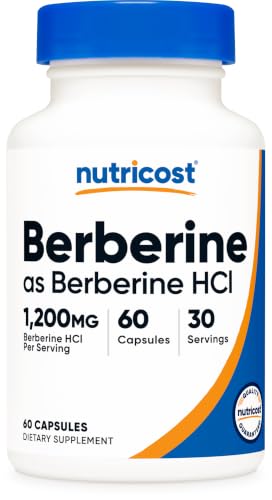
  • BEST VALUE: Nutricost Berberine HCl 1,200 mg — For most people who just want to run a 90-day n=1 experiment with berberine without paying premium-brand markup, Nutricost is the rational choice. The cost difference vs Thorne over 3 months pays for a CGM, which is a better use of the money anyway.
  • BEST SYNERGY FORMULA: NOW Foods Berberine Glucose Support — The synergy formula category is mostly marketing fluff, but NOW's version is the least guilty of it — the milk thistle + chromium combo has a defensible mechanistic rationale. If you'd otherwise be buying milk thistle separately, the bundled version saves a few dollars.

If you’ve spent more than five minutes on health TikTok in the last two years, you’ve heard berberine called “nature’s Ozempic.” The hook is everywhere: a $20 supplement that supposedly does what a $1,000-a-month GLP-1 injection does. The math, unfortunately, does not work out. Semaglutide produces roughly a 1.5–2.0% reduction in A1c and ~15% body weight loss in clinical trials. Berberine produces roughly a 0.5–1.0% A1c reduction and modest weight changes — often a few pounds, sometimes none. Same neighborhood, different planet.

That doesn’t mean berberine is junk. It’s a genuinely interesting compound — an AMPK activator with a real evidence base for blood sugar and lipid profile improvement, sometimes compared to metformin in head-to-head studies. It’s just not Ozempic. This guide picks the 5 berberine supplements worth buying in 2026, explains the massive bioavailability problem with standard berberine HCl (only ~5% gets absorbed), walks through where dihydroberberine fits, and lays out exactly who should not be taking this stuff.

Health Disclaimer: Berberine interacts with a long list of medications, including metformin, statins, cyclosporine, blood thinners (warfarin), and blood pressure medications. In combination with diabetes drugs it can cause dangerous hypoglycemia. Do not take berberine during pregnancy or while breastfeeding — it can cross the placenta and has been linked to kernicterus in newborns. Berberine is not a substitute for prescribed diabetes management. This article is educational and is not medical advice. Talk to your doctor before starting berberine, especially if you take prescription medication or have a liver, kidney, or biliary condition.

Why Berberine Is NOT “Nature’s Ozempic” (And Why That’s Okay)

The “nature’s Ozempic” claim went viral in 2023 on TikTok and has refused to die since. It’s based on a real observation — berberine does lower blood glucose — wrapped in a marketing layer that papers over a 3x effect-size gap. Here’s what each compound actually does, side by side:

The honest pitch for berberine is “low-cost, well-tolerated metformin-adjacent supplement that helps the metabolic numbers move in the right direction.” That’s a real, useful thing. It’s just not a GLP-1, and pretending it is sets people up to quit it three months in when the scale hasn’t moved 30 pounds.

The most generous read of the data: if your A1c is in the 5.7–6.4 prediabetic range, your fasting glucose is creeping, and you’re already dialing in diet, sleep, and movement, berberine can nudge things. If you’re hoping to lose 40 lbs without changing your eating, this is not your tool. A continuous glucose monitor will tell you within two weeks whether berberine is actually doing anything for your physiology — which is a much more useful experiment than reading another testimonial thread on Reddit.

Berberine HCl vs Dihydroberberine: The Bioavailability Gap

This is the single most important thing to understand before you buy berberine, and it’s the thing nobody talks about in TikTok videos: standard berberine HCl has roughly 5% oral bioavailability. Ninety-five percent of every capsule you swallow gets metabolized in the gut wall and liver before it ever reaches systemic circulation. The compound works anyway, partly because some of its effects happen locally in the gut (microbiome modulation, intestinal AMPK), but the absorption math is rough.

Dihydroberberine (DHB) is berberine’s reduced form. In the gut, microbes actually convert a portion of berberine to DHB before re-oxidizing it back into circulation — meaning DHB is closer to the “active” form your body actually uses. Pharmacokinetic work suggests DHB is meaningfully more bioavailable than berberine HCl — the direction is clear, though the exact multiple varies between studies and formulations. That’s why manufacturers pitch a 100–200 mg DHB dose as a rough equivalent to ~1500 mg of berberine HCl. Treat that as a heuristic, not a proven equivalence.

The pragmatic take: berberine HCl at 1500 mg/day is the form used in nearly every clinical trial that produced the A1c numbers above. If you tolerate it, start there. If three 500 mg capsules a day wreck your gut (a common enough outcome that it’s mentioned in most trial adverse-event tables — cramping and loose stools lead the list), DHB or a phytosome formulation is a reasonable plan B at a lower mg dose.

Detailed Reviews

BEST OVERALL

1. Thorne Berberine

4.6
$44.00
Thorne Berberine

Why it's here: Thorne is the brand most commonly recommended by functional medicine physicians for a reason — the supplement facts panel doesn't lie, the third-party testing is built into the company's DNA, and the formulation is exactly what showed up in the clinical trials. If you only buy one berberine product and want zero guesswork, this is the answer.

Pros:
  • Cleanest label of any major berberine product
  • Thorne's QC is the practitioner standard for a reason
  • Dose matches the studied 1500 mg/day protocol
Cons:
  • Most expensive per mg of any HCl product on this list
  • 60-count bottle means you reorder every three weeks at the full dose
Check Price on Amazon →
BEST BIOAVAILABILITY

2. NatureBell Dihydroberberine + Berberine HCl

4.5
$24.99
NatureBell Dihydroberberine + Berberine HCl

Why it's here: For the subset of people whose gut hates 500 mg of berberine HCl three times a day, the HCl + DHB stack at a lower total dose is the most evidence-informed alternative. You're betting that DHB's better absorption makes up for the lower mg total — and the pharmacokinetic case supports that bet, even if the RCT base for DHB alone is thinner.

Pros:
  • Stacks the well-studied HCl form with higher-bioavailability DHB
  • Easier on the gut than 1500 mg of straight HCl
  • Reasonable price for a dual-form formula
Cons:
  • DHB-specific clinical evidence is thinner than HCl evidence
  • Smaller brand, less name recognition than Thorne or Pure Encaps
Check Price on Amazon →
BEST PRACTITIONER-GRADE

3. Pure Encapsulations Berberine UltraSorb

4.7
$51.50
Pure Encapsulations Berberine UltraSorb

Why it's here: If you're going to commit to the full 1500 mg/day protocol for 90+ days (which is what the clinical trials did), the math on Pure Encaps' 90-count bottle is actually better than Thorne's 60-count when you adjust for capsules. Same dose, same trust level, fewer reorders.

Pros:
  • 90-count bottle is the only one that fits the full clinical dose for a month
  • Hypoallergenic certification matters if you're sensitive
  • Pharmaceutical-grade QC documentation
Cons:
  • Premium pricing
  • Sometimes harder to find in stock than Thorne
Check Price on Amazon →
BEST VALUE

4. Nutricost Berberine HCl 1,200 mg

4.5
$18.89
Nutricost Berberine HCl 1,200 mg

Why it's here: For most people who just want to run a 90-day n=1 experiment with berberine without paying premium-brand markup, Nutricost is the rational choice. The cost difference vs Thorne over 3 months pays for a CGM, which is a better use of the money anyway.

Pros:
  • Best cost-per-mg on this list by a wide margin
  • 120-count bottle lasts longer than premium options
  • 14,000+ reviews — established product, not a gamble
Cons:
  • Less rigorous QC documentation than Thorne / Pure Encaps
  • Contains rice flour and magnesium stearate (cosmetic for most, matters for some)
Check Price on Amazon →
BEST SYNERGY FORMULA

5. NOW Foods Berberine Glucose Support

4.6
$21.99
NOW Foods Berberine Glucose Support

Why it's here: The synergy formula category is mostly marketing fluff, but NOW's version is the least guilty of it — the milk thistle + chromium combo has a defensible mechanistic rationale. If you'd otherwise be buying milk thistle separately, the bundled version saves a few dollars.

Pros:
  • Milk thistle pairing is at least mechanistically defensible (liver support during long-term berberine use)
  • Chromium has modest blood sugar evidence of its own
  • NOW's third-party testing reputation is strong for a value brand
Cons:
  • Lower per-serving berberine dose (1200 mg/day total, not 1500 mg)
  • Combo formulas make it harder to know which ingredient is doing what
  • Alpha lipoic acid add-in is more marketing than science at this dose
Check Price on Amazon →

What Berberine Actually Does (The Real Mechanism)

Berberine works through at least three mechanisms that have been mapped out in the published literature, and understanding them helps explain why the effects are real but the magnitude is modest:

  • AMPK activation. AMP-activated protein kinase is a master metabolic switch — when it’s turned on, cells take up more glucose, burn more fat, and pump out less new glucose from the liver. Metformin works through this same pathway, which is why berberine gets called “natural metformin.” The activation is real; it’s just less potent than the pharmaceutical version.
  • Gut microbiome modulation. Because most berberine never makes it past the gut, a lot of its action happens locally — shifting the microbial composition toward species associated with better glucose handling and lower inflammation. This is a fast-moving area of research and probably explains part of the effect that AMPK alone doesn’t account for.
  • Lipid profile improvement. The published meta-analyses consistently show berberine lowering LDL cholesterol and, more modestly, triglycerides. The effect size is smaller than a real statin but not trivial, and for people who can’t tolerate statins it’s one of the more interesting non-statin options — with the honest caveat that “supplement that behaves a bit like a low-dose statin” comes with all the considerations of taking a low-dose statin.

None of this is woo. It’s all in PubMed. The reason berberine isn’t a blockbuster pharmaceutical is the absorption problem — 5% bioavailability is a brutal floor for the FDA approval process, even though it doesn’t seem to stop the compound from doing useful things at the gut-microbiome and AMPK levels.

Dosing: 500 mg Three Times Daily (Not Once)

Almost every published berberine trial uses the same dosing protocol: 500 mg, three times per day, taken with meals. Total: 1500 mg/day. People constantly try to shortcut this by taking 1500 mg once a day, and it doesn’t work as well — here’s why.

Berberine’s plasma half-life is short (about 4–8 hours depending on the form). A single 1500 mg dose creates a brief spike of high plasma levels, most of which gets cleared before the next meal. Splitting the dose around meals does two useful things: it keeps a steadier plasma level across the day, and it puts berberine in the gut at the same time as the carbohydrates it’s supposed to be modulating. The post-meal glucose response is exactly what you’re trying to blunt.

Practical schedule:

  • Capsule 1: with breakfast
  • Capsule 2: with lunch
  • Capsule 3: with dinner

If splitting causes GI issues at first, start with 500 mg once a day with the largest meal and add the second and third capsules over 1–2 weeks. Most GI side effects (cramping, loose stools, occasional constipation) settle within a week as the gut adjusts. If they don’t, that’s a signal to switch to a dihydroberberine product at a lower total mg.

Who Should Skip Berberine Entirely

This is the most important section on the page, and it’s where most “nature’s Ozempic” content goes silent. Berberine is not a benign herb — the interactions are real and clinically significant. Three buyer profiles should not be taking this at all without a prescriber’s direct involvement:

  • Anyone on prescription diabetes medication (metformin, sulfonylureas, insulin, GLP-1s). This is a real, well-documented interaction. Berberine and metformin both drive down blood glucose through the AMPK pathway, and stacking them can cause dangerous hypoglycemia. If you want to add berberine to an existing diabetes regimen, that’s a conversation with your endocrinologist about dose adjustment and glucose monitoring — not a self-experiment.
  • Anyone on statins, cyclosporine, tacrolimus, or other CYP3A4-metabolized drugs. Berberine inhibits CYP3A4, the liver enzyme that clears a huge fraction of all prescription drugs. Adding berberine can raise the blood levels of those medications — sometimes substantially. This is the same mechanism behind the grapefruit juice warning on so many drug labels. Talk to your prescriber before adding it.
  • Pregnant or breastfeeding people. Berberine crosses the placenta and has been linked to neonatal kernicterus (brain damage from elevated bilirubin). It also passes into breast milk. This is a firm contraindication, not a “talk to your doctor” — just don’t.

A few additional caveats worth flagging even if you don’t fall into the three primary skip buckets: berberine also interacts with warfarin and other blood thinners (antiplatelet effects, amplified bleeding risk); it stacks with antihypertensives to potentially cause orthostatic episodes; and people with existing liver, kidney, or biliary conditions should be careful because clearance is unpredictable.

If none of that applies to you and you’re a generally healthy adult with prediabetic glucose numbers or a lipid profile you’d like to nudge, berberine is a reasonable supplement to try for 90 days while tracking your own data.

Honest Limitations of This Guide

A few things we’re not pretending to have solved. Reading this section carefully is worth more than reading the star ratings:

  • We haven’t done 8–12 week personal trials on every product. Our picks are based on formulation quality, brand QC track record, dose matching the studied protocol, and third-party review depth — not on individual head-to-head A1c experiments across all five bottles.
  • Most berberine RCTs are small and geographically narrow. The bulk of the published trials are single-country studies with sample sizes typically well under 100 participants each. Meta-analyses pool that data into meaningful numbers, but the underlying evidence base is not deep the way it is for metformin or statins. The direction of the finding is real; the precision claims should be taken with a grain of salt.
  • Bioavailability is genuinely a mess and varies by formulation. Standard berberine HCl has poor absorption. DHB, phytosome, and liposomal formats all improve on that in different ways, but there is no clean apples-to-apples chart comparing every product on this list at the pharmacokinetic level. We chose our picks knowing the absorption problem exists, not because we’ve solved it.
  • Long-term safety data is limited. Most published trials run 8–12 weeks. What happens on 2+ years of continuous 1500 mg/day berberine is not something the literature can answer confidently right now. That’s part of why the “cycle it, reassess every 90 days” framing is honest and the “take it forever” framing is not.

How We Picked These

  1. Studied dose, real form. Pure berberine HCl from Berberis aristata or equivalent, at doses that allow you to hit the studied 1500 mg/day protocol — or a dihydroberberine alternative with credible bioavailability data.
  2. Brand-level QC and third-party testing. Preference for NSF, USP, or practitioner-channel brands (Thorne, Pure Encapsulations). Value picks need at minimum GMP-compliant manufacturing and independent third-party testing for identity, purity, and label accuracy.
  3. PA API verified. Every ASIN on this page is checked against the Amazon Product Advertising API before publish and re-verified on a rolling schedule. When a product goes unavailable, its buy button is greyed out automatically so we’re not sending readers to dead links.
  4. Clean labels. No proprietary blends hiding the actual berberine mg. No “synergy” formulas with five token ingredients at sub-clinical doses.
  5. Review depth. Minimum ~1,500 verified Amazon reviews with 4.4★+ average — enough signal to detect formulation problems and quality issues.
  6. No manufacturer paid to be here. DeskFitPro earns an Amazon Associates commission when you buy through our links, and that’s the whole business model — no supplement brand pays for placement, sponsors a slot, or reviews copy before publish. Picks change when the data changes, not when a rep emails us.
  7. Honest categorization. Each pick exists for a specific reason — clinical-grade default, bioavailability hedge, value play, synergy formula — not because we needed five slots to fill.

We rejected roughly a dozen popular Amazon berberine products during research, mostly for unverifiable sourcing claims, proprietary blends that hid the actual berberine dose, or “Ozempic alternative” marketing copy on the label itself. If a brand has to lie about the category to sell you the bottle, the bottle probably isn’t great either.

Frequently Asked Questions

Is berberine safe to take with metformin?

Not without your prescriber’s involvement. Both compounds activate the AMPK pathway and lower blood glucose, so stacking them can cause hypoglycemia. Some endocrinologists do prescribe the combination at adjusted doses, but it’s not a self-stack experiment — work with your doctor on dose timing and glucose monitoring.

How long until berberine works?

Fasting glucose and post-meal glucose changes can show up within 2–4 weeks if you’re tracking with a CGM. A1c changes (which average glucose over the prior 90 days) take 8–12 weeks to register meaningfully. Lipid changes show up at 4–8 weeks. If you’ve been on the full 1500 mg/day protocol for 90 days and your numbers haven’t budged, it’s probably not doing anything for you and you can stop.

Berberine vs metformin: how do they actually compare?

Head-to-head trials suggest berberine produces glucose-lowering effects roughly comparable to metformin at standard doses, with similar A1c reductions in the 0.5–1.0% range. The catch: metformin has decades of safety data, is essentially free, and is the most-studied diabetes drug in the world. Berberine has a smaller evidence base, costs more out-of-pocket than generic metformin, and has more drug interaction landmines. It’s a reasonable choice for people who can’t or won’t take metformin — not a clear upgrade.

Can berberine cause weight loss?

Modestly. Meta-analyses of berberine trials show average weight changes of roughly 2–5 pounds over 12+ weeks — usually attributed to improved insulin sensitivity and appetite regulation rather than direct fat burning. If you’re expecting GLP-1-class weight loss, you’ll be disappointed. If you’re expecting “the supplement that finally made the last few pounds move when everything else was already dialed in,” that’s closer to realistic.

Is it safe to take berberine during pregnancy?

No. Berberine crosses the placenta and has been associated with kernicterus in newborns from elevated bilirubin. It also passes into breast milk. This is one of the firmest contraindications in supplement medicine — don’t take it during pregnancy or while breastfeeding under any circumstances.

What’s the difference between berberine HCl and dihydroberberine?

Berberine HCl is the standard form used in nearly every published clinical trial — well-studied, ~5% bioavailable, and best tolerated at the 500 mg three-times-daily protocol. Dihydroberberine (DHB) is the reduced form your gut microbiome partially converts berberine into; it’s roughly 5–10x more bioavailable, so much lower mg doses work. DHB has less direct clinical trial data but a stronger pharmacokinetic case for absorption.

Do I need to cycle berberine?

The honest answer is “we don’t really know.” Most clinical trials run 8–12 weeks, so there’s not great long-term data past about a year. Many practitioners suggest 8 weeks on, 2 weeks off, or running it for 12 weeks and reassessing whether your numbers warrant continuing. If your A1c, fasting glucose, and lipid markers have moved into a healthy range, it’s reasonable to taper and see whether diet and exercise alone can hold the gains.

Can I take berberine with magnesium and other supplements?

Generally yes — there’s no significant interaction with most standard supplements. Magnesium glycinate is commonly stacked with berberine for sleep and recovery, and a CGM is the single most useful add-on for actually measuring whether berberine is doing anything for your blood sugar. The interactions to worry about are pharmaceutical, not nutritional.

Final Thoughts

Berberine is one of the few “TikTok supplements” that has a real, replicable, published evidence base. It activates AMPK, modulates the gut microbiome, lowers LDL roughly as much as a low-dose statin, and produces A1c reductions in the 0.5–1.0% range over 12 weeks at 1500 mg/day. That’s a useful supplement. It is not Ozempic. It will not produce 15% body weight loss. Anyone selling it to you on that pitch is selling marketing, not pharmacology.

If you want the cleanest possible execution of the studied protocol, Thorne Berberine is the default — clinical-grade brand, exact dose, no add-ons, no surprises. If GI tolerance is a concern or you’ve heard horror stories about berberine cramps, NatureBell Dihydroberberine + Berberine HCl is the bioavailability-hedged alternative at a more gut-friendly mg. And if you’re already convinced the experiment is worth running and just want to run it without paying premium-brand markup, Nutricost at less than half the price of Thorne is the rational value pick — the leftover budget pays for a CGM, which will tell you more about whether berberine is working for your physiology than any review (including this one) ever could.

Last updated: July 04, 2026. Prices and availability shown are accurate as of this time and are subject to change. As an Amazon Associate, DeskFitPro earns from qualifying purchases.

Ready to Buy?