Magnesium glycinate is the most bioavailable, gentlest-on-stomach form of magnesium — and the form most clinical sleep studies use. An estimated 50% of Americans are deficient in magnesium, which is involved in 300+ enzymatic reactions and supports sleep quality, muscle recovery, and cognitive function.
This guide compares the 5 best magnesium glycinate supplements on Amazon — third-party tested, properly chelated (not magnesium oxide), and ranked by elemental magnesium per dose. Plus magnesium glycinate vs citrate vs threonate so you pick the right form.
We take Doctor’s Best High Absorption Magnesium Glycinate daily — it’s the form most clinical sleep studies use (glycinate or threonate), the TRAACS chelation means it actually absorbs, and at 4.7 stars from 50,000+ reviews the track record speaks for itself. Below I’ve compared five of the best magnesium supplements in 2026 across different forms — glycinate, citrate, threonate — so you can pick the right one for your goals.
Health Disclaimer: The information on this page is for educational purposes only and is not intended as medical advice. These products are not intended to diagnose, treat, cure, or prevent any disease. Consult your healthcare provider before starting any new supplement or wellness regimen, especially if you have a pre-existing condition, kidney disease, or are taking medication. The tolerable upper intake level for supplemental magnesium is 350 mg/day for adults per the National Institutes of Health.
Already know what you’re looking for? Jump to product picks →
Natural Vitality CALM Magnesium Powder
Magnesium citrate in an effervescent powder · Starts fizzing and activating the moment it hits water, i… · Adjustable serving size: start at 1 tsp (83 mg elemental …
Check Price on Amazon →As an Amazon Associate, I earn from qualifying purchases. Learn more.
Why Magnesium Matters More Than You Think
Magnesium is the fourth most abundant mineral in the human body and a cofactor in over 300 biochemical reactions — including protein synthesis, muscle and nerve function, blood glucose control, and blood pressure regulation. Despite how critical it is, research consistently shows that roughly 50% of Americans consume less than the recommended daily amount from food alone.
Modern diets are largely to blame. Processed foods strip magnesium during manufacturing. Soil depletion means even vegetables contain less magnesium than they did decades ago. High stress, alcohol, and intense exercise all deplete magnesium faster. The result: a widespread, low-grade deficiency that most people never connect to their symptoms — poor sleep, muscle cramps, anxiety, brain fog, and fatigue.
research and Magnesium
research, Ph.D. — the Stanford neuroscientist behind the research Lab podcast — has consistently recommended magnesium supplementation, particularly magnesium threonate and magnesium bisglycinate, as part of his sleep stack. He takes 140 mg of magnesium threonate or 200 mg of magnesium glycinate approximately 30–60 minutes before bed. His rationale: magnesium activates GABA receptors in the brain, which promotes relaxation and transitions the nervous system from alert (sympathetic) to calm (parasympathetic) states — a critical shift for quality sleep onset.
The Science: What Magnesium Actually Does
The research on magnesium supplementation covers several key areas:
- Sleep quality: A double-blind randomized clinical trial published in the Journal of Research in Medical Sciences (Abbasi et al.) found that 500 mg of magnesium daily for 8 weeks significantly improved sleep time, sleep efficiency, and sleep onset latency in adults with insomnia. Critically, magnesium supplementation raised melatonin levels and lowered cortisol — two hormones directly governing sleep-wake cycles. Magnesium works as a natural NMDA antagonist and GABA agonist, chemically calming the nervous system.
- Muscle function and recovery: Magnesium is required for ATP (energy) production and plays a direct role in muscle contraction and relaxation. Low magnesium is a common cause of muscle cramps, spasms, and prolonged recovery after exercise. Research shows that athletes with adequate magnesium status have better performance and faster recovery than those who are deficient.
- Cognitive performance: Magnesium threonate (Magtein) has been specifically researched for cognitive applications. Studies suggest it crosses the blood-brain barrier more effectively than other forms, increasing synaptic density in the hippocampus — the brain region central to memory and learning. Threonate is the form supported by research when cognitive benefits are the goal.
- Cardiovascular health: Chronic magnesium deficiency is associated with hypertension, arrhythmias, and increased cardiovascular risk. Research published in Open Heart argues that subclinical magnesium deficiency is a principal driver of cardiovascular disease in Western societies.
Types of Magnesium: Which Form Is Best?
Not all magnesium supplements are equal. The form of magnesium — meaning what compound the elemental magnesium is bound to — determines both its bioavailability (how much your body actually absorbs) and what it’s best used for. Here’s how the main forms compare:
| Form | Bioavailability | Best For | Notes |
|---|---|---|---|
| Magnesium Glycinate | High | Sleep, anxiety, muscle relaxation | Chelated with glycine (calming amino acid). Gentle on stomach. Best all-around form. |
| Magnesium Citrate | High | General supplementation, constipation | Highly studied, well-absorbed. Mild laxative effect at higher doses. |
| Magnesium Threonate | High (brain) | Cognitive function, memory, brain health | Only form shown to raise magnesium levels in the brain. More expensive. |
| Magnesium Malate | High | Energy, muscle recovery, fibromyalgia | Bound to malic acid. Supports ATP production. Good for active people. |
| Magnesium Oxide | Very low (~4%) | Antacid use only | Cheap but poorly absorbed. Not recommended for supplementation. |
| Magnesium L-Threonate | High (brain) | Cognitive enhancement | Premium form. Magtein is the branded version used in most research. |
Bottom line on form: For sleep and general daily use, magnesium glycinate or magnesium citrate is the right choice for most people. For cognitive benefits specifically, magnesium threonate is worth the premium. Avoid magnesium oxide — it has roughly 4% bioavailability and is essentially wasted money.
How Much Magnesium Should You Take?
The Recommended Dietary Allowance (RDA) for magnesium is 400–420 mg/day for adult men and 310–320 mg/day for adult women. However, the NIH sets the Tolerable Upper Intake Level for supplemental magnesium at 350 mg/day from supplements alone (not including food sources). This is the threshold where digestive side effects become likely in some people.
In practice, most people start at 100–200 mg of elemental magnesium from supplements and adjust from there. For sleep specifically, the typical clinical dose is 200 mg of magnesium glycinate or 140 mg of threonate, taken 30–60 minutes before bed. The Natural Vitality CALM serving size starts at 1 teaspoon (providing 83 mg elemental magnesium) and can be built up to 2 teaspoons (166 mg) — an adjustable approach that lets you find your ideal dose.
When to take it: For sleep benefits, take magnesium 30–60 minutes before bed. For general supplementation or muscle recovery, any time with food works. Taking it with food generally reduces the chance of any gastrointestinal discomfort.
Best Magnesium Supplements at a Glance
- Best Overall (What We Take): Natural Vitality CALM Magnesium Powder — magnesium citrate, adjustable dose, great for evening wind-down
- Best Magnesium Glycinate: Doctor’s Best High Absorption Magnesium Glycinate — chelated, high bioavailability, easy on stomach
- Best Budget Glycinate: NOW Foods Magnesium Glycinate — trusted brand, solid value, 400 mg per serving
- Best for Cognition: Life Extension Neuro-Mag Magnesium L-Threonate — Magtein formula, crosses blood-brain barrier
- Best Mainstream Pick: Nature Made Magnesium Glycinate — USP verified, widely available, affordable
Quick Comparison: Best Magnesium Supplements 2026
| Supplement | Form | Dose (elemental Mg) | Format | Price | Rating |
|---|---|---|---|---|---|
| Doctor’s Best Magnesium Glycinate ★ #1 | Magnesium Glycinate | 200 mg | Tablets | ~$14–$22 | 4.7★ |
| Natural Vitality CALM | Magnesium Citrate | 83–166 mg | Powder | ~$23–$42 | 4.5★ |
| NOW Foods Magnesium Glycinate | Magnesium Glycinate | 400 mg | Capsules | ~$16–$24 | 4.6★ |
| Life Extension Neuro-Mag | Magnesium L-Threonate | 144 mg | Capsules | ~$26–$35 | 4.6★ |
| Nature Made Magnesium Glycinate | Magnesium Glycinate | 200 mg | Capsules | ~$18–$28 | 4.6★ |
Detailed Reviews
2. Natural Vitality CALM Magnesium Powder

- Magnesium citrate in an effervescent powder — mix with water for fast absorption
- Starts fizzing and activating the moment it hits water, indicating the reaction that improves bioavailability
- Adjustable serving size: start at 1 tsp (83 mg elemental magnesium) and build to 2 tsp (166 mg)
- Available in flavored (Raspberry Lemon, Cherry, Orange) and unflavored versions
- Non-GMO, vegan, gluten-free — no unnecessary fillers or additives
- Made in the USA; one of the best-reviewed supplements on Amazon with 100,000+ ratings
- Powder format allows precise dose titration — start low and increase gradually
- Fast-acting: the effervescent reaction improves absorption vs. tablets
- The ritual of mixing it before bed is genuinely calming — our family uses it nightly
- Over 100,000 reviews at 4.5 stars is rare for any supplement — real-world proof it works
- Magnesium citrate is one of the best-studied, most bioavailable forms
- Flavored versions taste good — easy compliance compared to swallowing multiple pills
- Magnesium citrate can have a mild laxative effect at higher doses — start with 1 tsp if sensitive
- Powder format requires mixing, which isn’t as convenient as a capsule for travel
- Not the ideal form if your primary goal is cognitive/brain benefits (threonate is better for that)
Why I recommend it: CALM is the most popular magnesium supplement on Amazon for a reason — over 100,000 reviews at 4.5 stars. The powder format lets you dial in the exact dose, and the effervescent fizz creates highly bioavailable ionic magnesium. Great option if you prefer a drink format over tablets.
1. Doctor’s Best High Absorption Magnesium Glycinate Lysinate
- TRAACS-chelated magnesium glycinate lysinate — a patented chelation process that maximizes bioavailability
- 200 mg of elemental magnesium per serving (2 tablets)
- Glycine chelation: the glycine amino acid in the chelate is itself calming and sleep-supportive
- Highly soluble and gentle on the digestive system — no laxative effect at standard doses
- Non-GMO, gluten-free, vegan-friendly; manufactured in an FDA-registered facility
- One of the most recommended magnesium glycinate supplements by doctors and dietitians
- 4.7 stars from 50,000+ reviews — the highest rating on this list
- Chelated form means superior absorption vs. non-chelated magnesium glycinate
- Glycine has independent sleep and anxiety benefits — a synergistic pairing
- Tablet form is highly portable and convenient for travel
- Excellent value — among the cheapest per-mg options for a quality chelated glycinate
- Two tablets per serving — some people prefer a single capsule
- Tablets are on the larger side
Why it’s our #1: This is the magnesium we actually take every day. After researching the different forms, glycinate was the clear winner for us — research supports magnesium glycinate or threonate for sleep, and the TRAACS chelation in Doctor’s Best means it actually survives digestion and absorbs. The glycine amino acid in the chelate has its own independent calming and sleep-supporting effects, so you’re getting a synergistic benefit. At 4.7 stars from 50,000+ reviews and under $15 for 240 tablets, the value is hard to beat. We take it before bed and the improvement in sleep quality was noticeable within the first week.
3. NOW Foods Magnesium Glycinate 400 mg
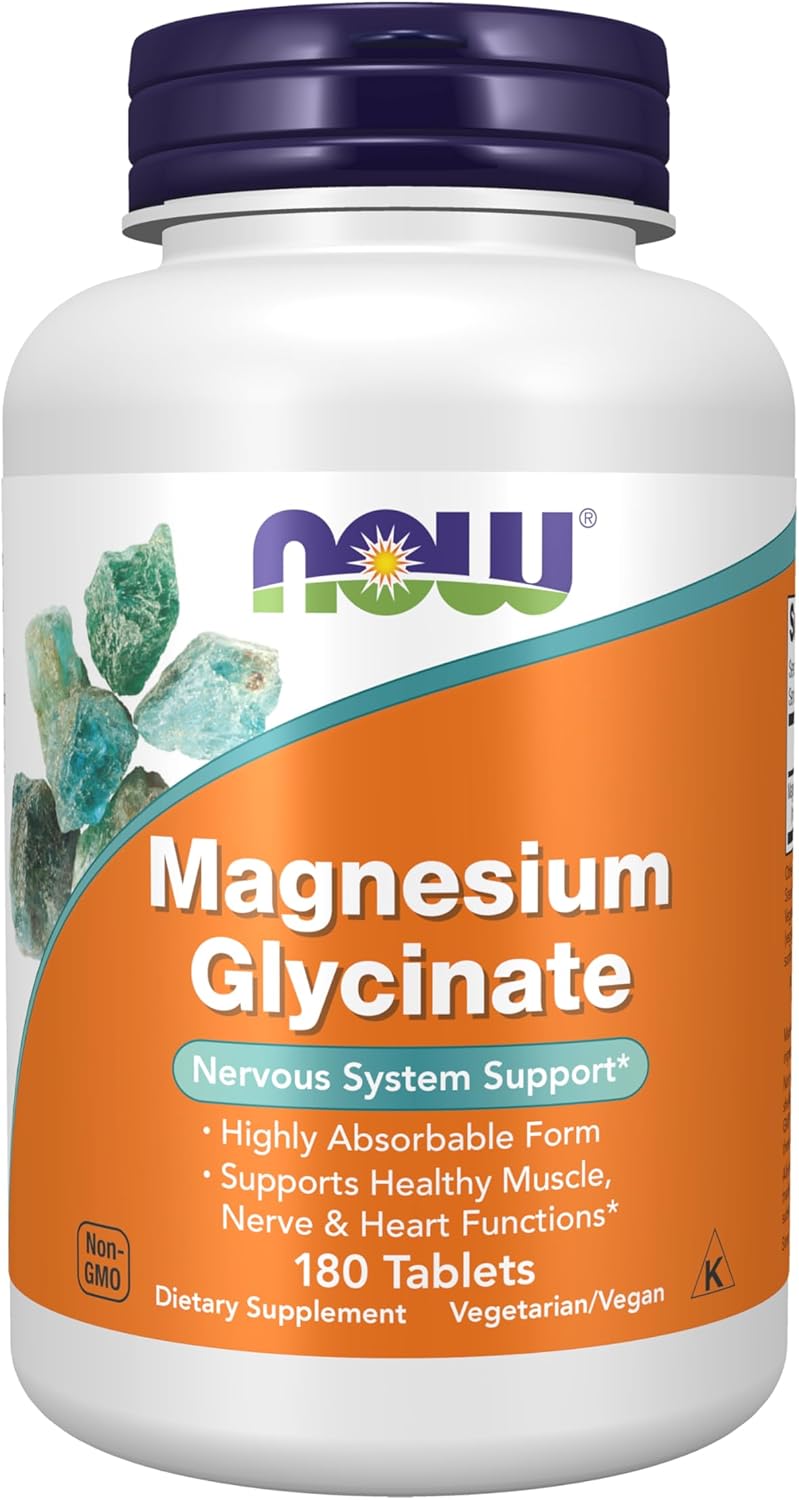
- 400 mg elemental magnesium per 4-capsule serving — higher dose than most competitors
- Fully chelated magnesium glycinate for improved absorption and gut tolerance
- NOW Foods is a GMP-certified manufacturer with 50+ years in the supplement industry
- Free of common allergens: soy-free, dairy-free, non-GMO, no artificial ingredients
- Available in 180-count and larger bottles — strong value per dose
- Third-party tested for purity and label accuracy
- Higher dose per serving (400 mg) gives more flexibility for those needing more magnesium
- NOW Foods is a trusted, long-established brand with excellent manufacturing standards
- Great cost-per-dose value — one of the cheapest quality glycinates available
- GMP certified with third-party testing — you know what’s in the bottle
- 4-capsule serving size is a lot of pills to take at once
- 400 mg elemental magnesium exceeds the NIH’s 350 mg daily supplemental upper limit — most people will take less than the full serving
- Less premium chelation process than Doctor’s Best TRAACS
Why it’s here: NOW Foods is one of the most trusted names in supplements, and their Magnesium Glycinate delivers solid value at a competitive price. If you’re on a budget or want to stock up with a large bottle, this is the most cost-effective chelated glycinate option. The higher 400 mg per full serving means most people will take half a serving (2 capsules, 200 mg), which stretches the bottle further. NOW’s GMP certification and decades of manufacturing history make this a safe, reliable choice for daily magnesium supplementation.
4. Life Extension Neuro-Mag Magnesium L-Threonate
- Uses Magtein — the branded, patented magnesium L-threonate developed at MIT specifically for brain penetration
- 144 mg of elemental magnesium per 3-capsule serving from 2,000 mg of magnesium L-threonate
- Clinical research shows Magtein raises brain magnesium levels, which other forms do not
- Supports synaptic density in the hippocampus — associated with improved memory and learning
- Life Extension is one of the most science-forward supplement companies, with decades of research-backed formulations
- Non-GMO, gluten-free; manufactured in a cGMP-compliant facility
- Only magnesium form clinically shown to cross the blood-brain barrier effectively
- The Magtein patent is backed by rigorous peer-reviewed research (MIT, Journal of Neuroscience)
- research supports threonate for cognitive applications
- Life Extension is a highly reputable brand known for scientifically rigorous formulations
- More expensive than glycinate or citrate options
- Lower elemental magnesium per serving (144 mg) — may need to pair with another form for full RDA
- 3-capsule serving is more than most people want to take
Why it’s here: If your primary motivation for taking magnesium is cognitive — focus, memory, learning, or brain health — magnesium L-threonate is in a category of its own. Research from MIT published in the Journal of Neuroscience showed that Magtein-supplemented animals had significantly higher brain magnesium concentrations and improved short- and long-term memory. Life Extension’s Neuro-Mag uses the authentic Magtein formula and is the go-to threonate supplement in the longevity and biohacker communities. It’s the most expensive option on this list, but for targeted cognitive support, the premium is justified.
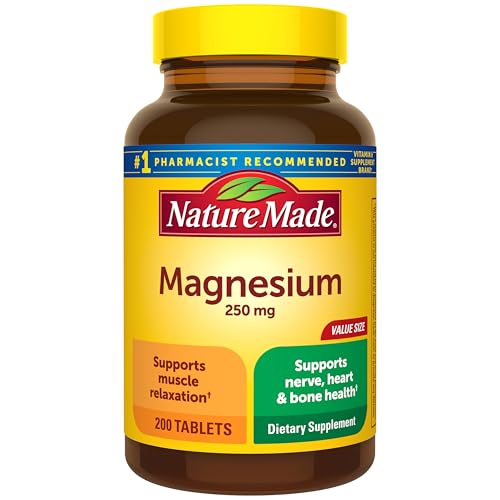
5. Nature Made Magnesium Glycinate 200 mg

- 200 mg of elemental magnesium glycinate per 2-capsule serving
- USP Verified — independently tested and verified for purity, potency, and label accuracy
- Glycinate form is gentle on the stomach and highly bioavailable
- No artificial colors, flavors, or preservatives; gluten-free
- Nature Made is one of the most widely recommended supplement brands by pharmacists
- Widely available in pharmacies and grocery stores in addition to Amazon
- USP Verified — one of the most rigorous third-party certifications available
- Nature Made is the #1 pharmacist-recommended supplement brand in the US
- Clean formula with no unnecessary additives
- Highly accessible — available at CVS, Walgreens, Target, and Amazon
- Straightforward 200 mg dose is easy to understand and manage
- Slightly more expensive per dose than Doctor’s Best or NOW Foods for comparable quality
- 2-capsule serving is still two pills, though smaller than some competitors
Why it’s here: Nature Made is the most pharmacy-mainstream magnesium glycinate on this list, and its USP Verification sets it apart from the crowd. USP (US Pharmacopeia) is one of the strictest independent testing certifications — it verifies that the product contains exactly what the label says, in the right amounts, with no harmful contaminants. If you’re new to supplementation and want the confidence of a universally trusted brand with rigorous third-party verification, Nature Made is the right choice. The 200 mg glycinate dose aligns well with clinical recommended nightly dose.
Magnesium Glycinate vs. Citrate vs. Threonate: Which Should You Choose?
After reviewing the research and testing multiple forms, here’s our straightforward take on which magnesium form fits which person:
- For sleep and everyday use: Magnesium glycinate or citrate. Both are highly bioavailable and well-studied. Glycinate is gentler on the stomach and has the bonus of the calming amino acid glycine. Citrate (in CALM powder) is slightly more easily absorbed and works well in powder format for before-bed rituals. If you have any digestive sensitivity, glycinate is the safer starting choice.
- For cognitive performance and brain health: Magnesium threonate (Magtein). The only form with clinical evidence of raising brain magnesium levels. Worth the premium price if mental clarity, memory, or long-term brain health is your priority. Some people take threonate in the morning and glycinate at night.
- For energy and active recovery: Magnesium malate. Bound to malic acid, which is directly involved in the Krebs cycle (cellular energy production). Good choice for athletes or people dealing with fatigue or fibromyalgia symptoms.
- Avoid magnesium oxide. Despite being cheap and common in drugstore supplements, magnesium oxide has approximately 4% bioavailability — meaning 96% of what you take passes through unused. It’s effective as a short-term laxative or antacid, not as a magnesium supplement.
How to Take Magnesium for Better Sleep
Based on the clinical research and clinical protocol, the optimal approach for using magnesium to improve sleep:
- Timing: Take 30–60 minutes before your intended bedtime. This gives the magnesium enough time to cross the intestinal wall and begin activating GABA receptors that signal the nervous system to wind down.
- Dose: Start with a lower dose — 100–200 mg elemental magnesium. The CALM powder allows you to start at 1 teaspoon (83 mg) and build up gradually. This minimizes any digestive adjustment.
- Form matters: Glycinate and citrate are the best choices for sleep. Glycinate for sensitive stomachs; citrate (CALM) if you prefer a powder drink as part of a wind-down ritual.
- Consistency: Magnesium’s sleep benefits build over time. The clinical study showing significant sleep improvements ran for 8 weeks. Give it at least 2–4 weeks of consistent nightly use before evaluating the effect.
- Pair with good sleep habits: Magnesium works best alongside consistent sleep timing, dim lights in the evening, and limited screen exposure — the basics of sleep hygiene that magnesium supports on a biochemical level.
Frequently Asked Questions About Magnesium Supplements
What is the best magnesium supplement for sleep in 2026?
For sleep, Natural Vitality CALM (magnesium citrate powder) and Doctor’s Best Magnesium Glycinate are the two best options. CALM is our top pick for its adjustable dosing and calming pre-bed ritual. For those who prefer capsules, Doctor’s Best glycinate is the gold standard. Both work by activating GABA receptors that reduce nervous system activity — exactly what you need to fall asleep faster and sleep more deeply.
Is magnesium glycinate or magnesium citrate better?
Both have high bioavailability and are well-studied. Magnesium glycinate is gentler on the digestive system and less likely to cause loose stools — the better choice if you have a sensitive stomach. Magnesium citrate (as in Natural Vitality CALM) is slightly faster-acting in powder form and has a mild stool-softening effect that some people find beneficial. For pure sleep and relaxation, glycinate has the edge due to the calming effects of the glycine molecule it’s bound to.
What did research say about magnesium?
Andrew research recommends magnesium as part of a sleep stack, specifically 140 mg of magnesium L-threonate or 200 mg of magnesium bisglycinate taken 30–60 minutes before bed. He cites magnesium’s role as a natural GABA agonist and NMDA antagonist — meaning it biochemically signals the brain to calm down. He notes that most people are deficient and that supplementation is one of the highest-impact, lowest-risk nutritional interventions available.
How long does magnesium take to work for sleep?
Some people notice improvements in sleep quality within a few days. For consistent, measurable results, expect 2–4 weeks of nightly use. The clinical trial showing significant sleep improvements (increased sleep time, lower cortisol, higher melatonin) ran for 8 weeks at 500 mg daily. Individual responses vary — adjusting your dose within the safe range can speed up results.
Can you take too much magnesium?
Yes. The NIH’s Tolerable Upper Intake Level for supplemental magnesium is 350 mg/day from supplements (not including dietary sources). Exceeding this regularly increases the risk of diarrhea, nausea, and abdominal cramping. Very high doses from supplements can cause low blood pressure, muscle weakness, and — in rare cases with compromised kidney function — more serious effects. Stick to 100–350 mg from supplements and consult a doctor if you have kidney disease or take medications that affect magnesium levels.
What is the best magnesium supplement for muscle cramps?
For muscle cramps and recovery, magnesium glycinate or magnesium malate are the best choices. Glycinate’s high bioavailability means more magnesium reaches muscle tissue. Malate (bound to malic acid) directly supports ATP energy production and is particularly well-regarded for fibromyalgia-related muscle pain. If you experience frequent nighttime leg cramps, magnesium glycinate before bed addresses both the muscle issue and sleep quality simultaneously.
Does Natural Vitality CALM really work?
Based on both the research and over 100,000 Amazon reviews at 4.5 stars — yes. CALM uses magnesium citrate, one of the most bioavailable forms, in an effervescent powder that forms ionic magnesium when mixed with water. The combination of high bioavailability, adjustable dosing, and a calming pre-bed ritual makes it the most popular magnesium supplement in the US for a reason. It works best when taken consistently every evening over several weeks.
Is magnesium threonate worth the extra cost?
If your primary goal is cognitive function — memory, focus, or long-term brain health — then yes, magnesium threonate (specifically the Magtein formula) is worth the premium. It’s the only magnesium form with clinical evidence of raising magnesium concentrations in the brain. For general health, sleep, and muscle benefits, the much cheaper glycinate or citrate forms are equally effective and a better value.
Final Thoughts: The Best Magnesium Supplement in 2026
If you’ve read this far and you’re still not taking magnesium, start tonight. The data on deficiency prevalence, sleep quality improvement, and the low risk profile of magnesium supplementation make it one of the most straightforward additions to any wellness routine.
Our pick is Doctor’s Best Magnesium Glycinate Lysinate — it’s what we actually take every day. The TRAACS chelation makes it one of the most bioavailable options, the glycine has its own calming benefits, and at 4.7 stars from 50,000+ reviews the results speak for themselves. Under $15 for 240 tablets makes it one of the best values in the supplement space.
If you prefer a powder drink format, Natural Vitality CALM is excellent — 100,000+ reviews and the wind-down ritual of mixing it before bed is genuinely helpful. For cognitive benefits specifically, Life Extension Neuro-Mag (magnesium threonate) is the only form shown to cross the blood-brain barrier effectively.
Pick the form that matches your goals, take it consistently before bed, and give it a few weeks. The research suggests you’ll notice the difference.
Get Natural Vitality CALM on Amazon →
Last updated: March 18, 2026. Prices and availability are subject to change. Always check the Amazon listing for current pricing before purchasing.
Related Magnesium Deep Dives
This is the broad overview. For focused picks on specific forms, formats, and use cases, see our dedicated reviews:
- Thorne Magnesium Glycinate Review — single-product deep dive on the NSF Certified for Sport pick we recommend most
- Best Magnesium Glycinate Gummies 2026 — for users who prefer chewable format over capsules (most “magnesium gummies” don’t actually use glycinate — these 5 do)
- Best Magnesium for Leg Cramps — symptom-specific picks across glycinate, citrate, malate, and electrolyte blends
Supplement Side Doors Worth Reading
If you came here for magnesium, you may want to explore the rest of the daily supplement stack we cover the same way — dose math first, marketing later:
- Best Ashwagandha Gummies — KSM-66 vs generic root powder, why 50mg gummies don’t hit the studied dose
- Best L-Theanine Gummies — 200mg threshold + caffeine pairing math
- Best Vitamin D Gummies — NHANES 40% deficient + the 2,000–5,000 IU range
- Best Zinc Gummies — picolinate vs oxide bioavailability + the copper balance problem
Ready to Buy?
Magnesium citrate in an effervescent powder, Starts fizzing and activating the moment it hits w…
Check Price →