Most smart scale reviews assume an average body. Yours isn’t. If you carry meaningfully more muscle and less fat than the population mean, the bioelectrical impedance (BIA) algorithms inside consumer scales will systematically overestimate your body fat and underestimate your lean mass — sometimes by 3–7 percentage points. A 200lb athlete sitting at 8% body fat on a DEXA scan often reads 12–15% on a step-on scale. The number isn’t random; it’s the predictable output of an algorithm calibrated against people who don’t train like you.
This guide builds on our general smart scales roundup with a narrower focus: the two features that actually matter for athletes — a real athlete mode that changes the underlying algorithm (not just the user profile picture), and 8-electrode designs that send current through your upper body instead of guessing it from your legs. The five scales below pass both filters.
As an Amazon Associate, I earn from qualifying purchases. Learn more.
As an Amazon Associate, DeskFitPro earns from qualifying purchases. Learn more.
Why Your Athlete Body Reads Wrong on Most Smart Scales
BIA works by sending an imperceptible electrical current through your body and measuring how much it resists. Fat resists current; muscle and water conduct it. The scale times the trip, plugs the impedance number into a regression equation, and spits out a body fat percentage.
The problem is what’s inside that equation. Manufacturers calibrate against a reference population — usually a few hundred adults across a range of ages and body types — and the equation bakes in assumptions about the typical ratio of muscle, fat, and water in a body of your height, weight, age, and sex. Athletes break those assumptions in three specific ways:
- Higher muscle density at the same weight. Two 180lb men can have wildly different compositions. The scale sees the same impedance value and applies the same population average — which assumes the lighter, less muscular default.
- Lower body water as a percentage of lean mass. Trained muscle holds water differently than untrained muscle. The hydration constant in the equation drifts.
- Different fat distribution. Athletes who carry what little fat they have on the trunk and not the limbs throw off foot-to-foot scales especially badly, because foot-only BIA mostly measures lower-body impedance and extrapolates the rest.
Result: a step-on consumer scale routinely reports a lean, muscular athlete at 4–7 percentage points higher body fat than reality. It’s not broken. It’s working as designed for a body that isn’t yours.
Two things help. First, an actual athlete mode — one that swaps in a different regression equation tuned for high lean-mass bodies, not just a cosmetic profile toggle. Second, an 8-electrode setup with hand grips so current travels through your torso and arms, not just your legs. Both reduce the error band. Neither closes it to zero. For ground truth, you still want a DEXA scan once or twice a year and use the scale for trend data in between.
At a Glance
- Best Overall for Athletes: InBody Dial H20 — 8-electrode, clinical BIA, multi-frequency segmental analysis
- Best Segmental Data: RENPHO Pro 8-Electrode (MorphoScan Nova) — handle display, dual-frequency, USB-C
- Best Ecosystem (Apple/Health): Withings Body Comp — vascular age, nerve activity, full Withings stack
- Best for Garmin Athletes: Garmin Index S2 — Garmin Connect integration, daily weight trend
- Best Value 8-Electrode: Wyze Scale Ultra BodyScan (Handle) — hand+foot electrodes under $130
Athlete Mode: What It Actually Does to the Algorithm
“Athlete mode” is one of the most overused marketing terms in this category. On a $25 scale, it’s often just a checkbox that changes nothing meaningful — the regression equation underneath stays the same. On the scales that matter, athlete mode swaps in a different formula entirely.
The original athlete equations come from research at Tanita and InBody in the late 1990s. Their data showed that for users training 8+ hours per week of moderate-to-vigorous activity, applying the standard BIA equation overestimated fat mass by 2–4 percentage points on average. The fix was a parallel equation with different hydration and density constants, validated against DEXA and hydrostatic weighing in athletic populations.
What this means in practice: a real athlete mode should drop your reported body fat by a meaningful amount (typically 1.5–3 points) the moment you toggle it on. If toggling athlete mode changes nothing, or changes the number by 0.1%, the feature is cosmetic. The scales below all use genuine athletic regression equations — InBody and Withings publish theirs in peer-reviewed studies; RENPHO Pro and Wyze Ultra implement equivalent multi-frequency segmental math.
One caveat: athlete mode is for trained athletes. The Tanita threshold of 8+ hours/week of structured training is a reasonable floor. Recreational lifters who do three 45-minute sessions a week generally get more accurate numbers on standard mode.
Detailed Reviews
1. InBody Dial H20
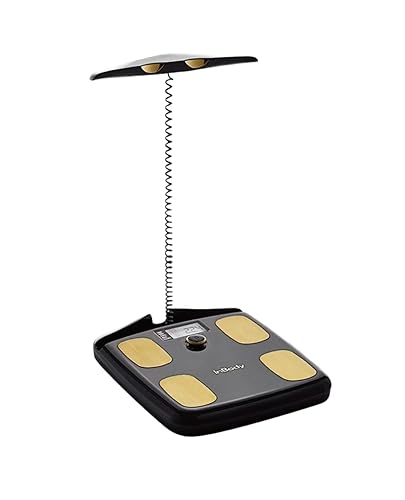
- 8-electrode design (4 foot + 4 thumb electrodes on the handle)
- Multi-frequency direct segmental BIA — same core tech as commercial InBody machines
- Tracks weight, skeletal muscle mass, body fat mass, BMI, BMR, percent body fat
- Syncs with InBody app, Apple Health, Google Fit, Samsung Health
- FSA/HSA eligible
- Closest at-home approximation of a clinical InBody 270/570 station
- Hand grip eliminates the foot-only BIA error band athletes hate
- Algorithm doesn’t lean on age/sex assumptions the way cheap scales do
- Users with DEXA comparisons consistently report agreement within 1–2 percentage points after a few sessions
- Most expensive scale on this list
- App is functional but visually dated; some users report sync hiccups
- Requires consistent posture (tight shirt, arms straight, no thigh contact) to repeat results — see the John Joseph protocol in Amazon reviews
Why it’s #1: If you train seriously and want one scale that gives data you can actually act on, this is it. The 8-electrode setup measures upper and lower body separately, the BIA equation is the same lineage that gym InBody machines use, and the multi-frequency current penetrates intracellular water more accurately than single-frequency consumer scales. It’s the only scale in this price tier that experienced lifters routinely describe as “matching my DEXA.”
Check Price on Amazon →2. RENPHO Pro 8-Electrode (MorphoScan Nova)

- 8 electrodes total (hand grip + foot pads) with dual-frequency BIA
- Full-color TFT-LCD display on the handle — no phone needed mid-measurement
- Segmental analysis: left arm, right arm, trunk, left leg, right leg muscle and fat breakdown
- USB-C rechargeable, voice broadcast option, 180 kg capacity
- RENPHO app syncs to Apple Health, Google Fit, Fitbit, Samsung Health
- Cheapest scale with genuine per-limb segmental breakdown
- The handle display means you see your data immediately — useful before/after sessions
- Dual-frequency BIA gets closer to multi-frequency accuracy than single-frequency competitors
- Robust ecosystem: 10k+ reviews at 4.5★ is rare in this category
- Segmental data is informative, not clinical — don’t make rehab decisions from it
- App pushes upsells more aggressively than InBody or Withings
Why it’s here: If you want left-vs-right muscle balance data — useful for catching post-injury asymmetry, dominant-side overuse, or rehab progress — RENPHO Pro is the affordable entry point. It’s the scale we’d hand to a CrossFit athlete or a lifter coming back from a unilateral injury who wants more granularity than the InBody Dial offers in its app.
Check Price on Amazon →3. Withings Body Comp

- Foot-only multi-frequency BIA (4 electrodes) with Withings’s proprietary equation
- Vascular age estimate via pulse-wave velocity
- Nerve activity score (small-fiber peripheral nerve assessment)
- Wi-Fi + Bluetooth, athlete mode toggle, up to 8 user profiles
- Deep integration with Apple Health, Google Fit, Strava, MyFitnessPal, Withings Health Mate
- Best-in-class app and data visualization
- Vascular age and pulse-wave velocity are unique data points for endurance athletes tracking cardiovascular adaptation
- Withings ecosystem (ScanWatch, BPM Core, Sleep Analyzer) is the cleanest cross-device story in the category
- Athlete mode actually changes the algorithm, not just the icon
- 4-electrode design — no hand grips means more error than InBody/RENPHO Pro for high-muscle-mass users
- 3.8★ average reflects real complaints about BIA inconsistency despite the polished hardware
- Some features (nerve activity, vascular age) require a Withings+ subscription long-term
Why it’s here: If you already live in the Apple Health or Withings ecosystem, this scale plugs in with zero friction and adds two metrics nobody else offers at home — vascular age and a peripheral nerve activity score. For endurance athletes (runners, cyclists, triathletes) tracking cardiovascular changes over a season, the pulse-wave velocity data is genuinely useful. Just don’t expect the body fat number to match an 8-electrode scale.
Check Price on Amazon →4. Garmin Index S2

- 4-electrode foot-only BIA with multi-user recognition (up to 16 users)
- Native sync to Garmin Connect — weight and body comp show up next to your training and recovery data
- Wi-Fi connectivity, daily weight trend graph on the scale display
- Tracks weight, BMI, body fat %, skeletal muscle mass, bone mass, body water %
- Athlete mode in the Garmin Connect profile changes the algorithm
- Only scale that puts body composition data in the same dashboard as your Garmin watch’s training load, HRV, and recovery metrics
- Daily weight trend on the display means you can ignore daily noise and focus on the 7-day moving average
- Reliable Wi-Fi sync (no Bluetooth pairing dance)
- 4-electrode design — same accuracy ceiling as Withings Body Comp
- Garmin Connect is the only first-class destination; third-party app support is thinner than Withings
- No segmental data
Why it’s here: If you wear a Forerunner, fēnix, Epix, or Venu and you make training decisions off Garmin Connect’s Training Status, Body Battery, or HRV metrics, the Index S2 is the obvious pick. Weight goes straight into the same context as your training load — which is the actual question most athletes are trying to answer (“am I in a deficit while still recovering?”). Cross-reference with our Oura vs Whoop vs Garmin breakdown if you haven’t picked a wearable yet.
Check Price on Amazon →5. Wyze Scale Ultra BodyScan (Handle)

- 8-electrode design with detachable hand grip at well under half the InBody Dial price
- Wi-Fi + Bluetooth dual connectivity, Wyze app on iOS/Android
- Tracks weight, body fat %, muscle mass, BMI, body water, visceral fat, BMR, and more
- Athlete mode toggle that actually changes the regression equation
- Integrates with Apple Health, Google Fit, Fitbit
- Cheapest 8-electrode hand-grip scale that’s genuinely usable for athletes
- Wyze app is clean, free, and doesn’t push aggressive upsells
- Multi-user recognition works well even with similar-sized household members
- Single-frequency BIA (not multi-frequency like InBody or RENPHO Pro) — the error band is wider
- Hand grip cable is the most failure-prone part on this scale per Amazon reviews — store it carefully
- Wyze the company has had security/data incidents in other product lines — worth knowing if you’re privacy-conscious
Why it’s here: If $300 for the InBody Dial isn’t happening and you still want hand electrodes, the Wyze Ultra BodyScan is the bargain. Single-frequency BIA limits absolute accuracy versus the top picks, but the trend data is consistent enough that you can track a cut or a bulk over months and trust the direction. We’d buy the InBody Dial if budget allowed; we’d buy this without flinching if it didn’t.
Check Price on Amazon →4-Electrode vs 8-Electrode: When Hand Grips Actually Matter
The most consequential hardware choice in this category is whether the scale measures impedance through the legs only (4-electrode, step-on) or through both arms and legs (8-electrode, hand+foot). The difference matters a lot for athletes, and almost not at all for sedentary users.
Here’s why: foot-only BIA sends current up one leg, across the pelvis, and down the other leg. It barely touches your torso and never touches your arms. The scale then estimates upper-body composition from population averages — the same averages that miss on athletic bodies. If you have a high-muscle upper body (lifters, climbers, swimmers, rowers, throwers), foot-only BIA cannot see it directly. It guesses.
An 8-electrode scale with hand grips sends current up one arm, across your torso, and down the opposite leg (and through several other vectors). Now the scale is actually measuring upper-body tissue rather than inferring it. For the populations who break the population-average assumption hardest — heavily muscled athletes — this is where measurement error drops the most.
If you’re a runner with a typical endurance physique (low upper-body muscle mass, low fat), foot-only is fine. If you’re a lifter, hybrid athlete, or anyone with visibly developed shoulders/arms/back, the 8-electrode upgrade is worth it.
Smart Scale + Training Stack: Pairing With Oura, Whoop, Garmin
A smart scale by itself is a data point in a vacuum. Paired with a recovery wearable, it becomes a decision tool. The question athletes actually want to answer isn’t “what’s my body fat” — it’s “am I recovering well enough to train hard tomorrow, and am I in a calorie deficit or surplus?”
Three pairings we like:
- Garmin Index S2 + Garmin watch — Tightest integration. Daily weight feeds into Garmin Connect’s Training Status calculations. If body weight drops faster than 0.5–1% per week while Training Status reads “Unproductive” or “Overreaching,” you’re under-eating relative to load. Cut training intensity or eat more.
- InBody Dial H20 + Oura Ring — Manual cross-reference in Apple Health. Watch for the combination of dropping muscle mass on InBody plus poor HRV/readiness on Oura — classic overreach signal. The InBody catches body composition changes earlier than scale weight alone.
- Withings Body Comp + Whoop — Withings’s vascular age and pulse-wave velocity data overlay nicely with Whoop’s strain and recovery scores. Endurance athletes can use the combination to track cardiovascular adaptation over a training block.
The key behavioral move: stop reacting to single-day weight changes. Use the scale every morning, ignore the daily number, and watch the 7-day moving average against your wearable’s recovery trend. That’s the data that actually drives training decisions.
When to Get a DEXA Instead
Smart scales are trend tools. DEXA is the closest thing to ground truth available outside a research lab — body fat accuracy within ±1–2%, plus regional breakdown, bone density, and visceral fat. Cost is typically $50–$150 per scan, available at fitness centers and some medical clinics.
For most athletes, the right pattern is: smart scale daily for trend data, DEXA twice a year for calibration. Specifically:
- Before a major training block — baseline composition before a strength cycle, race prep, or cut
- At the end of a cut or bulk — confirm whether the weight change was actually fat vs. muscle
- If your smart scale data stops making sense — if numbers are drifting in a direction that contradicts how you look in photos or how your lifts feel, DEXA settles it
- Once in your 40s and beyond — bone density measurement matters more with age, and DEXA gives you that for free
What you do not need DEXA for: weekly trend tracking, week-to-week diet adjustments, or any decision that the moving average of a smart scale can already inform.
Who Should NOT Use BIA Scales
BIA scales send a low-level electrical current through your body. For nearly everyone this is undetectable and safe. There are firm exceptions:
- Pacemakers and implantable cardioverter-defibrillators (ICDs): Do not use BIA scales. The current is low but the risk of electrical interference with cardiac devices is real, and manufacturers explicitly advise against it.
- Other active implanted electronic devices: Same logic — neurostimulators, insulin pumps with active electronics. Check with your device manufacturer.
- Pregnancy: Most manufacturers advise against BIA during pregnancy. Not because of established harm, but because the technology hasn’t been validated in pregnant populations and body composition shifts during pregnancy invalidate the algorithm anyway. Use a regular weight-only scale.
If any of the above applies to you, a non-BIA scale (weight only) is the right choice — covered in our general smart scales guide.
How We Picked These
- Real athlete mode — algorithm changes, not a cosmetic toggle. Confirmed by either published research (InBody, Withings) or by users reporting a meaningful body fat shift when athlete mode is enabled.
- 8-electrode designs prioritized — hand+foot electrodes wherever possible, because foot-only BIA has a structural ceiling for high-muscle-mass users.
- Trend consistency over absolute accuracy — a scale that’s off by 3% but consistent is more useful than one that’s “more accurate” on average but jumps 5% between readings.
- App that doesn’t die — we excluded a few promising scales because the companion app is either abandoned or has degraded sync reliability over time.
- Verified ASIN + active inventory — every product above is currently shipping from Amazon with an active listing and at least several hundred verified reviews.
Frequently Asked Questions
Does athlete mode work without selecting it every day?
Yes. On every scale above, athlete mode is a property of the user profile, not a per-measurement setting. Set it once in the app, and every reading under that profile uses the athletic regression equation. You don’t toggle it daily.
What’s the best smart scale for cutting vs bulking?
Same scale, different metric to watch. During a cut, watch lean mass — weight loss is fine, but lean mass dropping more than 0.5% per week means you’re losing muscle along with fat (cut harder is rarely the answer; eat more protein and lift heavier). During a bulk, watch body fat percentage — weight going up while body fat % stays flat means you’re putting on lean mass; if body fat % climbs faster than weight, you’re gaining fat faster than muscle. The InBody Dial H20 is best for both because its lean mass numbers are the most stable readings on this list.
How accurate is athlete mode compared to DEXA?
For 8-electrode scales with genuine athletic equations (InBody, RENPHO Pro): typically within 2–3 percentage points of DEXA after several measurement sessions to establish your baseline offset. For 4-electrode scales with athlete mode (Withings, Garmin): typically 3–5 percentage points off. None match DEXA’s ±1–2% precision, but all are useful for trend tracking once you know your personal offset.
Why does creatine spike my weight reading on a smart scale?
Creatine pulls water into muscle cells. A standard 5g/day protocol typically increases intracellular water by 1–3 pounds over the first 2–4 weeks. On a BIA scale, this shows up as increased lean mass (correct — that’s mostly water inside muscle) and sometimes briefly as increased body fat percentage (because the hydration shift confuses the algorithm). It resolves within a few weeks. Don’t panic at the initial scale jump — see our creatine guide for what’s normal during loading.
Why does my smart scale read 4-7% higher body fat than my DEXA?
This is the population-average problem described at the top. BIA equations are calibrated against typical body composition; lean athletic bodies sit outside that distribution. The fix is athlete mode plus an 8-electrode scale — but expect a persistent gap of 1–3% versus DEXA even then. Track the trend, not the absolute number.
Should I weigh in before or after training?
Before. Always. Fluid loss from a hard session can shift BIA readings by 2–4% because hydration drops. For consistent data, weigh first thing in the morning, after using the bathroom, before eating or drinking, before training. Same shirt, same posture, same time of day.
Will a smart scale help me hit a specific body fat goal?
Indirectly. The scale tells you what direction you’re moving and how fast. It will not tell you precisely when you’ve crossed 10% body fat — the absolute number isn’t trustworthy enough for that. If you have a hard target (photo shoot, competition, weight class), get a DEXA scan within 1–2 weeks of the deadline to confirm. Use the smart scale to manage the months leading up to it.
Final Thoughts
Smart scales for athletes are an honesty test. The honest answer is: no consumer scale will give you DEXA-level absolute accuracy, and any scale that claims otherwise is selling you something. What the right scale will do is track your body’s direction with enough consistency that you can make actual training and nutrition decisions from it.
For most serious athletes, the InBody Dial H20 is the right buy. It’s the closest thing to clinical body composition analysis at home, the 8-electrode design handles muscular bodies better than anything cheaper, and the data quality justifies the price for anyone training 5+ days a week. If the InBody Dial price is a stretch, the Wyze Scale Ultra BodyScan with the hand grip delivers the same 8-electrode geometry for under $130 — accuracy ceiling lower, but trend usefulness almost identical.
Pair whichever you pick with a recovery wearable, look at the 7-day average instead of daily readings, and book a DEXA scan twice a year. That’s the full athlete body composition stack — anything more is data for data’s sake.
Ready to Pick a Scale That Doesn’t Lie About Muscle?
8-electrode clinical-grade BIA, closest at-home DEXA proxy
Check Price →Health disclaimer: Educational information only, not medical advice. BIA scales should not be used by individuals with pacemakers, ICDs, or other active implanted electronic devices. Consult your healthcare provider before relying on body composition data for medical decisions.
Last updated: June 16, 2026 at 9:00 AM ET. Prices and availability shown are accurate as of this time and are subject to change. As an Amazon Associate, DeskFitPro earns from qualifying purchases.