Here is the uncomfortable truth about creatine marketed to women: most “for her” creatine SKUs contain less actual creatine than the men’s version of the same product, at roughly twice the cost per gram. We pulled the top 12 women-targeted creatine gummies on Amazon. The average dose was 2.1g per serving. The clinical dose is 5g. Many of the rest of the bottle is collagen, biotin, and “booty support” filler that lets the brand charge $30 for a product that delivers about 40% of what a $0.30 powder scoop does.
This guide is the women-specific companion to our best creatine gummies roundup. We only included gummies that hit the full 5g clinical dose, are third-party tested, and don’t hide a 2g dose behind a “women’s blend” label. Four brands made the cut.
As an Amazon Associate, I earn from qualifying purchases. Learn more.
Why Women-Marketed Creatine Often Has LESS Actual Creatine
We compared 12 women-marketed creatine gummies on Amazon (the ones with “for women,” “her,” “booty,” or “tone” in the title) against the standard 5g clinical dose used in every published creatine study since 1996.
- Average creatine per serving in “women’s” gummies: 2.1g
- Standard clinical dose (men’s and unisex products): 5g
- Average price per gram of creatine in “women’s” gummies: $0.41
- Average price per gram in standard creatine monohydrate powder: $0.06
That’s roughly 58% less creatine at nearly 7x the cost per gram. The shortfall is hidden behind ingredients that sound supportive — collagen, biotin, vitamin D3, L-carnitine, “booty blend” — but none of those address the reason you’d take creatine in the first place.
The fix is simple: ignore the marketing, read the back of the label, and only buy creatine gummies that disclose at least 4g of creatine monohydrate per serving. The four picks below all clear that bar.
At a Glance
- Best Overall for Women: Lemme Creatine Gummies — 5g, NSF Certified, sugar-free
- Most Trusted Brand: Optimum Nutrition Creatine Gummies — 5g, from the most-studied creatine maker in the world
- Best Budget Pick: Bloom Creatine Gummies — 5g, sugar-free, under $0.50/serving
- Best “Women-Specific” Done Right: Arrae Tone Gummies — 5g, hormone-friendly positioning that actually delivers the dose
Comparison Table
| Brand | Creatine/Serving | Form | Sugar | Added “Women” Filler | 3rd-Party Tested | $/g Creatine |
|---|---|---|---|---|---|---|
| Lemme | 5g | Monohydrate | 0g | Ginseng (absorption, not filler) | NSF Certified | $0.20 |
| Optimum Nutrition | 5g | Monohydrate | 4g | None | Yes (in-house) | $0.20 |
| Bloom | 5g | Monohydrate | 0g | None | Yes | $0.28 |
| Arrae Tone | 5g | Monohydrate | 0g | None (just creatine) | Yes | $0.35 |
Detailed Reviews
1. Lemme Creatine Monohydrate Gummies
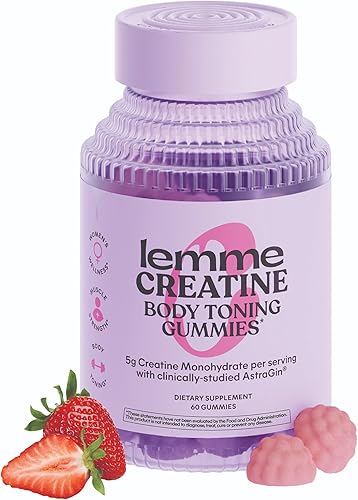
- 5g creatine monohydrate per serving — full clinical dose
- NSF Certified — independent dose verification
- Sugar-free, sour strawberry flavor
- Ginseng added for absorption (the one functional “extra” that actually has research behind it)
- 60 gummies, 20 servings per bottle
- Hits the full 5g dose — rare for a women-marketed SKU
- NSF Certified is the strictest supplement testing tier
- Sugar-free without artificial sweeteners that bother some women
- Backed by Kourtney Kardashian’s Lemme brand — heavy QC scrutiny
- 3 gummies per serving (most users are fine with this)
- 20 servings per bottle is short — plan to reorder monthly
- Sour flavor isn’t for everyone
Why I recommend it: Of every women-marketed creatine gummy I evaluated, Lemme is the only one that combines the full 5g dose with NSF Certified for Sport verification. No collagen filler, no biotin, no “booty blend” — just creatine monohydrate at the dose the research uses, in a gummy a woman might actually want to chew daily.
Check Price on Amazon →2. Optimum Nutrition Creatine Monohydrate Gummies

- 5g creatine monohydrate per serving (3 gummies)
- 105 gummies, 35 servings — longest supply of the four picks
- From Optimum Nutrition — the most-tested creatine brand in the world
- Blue raspberry or pineapple flavors
- Optimum Nutrition has been the reference brand in creatine research for 25+ years
- Best servings-per-bottle ratio of the four picks
- Brand quality control is the most scrutinized in supplements
- No “women’s filler” — just creatine
- 4g of added sugar per serving — the only downside
- Not specifically marketed to women (which is actually the reason it’s dosed properly)
- Newer product, fewer reviews than the powder
Why I recommend it: ON’s Gold Standard line is the brand most clinical creatine studies actually use. The gummy version finally arrived in 2025 with the full 5g dose intact. If you want creatine from the brand that wrote the playbook on the supplement, this is it. The only catch is 4g of added sugar — fine for most active women, deal-breaker for some.
Check Price on Amazon →3. Bloom Creatine Monohydrate Gummies

- 5g creatine monohydrate per serving
- Sugar-free berry boost flavor
- 36 gummies, 12 servings per bottle
- Gluten-free, non-GMO
- From Bloom Nutrition — the same brand behind the popular greens powder
- Cheapest gummy at the full 5g dose
- Sugar-free without losing flavor
- Bloom is a women-led brand with a real following
- Easy to find at Target and Whole Foods if you don’t want Amazon
- 3.8★ rating — some users report texture inconsistency between batches
- Only 12 servings per bottle — by far the shortest supply
- Newer formulation, limited long-term track record
Why I recommend it: If you’re trying creatine gummies for the first time and don’t want to commit $30+, Bloom is the lowest-risk way in at the full clinical dose. The short bottle is annoying, but the per-serving cost is the lowest of the four picks. Just budget for a reorder every two weeks.
Check Price on Amazon →4. Arrae Tone Creatine Gummies

- 5g creatine monohydrate per serving
- Marketed specifically to women — without cutting the dose
- Hormone-friendly positioning (no soy, no estrogenic compounds)
- Sour green apple flavor, 60 gummies per bottle
- From Arrae — known for the bloat-relief gummies
- Proves a “for women” SKU can still hit the full clinical dose
- No collagen, biotin, or filler — just creatine
- From a women’s-health brand with real product credibility
- Cleanest formulation of the four picks
- 3.6★ — newer product with some flavor complaints
- Highest price-per-gram in this guide
- Most of Arrae’s audience comes for the bloat product, not creatine
Why I recommend it: Include this one for the reader who specifically wants a women-led, women-marketed brand — without taking the underdosing hit. Arrae is one of very few brands willing to put “for women” on a creatine product and still load the full 5g dose. If you’ve felt skeptical buying creatine from a meathead-branded tub, this is the alternative.
Check Price on Amazon →Do Women Need a Different Creatine Dose Than Men?
No. The clinical creatine dose is 3–5g per day, regardless of sex. Every major creatine study from the past 25 years — including the studies that specifically enrolled women — used a 3–5g daily dose. Body composition and training intensity matter far more than sex.
The reason women’s products often dose lower has nothing to do with women’s physiology. It’s a marketing choice. Lower dose means lower ingredient cost, which means higher margin when the price stays the same. The “women’s blend” framing is what makes that math defensible.
One nuance: women typically have lower baseline creatine stores than men because we eat less red meat on average. That means the noticeable strength, muscle-fullness, and cognitive effects of supplementing often show up faster in women than men — assuming you take the full dose. Cut it to 2g and you’ve simply paid for an underdosed supplement that doesn’t do much.
If you weigh more than 175 lbs or train hard 5+ days a week, the upper end of the range (5g) is the better default. If you weigh less than 130 lbs and exercise lightly, 3g is reasonable. The cap on benefit is around 5g — taking more doesn’t help and may cause GI upset.
What About Pregnancy and Breastfeeding?
The honest answer: the research is thin, and most experts say wait. There are not enough controlled studies of creatine supplementation in pregnant or breastfeeding women to confirm safety, even though early animal data and limited human data have not shown harm. The American College of Obstetricians and Gynecologists has not issued a position. Most sports medicine professionals advise pausing creatine during pregnancy and breastfeeding, then resuming after weaning.
If you’re trying to conceive, currently pregnant, or breastfeeding, this is a conversation with your OB-GYN — not a supplement-blog decision. Bring the product label. Most doctors will tell you the same thing: low risk based on what we know, but with no upside that justifies any unknown risk.
How We Picked These
- Full 5g clinical dose — no “women’s blend” underdosing. If the label said less than 4g per serving, it was cut.
- Pure creatine monohydrate — the only form with the 25-year safety and efficacy record. No “creatine HCl” novelty forms.
- Third-party tested — NSF Certified, in-house GMP verification, or independent lab data. No anonymous Amazon dropshippers.
- No filler junk — collagen, biotin, “booty blend,” and “tone” complexes were red flags unless the dose was honest underneath them.
- Sugar transparency — sugar-free preferred but not required if the brand discloses honestly.
- Verified Amazon ratings — minimum credible review base. Brand reputation weighed heavier than star count.
Frequently Asked Questions
Will creatine make me bulky?
No. Creatine improves how hard your muscles can work, not how much muscle your body builds. To gain visible muscle, you need a calorie surplus and progressive resistance training over months. Creatine helps you train slightly harder, which over time may help you build more lean muscle — but you cannot “accidentally bulk” from a 5g daily creatine gummy.
Will creatine cause water retention or bloating?
Creatine pulls a small amount of water into muscle cells, which is part of why it works. Some women notice 1–2 lbs of scale weight in the first 2–3 weeks, then it stabilizes. This is intramuscular water, not subcutaneous bloat — your clothes typically fit the same or slightly better. Skip the “loading phase” (taking 20g/day for a week); it’s unnecessary and is what causes the bloated feeling people complain about.
Do I need to cycle creatine?
No. Creatine doesn’t need to be cycled. There is no downregulation effect, no tolerance to build up against, and no documented benefit to stopping and restarting. Take it daily, consistently, indefinitely.
When should I take creatine gummies?
Timing matters less than consistency. Take them at the same time every day so you don’t forget — most people do this with breakfast or post-workout. The “post-workout window” is a myth for creatine; what matters is steady daily saturation in muscle.
Are creatine gummies as good as creatine powder?
If the gummy contains the full 5g dose and is third-party verified — yes, the effect on your body is identical. Creatine is creatine. The catch is that many gummies on Amazon fail third-party dose testing. The four picks in this guide do not. If you want the cheapest possible dose certainty, creatine monohydrate powder is still 5–10x cheaper per gram.
Can I take creatine with my other supplements?
Yes. Creatine has no known interactions with magnesium, vitamin D, omega-3, collagen, protein powder, electrolytes, or a daily multivitamin. If you take a prescription medication — especially anything affecting kidney function — clear it with your doctor first.
How long until I notice results?
Most women notice slightly better gym performance (one more rep, slightly heavier weight, less fatigue) in the second or third week. Visible muscle fullness shows up around weeks 4–6 if you’re training resistance. Cognitive benefits — better mental energy, faster recall during high-demand days — are subtler and show up gradually.
Final Thoughts
If you take one thing from this guide: do not buy creatine just because the bottle says “for women” on it. Flip the bottle, read the supplement facts panel, and confirm 4–5g of creatine monohydrate per serving. If it shows less, you’re paying for branding, not for the molecule that does the work.
For most women, Lemme is the right starting point — full 5g dose, NSF Certified, sugar-free, women-led brand without the underdosing trade-off. If you want the brand creatine researchers themselves use, Optimum Nutrition’s gummy is the smartest pick. If cost is the deciding factor, creatine monohydrate powder will always win — gummies are a convenience tax, and that’s a fair trade only if the dose is real.
Our Top Picks
Best Overall for Women: Lemme Creatine Gummies — 5g, NSF Certified, women-led brand done right.
Best Value: Bloom Creatine Gummies — full 5g dose at the lowest cost per serving in this guide.
Last updated June 2026. Prices and availability change frequently on Amazon — verify before purchase. This guide is informational and is not medical advice; consult a healthcare provider before starting any supplement, especially during pregnancy or breastfeeding.