The adult RDA for biotin is 30 micrograms a day. Yes, micrograms. The popular gummies on Amazon contain 5,000 to 10,000mcg per serving — 166 to 333 times the RDA — and market themselves on a hair-growth claim the evidence barely supports. The honest reality: biotin only helps hair when you’re deficient, deficiency is rare in healthy adults, and mega-dosing the stuff has a real, FDA-flagged downside that nobody on the marketing side wants to mention.
That downside is lab interference. High-dose biotin distorts thyroid panels, troponin (heart-attack) tests, vitamin D assays, hCG pregnancy tests, and a long list of other clinical immunoassays. People have been misdiagnosed because they didn’t tell their doctor they were taking a beauty gummy. We wrote this guide assuming you want hair that looks good and lab results that are actually accurate.
Affiliate disclosure: As an Amazon Associate, DeskFitPro earns from qualifying purchases. We only recommend products we’d actually take.
Health disclaimer — read this one: High-dose biotin (anything above ~1,000mcg) interferes with biotin-streptavidin lab assays used in routine bloodwork. The FDA has issued repeat safety communications warning that this interference can produce falsely high or falsely low TSH (thyroid), free T4, free T3, troponin (heart attack markers), vitamin D, parathyroid hormone, testosterone, and hCG (pregnancy) results. At least one death has been linked to a missed heart attack diagnosis due to biotin interference. Stop biotin supplements at least 72 hours before any blood test, and always tell every doctor and lab tech that you take biotin. This is informational, not medical advice — talk to your physician.
#1 PICK: Nature’s Bounty Hair, Skin & Nails with Biotin 2,500mcg — moderate-dose biotin (still 83x the RDA, but a fraction of the 10,000mcg gummies), paired with vitamin C and antioxidants. 4.6★ across 69,800+ reviews. About $14 for 100 servings.
As an Amazon Associate, I earn from qualifying purchases. Learn more.
Why 10,000mcg Biotin Won’t Grow Your Hair Faster Than 100mcg (And Will Mess Up Your Thyroid Labs)
Biotin is vitamin B7. Your body uses it as a cofactor for a handful of carboxylase enzymes that help metabolize fats, carbs, and amino acids. The recommended adequate intake for adults is 30 micrograms per day. You can hit that with two eggs and a handful of almonds. Frank biotin deficiency in otherwise healthy people is so rare that most general practitioners will go their whole career without diagnosing a case.
Where the supplement industry got the “biotin grows hair” idea is real but narrow. People with genuine biotin deficiency — typically from biotinidase deficiency (a rare inherited disorder), long-term raw egg white consumption (the avidin in raw whites binds biotin), prolonged antibiotic use that wipes out gut bacteria producing biotin, or specific malabsorption conditions — do experience hair thinning, brittle nails, and skin issues. Restoring biotin to normal levels in those people reverses those symptoms. That’s the entire evidence base.
The leap from “biotin fixes deficiency-related hair loss” to “biotin will give a healthy person thicker, faster-growing hair” is a marketing leap, not a scientific one. Reviews of the hair-growth literature consistently conclude that biotin supplementation in non-deficient adults shows no measurable benefit over placebo. The before-and-after photos in influencer ads are doing a lot of work that the biology isn’t.
The 10,000mcg number on most popular gummies isn’t there because the science says so. It’s there because “more = better” sells. Biotin is water-soluble, so excess simply ends up in your urine — but unlike, say, vitamin C, the excess isn’t quietly excreted and forgotten. It actively interferes with one of the most common lab techniques in modern medicine.
Most clinical immunoassays rely on the biotin-streptavidin binding interaction to capture and measure target molecules in your blood. When you flood your bloodstream with supplemental biotin, you saturate that binding chemistry and skew results in unpredictable directions. The FDA has issued multiple warnings about this since 2017. The most-affected tests are the ones people get most often:
- TSH and free T4 / free T3. High-dose biotin can produce a pattern that looks like Graves’ disease (hyperthyroidism) on paper — low TSH, high T4 — when the patient is actually euthyroid. People have been started on antithyroid medication based on biotin-fooled labs.
- Troponin. The heart-attack marker can read falsely low, masking an actual heart attack in progress. The FDA flagged a death linked to this in their 2019 communication.
- hCG. Pregnancy tests can show falsely negative results.
- Vitamin D, parathyroid hormone, testosterone, cortisol, ferritin, and many others. The list is long and depends on the specific assay your lab uses.
Here’s the practical implication: the more biotin you take, the higher the interference. A 30mcg daily intake (food levels) doesn’t move labs. A 100-300mcg supplement probably doesn’t either. By 1,000mcg, interference starts showing up in sensitive assays. At 5,000-10,000mcg — the dose on most popular gummies — interference is well-documented and can persist for 24-72 hours after the last dose.
None of this means biotin is dangerous in a pharmacological sense. It means a substance that does nothing measurable for hair in healthy adults is actively making your bloodwork less trustworthy. That’s a bad trade.
At a Glance
- Best Overall (Honest Moderate Dose): Nature’s Bounty Hair, Skin & Nails 2,500mcg — 2,500mcg biotin plus vitamin C and antioxidants, established brand, 69,800+ reviews
- Best Sugar-Free: MaryRuth’s Organics Biotin Gummies 2,500mcg — sugar-free, vegan, moderate dose, no fillers
- Best Multi-Nutrient Stack: Nature Made Advanced Hair, Skin & Nails — biotin paired with retinol, niacinamide, vitamin C, vitamin E (the nutrients with actual hair/skin evidence)
- Best Mainstream Grocery Brand: OLLY Undeniable Beauty 2,500mcg — moderate dose, keratin, vitamin C, Target/CVS shelf credibility
- Most Popular Higher-Dose Option (Buy With Eyes Open): Vitafusion Extra Strength 5,000mcg — 5,000mcg dose so the lab-interference caveat matters more; established brand
The Dose Reality: RDA vs Mega-Dose Gummies
Here’s what you’re actually buying when you compare biotin gummies side by side. The “% of RDA” column is the one that should make you raise an eyebrow.
| Product | Biotin per Serving | % of Adult RDA | Sugar / Serving | Other Hair-Relevant Nutrients | Price |
|---|---|---|---|---|---|
| Nature’s Bounty 2,500mcg | 2,500mcg | 8,333% | 3g | Vit C, Vit E, Zinc (varies by SKU) | ~$14 |
| MaryRuth’s Sugar-Free | 2,500mcg | 8,333% | 0g | Standalone biotin | ~$25 |
| Nature Made Advanced | 2,500mcg | 8,333% | 3g | Vit C, Vit E, Niacinamide, Pro-Retinol A | ~$12 |
| OLLY Undeniable Beauty | 2,500mcg | 8,333% | 3g | Vit C, Keratin | ~$13 |
| Vitafusion 5,000mcg | 5,000mcg | 16,667% | 3g | Standalone biotin (high dose) | ~$14 |
The picks in this guide top out at 2,500-5,000mcg. We deliberately excluded the 10,000mcg category — not because it’s dangerous in the toxicity sense (biotin has no established upper limit), but because the higher the dose, the more it skews your labs, and there is zero evidence the higher dose does anything more for your hair than the lower dose. If you’re going to take a vitamin that doesn’t really do what the label promises, take the smallest version of it.
Detailed Reviews
1. Nature’s Bounty Hair, Skin & Nails with Biotin 2,500mcg

- Biotin per serving: 2,500mcg (the lowest reasonable “beauty gummy” dose)
- Adds vitamins C and E — nutrients with actual skin and connective tissue evidence
- 200 gummies = 100 servings (about 3-month supply at 2 gummies/day)
- Strawberry flavor, gelatin-based
- Established Nature’s Bounty brand with multi-decade compliance record
- Pectin-based vegetarian SKU also available for the same dose
- Lowest mainstream biotin dose still labeled as a “hair, skin & nails” product
- 69,800+ reviews at 4.6★ — strongest social proof in the category
- Cost-per-serving is among the lowest at any dose tier
- Vitamin C addition is the actual mechanism most people are looking for (collagen cofactor)
- Still 83x the RDA — lab interference applies, just less severely than 10,000mcg products
- 3g sugar per serving (cane sugar) — meaningful if you take it daily for months
- Gelatin base — not vegan (the vegetarian SKU is a different ASIN)
Why I recommend it: If you’re going to take a biotin gummy, this is the one that minimizes the downsides without pretending it’s something it isn’t. The dose is the lowest in the mainstream beauty-gummy category, the price is right, the brand has a real compliance footprint, and the vitamin C addition is the only ingredient in the formula with credible hair-and-skin evidence. Just remember the lab-test rule — stop taking it 72 hours before any blood draw.
Check Price on Amazon →2. MaryRuth’s Organics Biotin Gummies 2,500mcg

- Biotin per serving: 2,500mcg
- Sugar per serving: 0g (sweetened without sugar or sugar alcohols)
- Vegan, non-GMO, pectin-based
- 60 gummies = 30 servings (one month)
- Made by MaryRuth’s — established sugar-free supplement specialist
- Free of common allergens, artificial flavors, and dyes
- Genuinely zero sugar — useful if you’re taking gummies daily and counting carbs
- Vegan and pectin-based (no gelatin), suitable for plant-based diets
- Standalone biotin without proprietary blends or undisclosed extras
- MaryRuth’s publishes ingredient sourcing and has strong consistency reviews
- Most expensive per serving on this list
- Standalone biotin means no vitamin C or other genuinely hair-relevant nutrients
- Some reviewers find the natural sweetener aftertaste noticeable
Why I recommend it: If you’ve decided you want biotin in your routine and you’re already avoiding added sugar — keto, low-carb, GLP-1 protocol, or just dental-conscious — this is the cleanest moderate-dose option. The trade-off is that you’re paying premium for a vitamin that’s questionably useful in the first place. Pair it with a separate vitamin C source if hair and skin are the actual goal.
Check Price on Amazon →3. Nature Made Advanced Hair, Skin and Nails Gummies

- Biotin per serving: 2,500mcg (moderate dose tier)
- Adds Pro-Retinol A, niacinamide, vitamin C, vitamin E
- 80 gummies = 40 servings
- USP Verified manufacturer (Nature Made is one of the few brands that publishes this)
- Berry flavor, gluten-free
- Tied for lowest cost-per-serving on this list
- Only product on this list pairing biotin with niacinamide and a retinol form — both have actual skin evidence
- Nature Made is USP Verified across most of their line — third-party content/quality testing
- Lowest price point at the moderate-dose tier
- Multi-nutrient formula means biotin is the smallest part of what you’re paying for
- Newer SKU — review count is still small (108) compared to mainstream alternatives
- Pro-Retinol A in a gummy is low-dose by definition; don’t expect topical-retinol effects
- Contains gelatin — not vegan
Why I recommend it: If you want the closest thing to an “evidence-aligned hair and skin gummy,” this is it. Niacinamide has solid topical evidence and reasonable systemic evidence for skin barrier function. Vitamin C is a collagen cofactor. Vitamin E is an antioxidant. Biotin is along for the ride. You’re not buying it for the biotin — you’re buying it for the rest of the formula and getting biotin you didn’t need anyway.
Check Price on Amazon →4. OLLY Undeniable Beauty Hair, Skin & Nails 2,500mcg
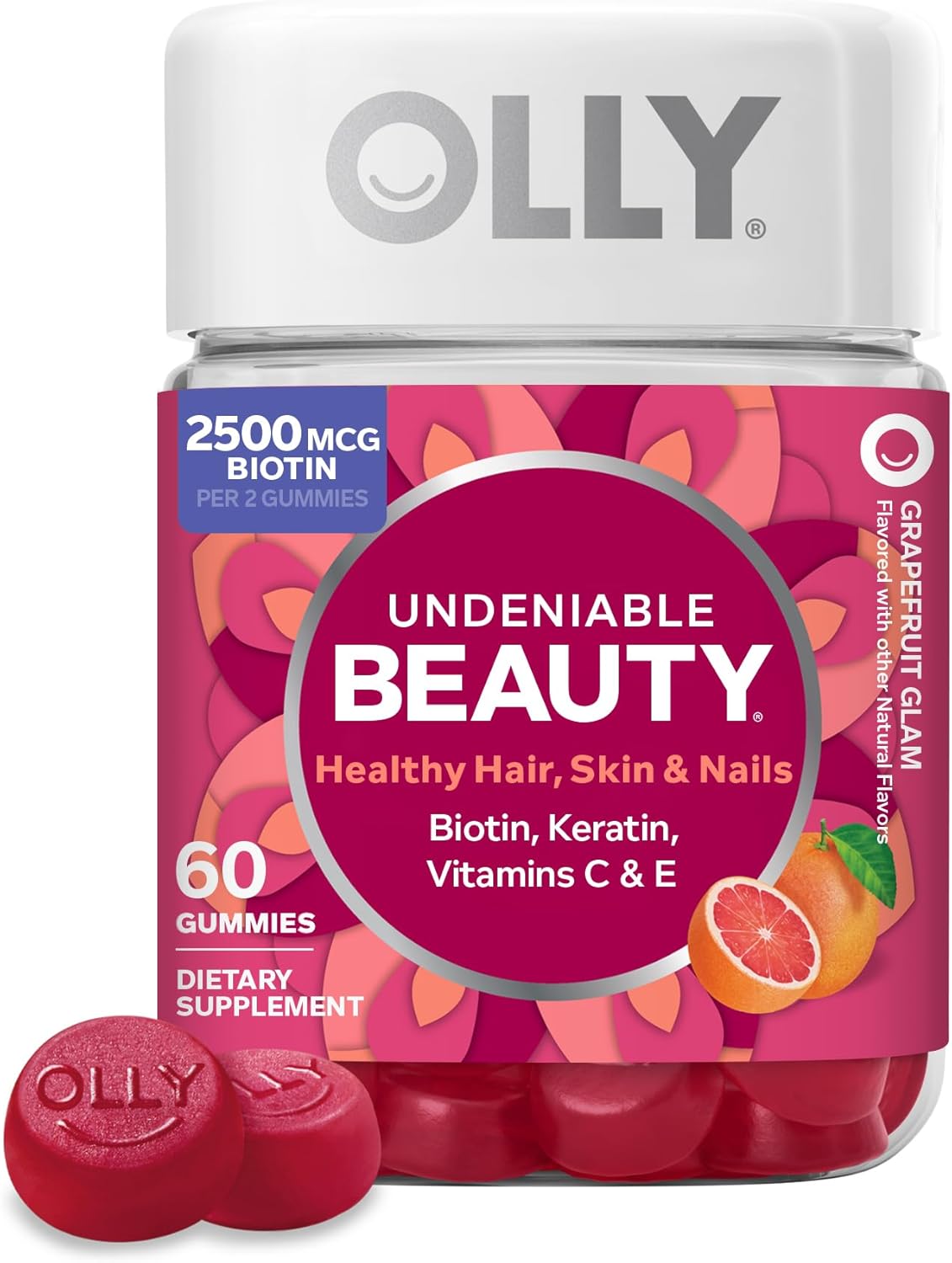
- Biotin per serving: 2,500mcg (per 2 gummies)
- Adds vitamin C and keratin
- 60 gummies = 30 servings
- Grapefruit flavor (frequently called best-tasting in the category)
- Sold at Target, CVS, Walmart, Whole Foods — retail compliance footprint
- Owned by Unilever — major-corporation QC standards
- 13,900+ reviews at 4.6★ — second-highest review volume in our list
- Genuinely good-tasting (grapefruit, less candy-sweet than competitors)
- Brand sits on shelves at major retailers — meaning labels are scrutinized by retailer compliance teams
- Moderate biotin dose, paired with vitamin C
- Keratin in a gummy is largely marketing — oral keratin is digested into amino acids long before it reaches a hair follicle
- 3g sugar per serving (cane sugar + glucose syrup)
- Pricier per gummy than Nature’s Bounty for similar formulation
Why I recommend it: OLLY is the brand you grab from Target on the way home, and that’s both its strength and its limit. Formula is solid for the dose tier, taste is genuinely better than most, retail QC is real. Just understand the keratin claim is cosmetic marketing, not biology. If Nature’s Bounty isn’t your aesthetic preference, this is the obvious alternative.
Check Price on Amazon →5. Vitafusion Extra Strength Biotin 5,000mcg Gummies
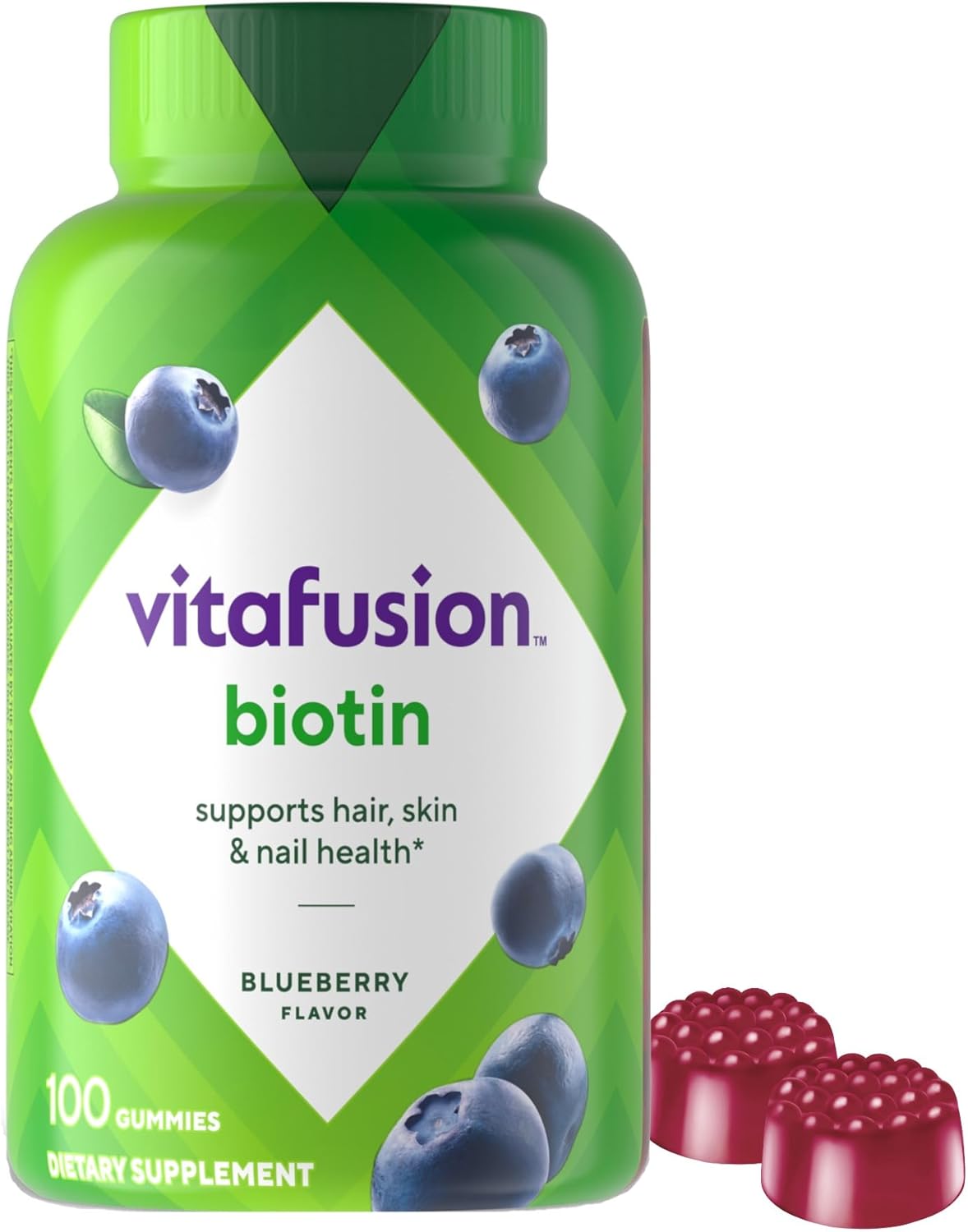
- Biotin per serving: 5,000mcg (twice the dose of our other picks)
- Standalone biotin — no other “beauty” nutrients
- 100 gummies = 50 servings
- Berry flavor, gluten-free
- America’s #1 gummy vitamin brand by sales
- Owned by Church & Dwight (publicly traded, large QC footprint)
- 4.7★ across 20,100+ reviews — highest rating on this list
- Strong brand QC and consistent formulation
- Standalone biotin is the cleanest formula if you specifically want B7 without keratin/retinol theater
- Cost-per-mg of biotin is among the lowest on Amazon
- 5,000mcg is 166x the RDA — the dose where lab assay interference is well-documented. Stop 72+ hours before any blood test.
- Standalone biotin means none of the multi-nutrient cover that makes the lower-dose picks worth taking
- 3g sugar per serving
Why I recommend it (with a caveat): Vitafusion is on this list because excluding it would be dishonest — it’s one of the most-bought biotin gummies in the country and reviewers consistently like it. If you’ve decided you want a higher biotin dose despite the evidence, Vitafusion is the version made by a real company with real QC. But this is the SKU where the lab-interference disclaimer matters most. If you get regular bloodwork — thyroid panels, cardiac markers, fertility workups — strongly consider stepping down to a 2,500mcg option instead.
Check Price on Amazon →What Actually Grows Hair: A Quick Evidence Tour
If you bought a biotin gummy because you want thicker, fuller hair, here’s what the evidence actually supports — most of which has nothing to do with biotin.
Protein adequacy. Hair is made of keratin, which is built from amino acids. Chronic underfeeding or low-protein diets (under ~0.6g/kg of body weight) genuinely cause hair shedding. This shows up most often in people on aggressive weight-loss diets, GLP-1 protocols, or restrictive eating patterns. Hitting 0.8-1g of protein per kg of bodyweight daily is one of the few “hair growth” interventions with consistent evidence. No gummy fixes a protein deficit.
Iron, if you’re deficient. Iron deficiency — even without full anemia — is one of the most common causes of diffuse hair shedding in premenopausal women. If your ferritin is below ~30 ng/mL, supplementing iron under a doctor’s supervision can reverse the shedding. If your ferritin is normal, iron does nothing and over-supplementing is harmful. Get tested before you act.
Vitamin D, if you’re deficient. Low vitamin D is associated with alopecia areata and telogen effluvium. Correcting deficiency helps; supplementing past sufficiency doesn’t.
Treating the actual scalp condition. A lot of “hair loss” is actually androgenetic alopecia (male/female pattern hair loss), telogen effluvium from a stress event 2-3 months prior, traction alopecia from tight hairstyles, or a treatable inflammatory scalp condition. Each has a real treatment. Minoxidil and finasteride have decades of evidence for androgenetic alopecia. A dermatologist visit beats a year of beauty gummies.
Collagen, maybe. Some small trials show oral collagen peptides modestly improve hair thickness and skin elasticity. Evidence is weaker than for protein adequacy generally, but stronger than for biotin. Worth a try if you’ve already nailed the basics.
Sleep, stress, and not over-styling. Hair grows in cycles; stress and poor sleep shift more follicles into the resting phase. This is also why ashwagandha and magnesium tend to be in the “hair stack” conversation — they help via stress reduction, not via the hair follicle directly. See our best ashwagandha gummies and best magnesium glycinate gummies guides if that’s the angle you want.
The honest hierarchy: feed yourself enough protein, fix any real deficiencies, treat the actual scalp condition if there is one, manage stress and sleep. Biotin lives somewhere around step seven on that list, and only if you happen to be deficient.
Tell Your Doctor If You’re Taking High-Dose Biotin (Seriously)
This is the action item nobody puts on the label. Every time you get bloodwork — annual physical, thyroid check, fertility panel, ER visit with chest pain — tell the person drawing your blood that you take biotin and at what dose. Better yet, follow this protocol:
- For routine bloodwork: Stop biotin at least 72 hours before the blood draw. Some labs recommend up to 7 days for very-high doses (10,000mcg+).
- For acute care (ER visit, chest pain workup): You can’t pre-plan this, so just make sure you tell the triage nurse and the physician. Modern troponin assays vary in biotin sensitivity — some are unaffected — but the staff need to know to interpret results carefully.
- For thyroid management: If you’re on levothyroxine or being worked up for thyroid issues, talk to your endocrinologist before starting biotin. The interference can mimic hyperthyroidism on paper, leading to inappropriate medication changes.
- For pregnancy testing: If you’re using a quantitative serum hCG to monitor pregnancy or rule out ectopic, biotin can produce false-negative or falsely-low results. Stop several days before.
This isn’t paranoia — the FDA has issued formal safety communications in 2017 and 2019 on this exact problem, and major lab companies (Quest, LabCorp, Mayo) all publish guidance recommending biotin discontinuation before testing. The supplement industry has not, to put it mildly, prioritized telling consumers about it.
Who Should NOT Take High-Dose Biotin
For most healthy adults, biotin at moderate doses is unlikely to cause harm — the main downside is lab interference, not toxicity. But there are populations who should skip it entirely or talk to a doctor first.
- Anyone with thyroid disease. Hashimoto’s, Graves’, hypothyroidism on levothyroxine — biotin can make your labs unreliable and lead to medication errors. Skip it unless your endocrinologist clears it.
- Anyone with a known cardiac history or symptoms. Troponin interference can mask a heart attack. If you have any cardiovascular risk factors, the very small possible upside doesn’t justify the testing risk.
- People being worked up for fertility, pregnancy, or hormonal issues. hCG, testosterone, cortisol, and reproductive hormone panels can all be affected. Stop before testing.
- People on multiple supplements that already contain biotin. Multivitamins, prenatals, B-complex products, energy drinks, and “beauty stacks” frequently contain biotin. Stacking three of these can push you to 20,000mcg+ daily without noticing.
- Anyone with kidney disease or on dialysis. Biotin clearance dynamics are altered, and the lab-interference issue is more pronounced.
- Kids. Most beauty gummies are labeled for adults. Children’s biotin needs are well-covered by normal food intake; the mega-doses on adult gummies are unnecessary and add the same lab-interference concerns.
If you’re a generally healthy adult, not on thyroid medication, not in a fertility workup, not getting frequent labs, and you’ve already covered the actual evidence-based hair interventions (protein, treating deficiencies, stress, scalp condition) — a moderate-dose biotin gummy is unlikely to hurt you. Just remember the lab-test pause.
How We Picked These
Hundreds of biotin gummies exist on Amazon. We filtered using strict, label-skeptical criteria:
- Dose ceiling. We capped at 5,000mcg per serving and prioritized 2,500mcg products. Higher doses don’t do more for hair and increase lab interference. Every 10,000mcg gummy was excluded on principle — there’s no benefit reason to recommend them.
- Real brand with a compliance footprint. Nature’s Bounty, Nature Made, OLLY, MaryRuth’s, Vitafusion — all sold at major retailers, all with traceable corporate ownership, all with consistent QC track records. We excluded Amazon-only white-label brands with cherry-picked reviews.
- Meaningful review volume. Minimum 3,000 reviews for established SKUs (Nature Made Advanced is the exception, as a newer USP Verified launch).
- Formulation transparency. Standalone biotin or honest multi-nutrient formulas — no proprietary “hair growth blends” with undisclosed doses. The Nature Made and OLLY picks add nutrients we can actually defend.
- Reasonable sugar load. We gave the sugar-free pick (MaryRuth’s) a category to itself rather than punishing the rest. 3g per serving is the category baseline; anything higher was deprioritized.
We did not get paid by any of these brands. We earn affiliate commission if you buy through our links — that’s how the site stays free — but the ranking is based on dose honesty and formulation, not who’s writing checks.
Frequently Asked Questions
Will biotin help hair loss from finasteride, minoxidil, or PCOS?
No. Hair loss from androgenetic alopecia (treated with finasteride/minoxidil) is driven by DHT signaling at the follicle, not by biotin status. Hair loss from PCOS is also DHT/androgen-driven and benefits from addressing the underlying hormone picture (spironolactone, metformin where indicated, lifestyle interventions). Biotin doesn’t move either pattern. If you’re already on minoxidil or finasteride, keep taking them — biotin won’t add to the effect.
Biotin vs collagen for hair — which is better?
Collagen has stronger (though still modest) evidence than biotin for hair thickness and skin elasticity in non-deficient adults. Several small trials show oral collagen peptides improve hair tensile strength and skin hydration over 8-12 weeks. Biotin has essentially no comparable evidence in non-deficient people. If you have to pick one, collagen is the more defensible spend. They can be stacked, but doing both at high doses for years isn’t necessary.
How long until biotin “works”?
This is the wrong question for non-deficient people, because biotin doesn’t measurably do anything for their hair on any timeline. For genuinely deficient people, restoring biotin normalizes hair within 3-6 months — but that’s a deficiency case, not a beauty case. If you’re taking biotin and notice better hair after a few months, the most likely explanation is regression-to-the-mean from a temporary shedding cycle (telogen effluvium typically resolves on its own in 3-6 months) or improvements in other parts of your routine (diet, stress, sleep) running in parallel.
Can I take biotin with prescription medications?
Biotin has very few direct drug interactions — it’s not a CYP enzyme inhibitor in any meaningful way. The big issue is lab interference, especially for medications you’re titrated on (levothyroxine, lithium, anticoagulants). Inaccurate labs can lead to inappropriate dose changes. If you’re on any medication that requires periodic blood monitoring, talk to your prescribing doctor and your pharmacist before starting high-dose biotin.
How long before a blood test should I stop taking biotin?
The conservative answer is 72 hours minimum, and 7 days for very high doses (10,000mcg+). Quest Diagnostics, LabCorp, and Mayo Clinic all publish guidance in this range. For thyroid panels and troponin specifically, longer is better. If you forget to stop, tell the lab tech — they can flag the sample for biotin-resistant assay methods where available.
Are biotin gummies safe during pregnancy?
Pregnancy increases biotin requirements modestly (the adequate intake goes up to 35mcg/day). Most prenatal vitamins already contain biotin in appropriate amounts. Adding a 5,000-10,000mcg beauty gummy on top of a prenatal is unnecessary and complicates hCG and other pregnancy-monitoring labs. Skip the beauty gummy during pregnancy; the prenatal has you covered.
Do biotin gummies cause acne?
This is a real and underdiscussed effect. High-dose biotin can worsen acne in some people, particularly those already prone to breakouts. The proposed mechanism is competition with pantothenic acid (vitamin B5) at gut absorption, indirectly increasing sebum production. If you start a biotin gummy and your skin gets worse, that’s a known pattern. Stop the gummy and the breakouts typically resolve within a few weeks.
Final Thoughts
The honest summary on biotin gummies is uncomfortable for the category: most of them sell a hair-growth promise the evidence doesn’t really support, at doses 100-300x what your body actually needs, with a real lab-interference side effect that most consumers don’t know about. That’s not a hit piece — biotin isn’t unsafe in the pharmacological sense — but it’s not the miracle the bottle implies.
If you’re going to take a biotin gummy anyway (and there are real reasons to: it might help, you like the routine, you want the placebo-adjacent benefit of doing something), take the smallest reasonable version of it. Nature’s Bounty Hair, Skin & Nails 2,500mcg is the obvious default — moderate dose, vitamin C add, lowest cost per serving, decades of brand track record. If you don’t want sugar, swap to MaryRuth’s. If you want a formula where biotin is the smallest part of what you’re paying for, Nature Made Advanced gives you niacinamide and retinol on top.
If you’re actually trying to grow your hair, the bigger levers are upstream: enough protein, treating real deficiencies (iron, vitamin D), addressing the actual scalp condition with a dermatologist, and managing stress and sleep. A biotin gummy isn’t a hair strategy. It’s a small, optional addition to one — and only if you remember to stop taking it before your bloodwork.
For the broader stress-sleep-stack angle, see our magnesium glycinate gummies and ashwagandha gummies guides. If you’re building a women-specific supplement stack, our best creatine gummies for women guide uses the same label-skeptical lens we applied here.
Best Overall (Lowest Reasonable Dose): Nature’s Bounty Hair, Skin & Nails 2,500mcg — moderate biotin dose plus vitamin C, 69,800+ reviews at 4.6★, around $14 for 100 servings.
Best Sugar-Free Pick: MaryRuth’s Organics Biotin Gummies 2,500mcg — zero sugar, vegan, moderate dose. Around $25 for a month.
Last updated: June 16, 2026. Prices on Amazon change frequently — current price at checkout is what counts. Affiliate links earn DeskFitPro a commission at no cost to you.